

Transparent Acrylic Paint Guide: What It Is, How It Works and How to Use It
Author: The Art Shed Team Date Posted:3 December 2025
Everything you need to know about transparent, semi-transparent and glazing colours across every major acrylic brand.
The aisles have spoken and we’ve heard you loud and clear. The chaos, confusion and paint-panic over transparent acrylics officially end here. Transparent acrylics, glazing colours, semi-transparent pigments and all the weird inconsistencies between brands can feel like a maze to navigate, especially when you're trying to figure out which colours actually let light through, why some pigments glow like stained glass and others cover like house paint, or how on earth you’re meant to choose the right paint for glazing. This guide puts everything you need in one place. It walks you through what transparent acrylic paint is, how semi-transparent colours behave, why some pigments will never be transparent no matter which brand you buy, how to make paint more transparent or more opaque, and exactly which colours count as transparent or semi-transparent in every major acrylic range we stock at Art Shed. If you’re building a glazing palette, learning how to layer colour properly, experimenting with depth and luminosity in your work or just trying to understand how transparency affects acrylic painting, this is the resource you’ll come back to again and again.
What Is Transparent Acrylic Paint?
Transparent acrylic paint is made with pigments that naturally allow light to pass through the dried paint film, creating luminous, glowing layers where the colour underneath still shows through. This transparency comes entirely from the pigment chemistry rather than the brand, which is why colours like Phthalo Blue, Quinacridone Magenta, Quinacridone Red, Dioxazine Purple, Alizarin Crimson and Transparent Oxides consistently appear on transparency charts across all brands.
These pigments are structured in a way that makes them naturally see-through, allowing the light to bounce through the paint layers and create depth. In contrast, opaque pigments such as cadmiums, metallics, titanium white and most earth colours physically block light due to their particle size and structure. Even when you thin them, they will always retain some level of coverage because opacity is literally built into the pigment itself.
What Does Semi-Transparent Mean?
Semi-transparent acrylics sit right in the middle of the opacity scale. They tint, shift or warm the layers underneath without fully covering them, offering a softer, more subtle effect than a fully transparent colour.
They’re perfect for gentle glazing, building warmth in shadows, enhancing tonal depth and adjusting colour temperature without repainting the entire area. Semi-transparent colours can easily be pushed more transparent with glazing medium or water, and they can also be layered in thin veils to create smoother transitions than opaque colours can typically achieve.
What Are Transparent Acrylics Used For?
Transparent acrylics are used for some of the most visually striking acrylic techniques: glazing, subtle shading, layering, warming or cooling tones, boosting vibrancy, staining raw surfaces, deepening shadows and building that luminous, glowing depth often seen in professional work.
Transparent pigments are also more forgiving and less prone to muddy colour mixing because they allow underlying hues to remain active in the mix. If you’ve ever admired a painting and wondered why the colours seem to radiate light rather than sit flat on the surface, chances are the artist used transparent acrylics layered gently over one another.

How to Tell if a Colour Is Transparent
Most acrylic brands use the same three symbols to show transparency. An empty square means the colour is transparent, a half-filled square means it’s semi-transparent or translucent, and a filled square means it’s opaque. These symbols appear on the tubes or on the manufacturer’s colour charts and are worth learning, because once you understand the markings, selecting colours for glazing or layering becomes incredibly simple.
It’s also important to understand that no brand can “choose” to make a pigment transparent. The pigment itself either allows light through, partially allows light through or blocks it completely, the brand can’t change that. That’s why certain colours (like cadmium red) never arrive in transparent versions, while others (like Phthalo Blue) are transparent across every brand on the market.
How to Make Opaque Colours Transparent
You can absolutely make opaque acrylic paint behave more transparently, and the best way to do this is by adding acrylic medium, especially glazing medium, which thins the paint without weakening its binder. Water also makes paint more transparent, and up to around 30% water can safely be used before the paint film becomes compromised. Transparent paint can be made more opaque too, although it will never become truly opaque in the way titanium white is.
Adding Titanium White instantly boosts coverage but also lightens the colour into a tint. Mixing transparent pigments with an opaque colour in the same hue family increases opacity without bleaching the colour. Opacity-boosting mediums can also add coverage, and simply applying the paint more thickly will naturally increase opacity because of the higher pigment load against the surface.
BRAND-BY-BRAND TRANSPARENCY LISTS
Below are the transparency guides for our most-loved acrylic paint ranges, all in one easy place. These lists include all colours listed by their manufacturers as transparent or semi-transparent, so you can easily build a glazing palette or choose the right paints for layering and luminous colour effects.

Liquitex Basics – Transparent & Semi-Transparent Colours
Transparent Colours:
- Transparent Yellow
- Fluorescent Yellow
- Transparent Mixing White
- Transparent Red
- Fluorescent Red
- Prism Violet
- Fluorescent Pink
- Fluorescent Orange
Semi-Transparent Colours:
- Cadmium Yellow Light Hue
- Primary Yellow
- Cadmium Yellow Medium Hue
- Cadmium Yellow Deep Hue
- Iridescent White
- Cadmium Red Light Hue
- Cadmium Red Medium Hue
- Naphthol Crimson
- Alizarin Crimson Hue Permanent
- Primary Red
- Medium Magenta
- Quinacridone Magenta
- Vivid Red Orange
- Cadmium Orange Hue
- Lime Green
- Light Olive Green
- Green Deep Permanent
- Hooker’s Green Hue Permanent
- Brilliant Yellow Green
- Ultramarine Blue
- Primary Blue
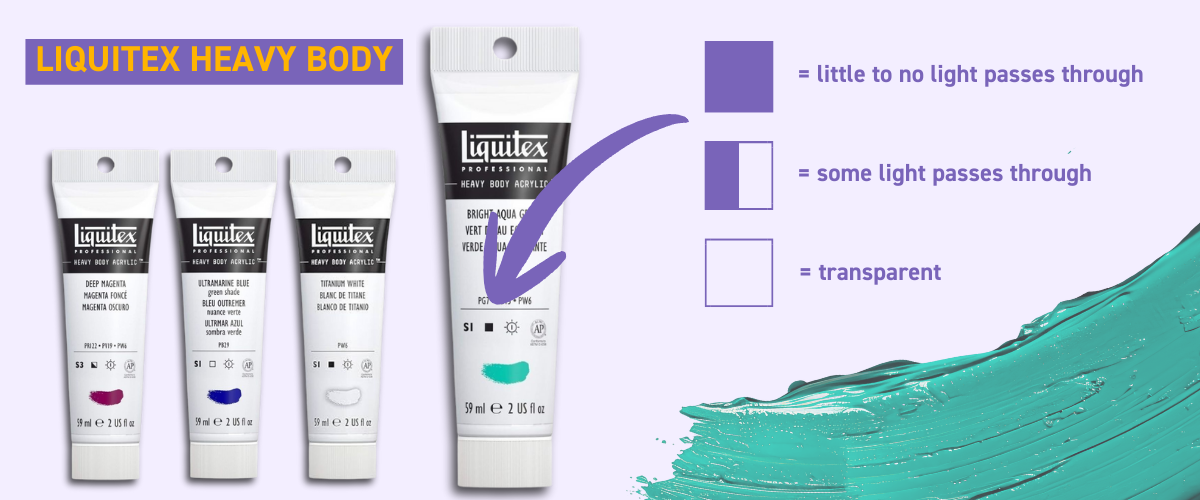
Liquitex Heavy Body – Transparent & Semi-Transparent Colours
Transparent Colours:
- Yellow Light Hansa
- Yellow Orange Azo
- Indian Yellow
- Vivid Red Orange
- Quinacridone Red-Orange
- Quinacridone Red
- Alizarin Crimson Hue Permanent
- Quinacridone Crimson
- Quinacridone Magenta
- Dioxazine Purple
- Quinacridone Blue Violet
- Deep Violet
- Prism Violet
- Indanthrene Blue
- Ultramarine Blue (Red & Green Shade)
- Transparent Viridian Hue
- Green Gold
- Transparent Raw Sienna
- Transparent Burnt Sienna
- Transparent Burnt Umber
- Transparent Raw Umber
- Transparent Mixing White
Semi-Transparent Colours:
- Yellow Medium Azo
- Pyrrole Orange
- Naphthol Red Light
- Naphthol Crimson
- Deep Magenta
- Prussian Blue Hue
- Indigo
- Turquoise Deep
- Hooker’s Green Hue Permanent
- Brilliant Yellow Green
- Turner’s Yellow
- Van Dyke Red
- Iridescent White
- Iridescent Bright Silver
- Iridescent Bright Gold
- Iridescent Rich Gold
- Iridescent Antique Gold

Matisse Flow + Structure – Transparent & Semi-Transparent Colours
Transparent Colours:
- Yellow Light Hansa
- Aureolin Yellow
- Quinacridone Red
- Magenta Quin Violet
- Dioxazine Purple
- Deep Rose Madder Permanent
- Transparent Venetian Red
- Phthalo Blue
- Southern Ocean Blue
- Phthalo Green
- Australian Olive Green
- Matisse Emerald
- Australian Sienna
- Transparent Red Oxide
- Transparent Umber
Semi-Transparent Colours:
- Zinc White
- Yellow Mid Azo
- Primary Yellow
- Nickel Titanate Yellow
- Yellow Deep
- Iso Yellow
- Permanent Orange
- Primary Red
- Matisse Red Light
- Naphthol Scarlet
- Naphthol Crimson
- Brilliant Alizarin Crimson
- Matisse Rose Madder
- Burgundy
- Venetian Red
- Ultramarine Blue
- Matisse Indigo
- Cobalt Turquoise
- Cerulean Blue
- Prussian Blue
- Primary Blue
- Hooker’s Green
- Permanent Green Light
- Australian Yellow Green
- Australian Sap Green
- Raw Sienna
- Raw Umber Deep
- Burnt Umber
- Raw Umber
- Paynes Grey
- Skin Tone Deep
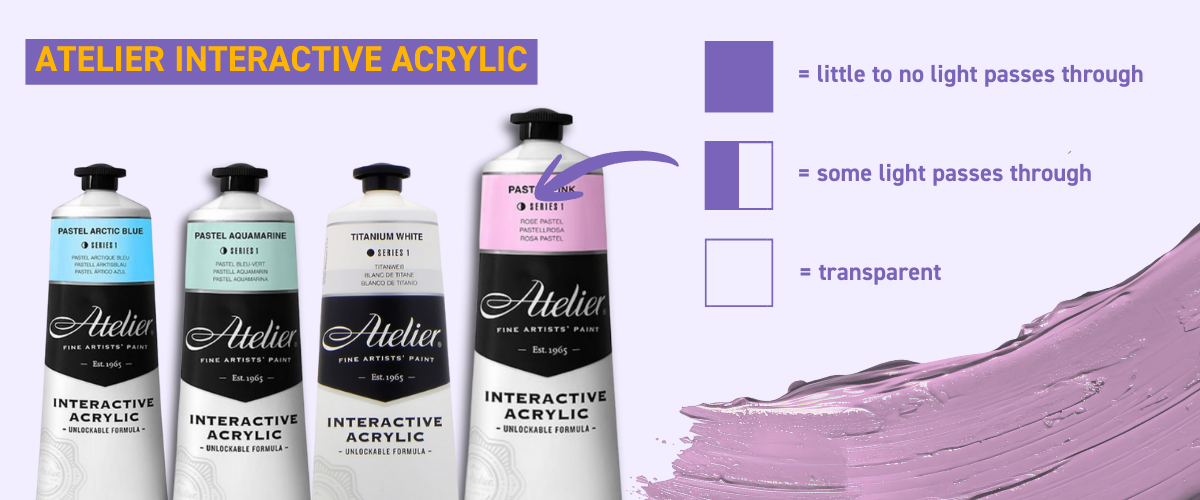
Atelier Interactive Acrylic – Transparent & Semi-Transparent Colours
Transparent Colours:
- Transparent Yellow
- Indian Yellow
- Transparent Perinone Orange
- Red Gold
- Transparent Red Oxide
- Naphthol Red Light
- Permanent Alizarin
- Permanent Brown Madder
- Quinacridone Magenta
- Quinacridone Red Violet
- Paynes Grey
- Dioxazine Purple
- Phthalo Blue (+ Red Shade)
- Prussian Blue Hue
- Phthalo Turquoise
- Forest Green
- Permanent Sap Green
- Olive Green
- Carbon Black
- Toning Grey Mid
- Phthalo Green
Semi-Transparent Colours:
- Orange
- Aryl Amide Yellow Deep
- Burnt Sienna
- Cobalt Blue Hue
- French Ultramarine
- Terre Verte
- Permanent Green Light
- Raw Umber
- Burnt Umber
- Raw Sienna Dark
- Brown Black
- Green Black
- Rich Gold
- Pale Gold
- Copper
- Blue Black
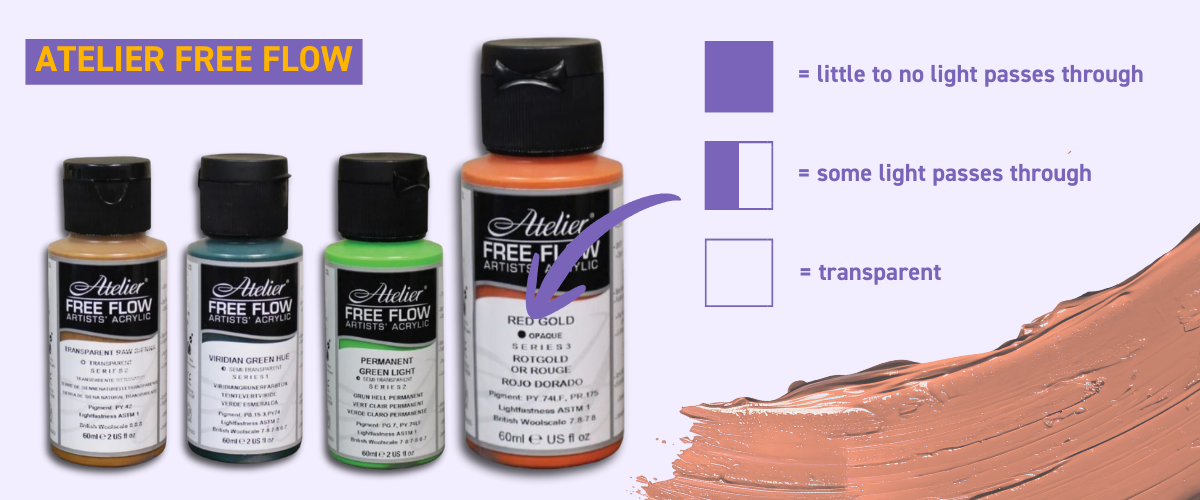
Atelier Free Flow – Transparent & Semi-Transparent Colours
Transparent Colours:
- Phthalo Blue
- Phthalo Green
- Transparent raw Sienna
- Permanent Alizarin
- Quinacridone Magenta
- Dioxazine Purple
- Carbon Black
- Paynes Grey
- Phthalo Blue Red Shade
Semi-Transparent Colours:
- ArylAmide Yellow Light
- Viridian Green Hue
- Permanent Green Light
- ArylAmide Yellow Deep
- Burnt Sienna Natural
- Naphthol Crimson
- Raw Umber
- Cobalt Blue
- French Ultramarine Blue
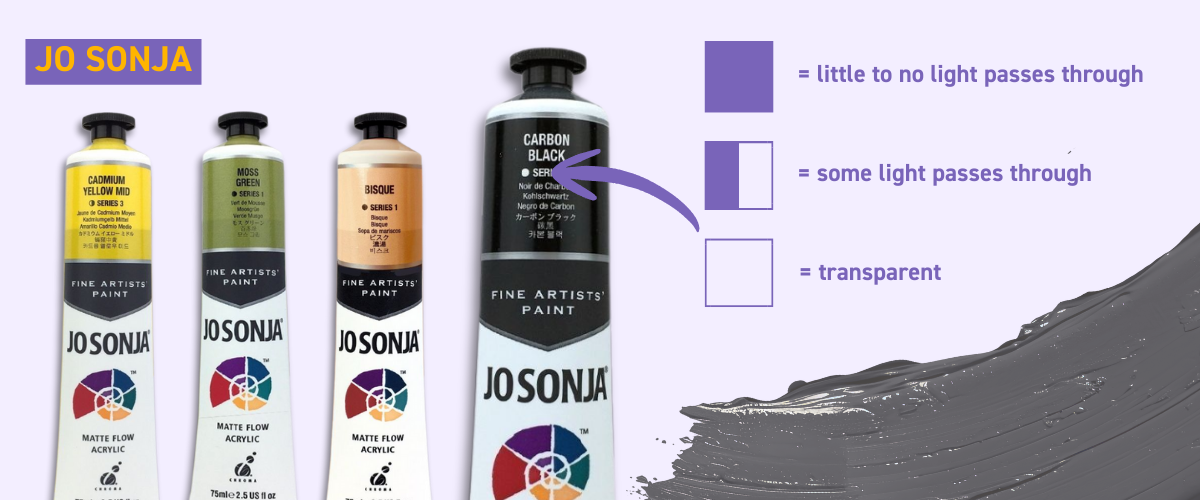
Jo Sonja – Transparent & Semi-Transparent Colours
Transparent Colours:
Semi-Transparent Colours:
- Yellow Light
- Yellow Orange
- Vermilion
- Naphthol Red Light
- Naphthol Crimson
- Purple Madder
- Brilliant Magenta
- Ultramarine Blue Deep
- Phthalo Blue
- Brilliant Green
- Yellow Green
- Silver
- Pale Gold
- Rich Gold
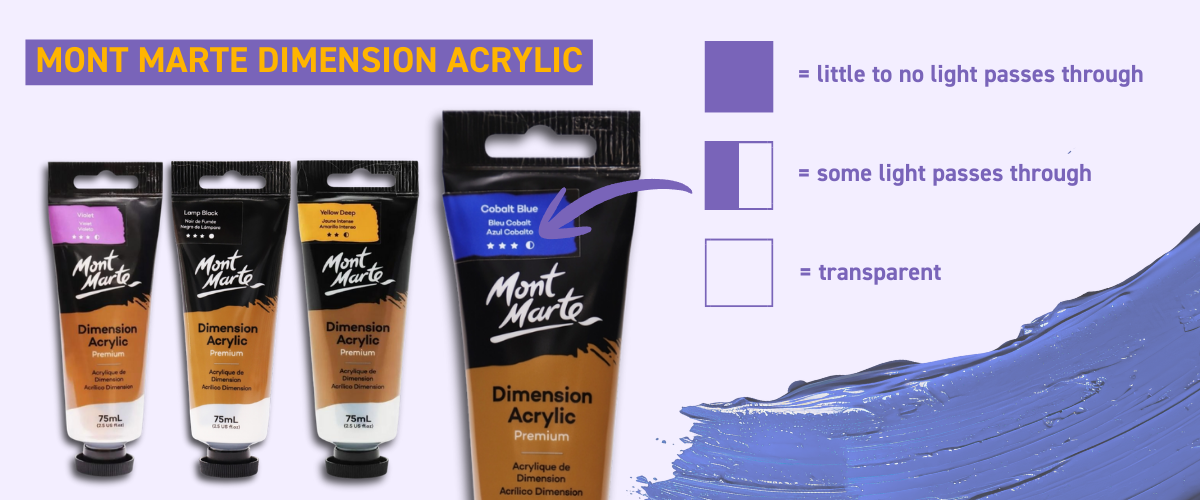
Mont Marte Dimension – Transparent & Semi-Transparent Colours
Transparent Colours:
Semi-Transparent Colours:
- White Zinc
- Gold
- Sap Green
- Pearl White
- Pearl Sapphire
- Yellow Deep
- Azo Vermilion
- Burnt Umber
- Olive Green
- Pearl Yellow Mid
- Monastral Green
- Phthalo Blue
- Pearl Wine Red
- Medium Yellow
- Carmine
- Violet
- Silver
- Lemon Yellow
- Cobalt Blue
- Orange
- Viridian
- Rose Madder
- Pearl Purple
- Raw Umber
- Burnt Sienna
- Hooker’s Green
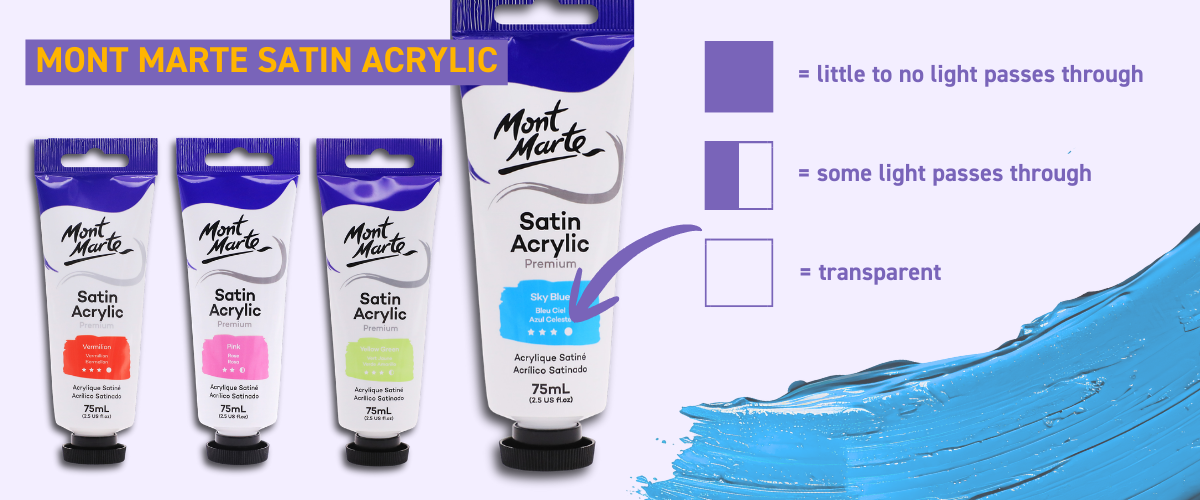
Mont Marte Satin Acrylic – Transparent & Semi-Transparent Colours
Semi-Transparent Colours:
- Burnt Sienna
- Raw Umber
- Yellow Green
- Cobalt Blue
- Burnt Umber
- Gold
- Silver
- Pink
- Crimson
- Brilliant
- Ultramarine Blue
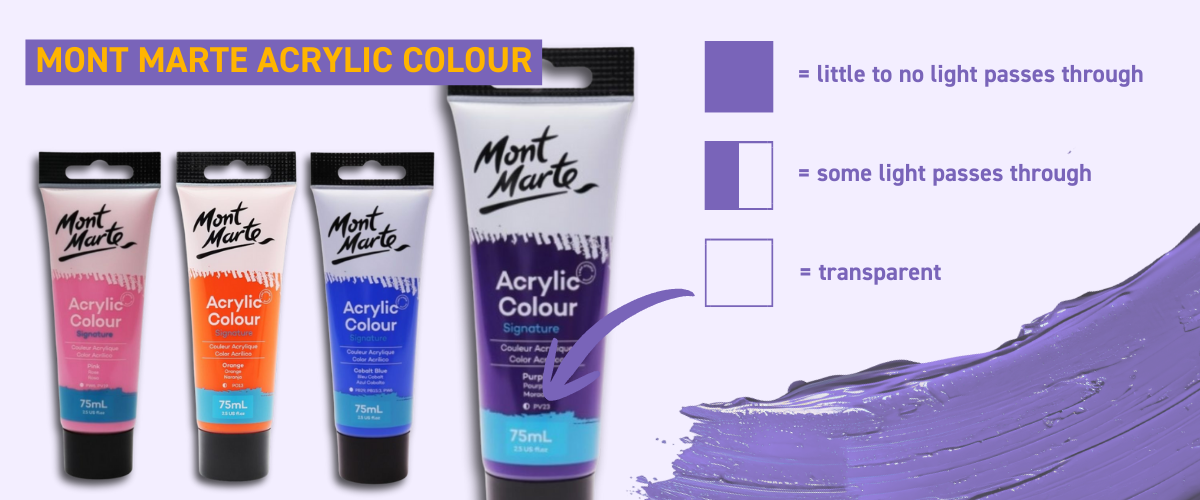
Mont Marte Acrylic Colour (Signature) – Transparent & Semi-Transparent Colours
Semi-Transparent Colours:
- Chinese White
- Lemon Yellow
- Pale Yellow
- Orange
- Orange Yellow
- Yellow Deep
- Medium Yellow
- Brilliant Red
- Magenta
- Carmine
- Crimson
- Old Mauve
- Ultramarine Blue
- Phthalo Blue
- Purple
- Violet
- Yellow Green
- Olive Green
- Medium Green
- Monastral Green
- Light Green
- Phthalo Green
- Burnt Sienna
- Raw Umber
- Burnt Umber
- Silver
- Gold

FAQs
What is transparent acrylic paint?
Transparent acrylic paint is made with pigments that naturally allow light to pass through the dried paint layer, creating a luminous glow when layered over other colours. These pigments behave differently from opaque colours because they don’t block the surface underneath.
What is transparent paint used for?
Transparent paint is used for glazing, warming or cooling tones, adjusting colour without repainting, deepening shadows, boosting vibrancy, staining, layering and building depth through subtle, glowing veils of colour.
What’s the difference between transparent and translucent paint?
Translucent is another term for semi-transparent. It allows some visibility of the layer beneath but not as much as a fully transparent pigment.
Are any acrylic paints transparent?
Yes. Many modern pigments, especially Phthalo colours, Quinacridones, Alizarin, Transparent Oxides and certain violets — are naturally transparent in almost every brand.
Why do some acrylic colours never come in transparent versions?
Because the pigment particles physically block light. Cadmiums, titanium whites, most earth tones and metallics are inherently opaque due to their particle size and chemistry.
Can I make opaque acrylic paint transparent?
Yes. Add glazing medium for the smoothest transparency or thin with water to create a wash. Medium maintains paint strength, while water creates more of a stained effect.
Can I make transparent paint opaque?
You can increase opacity by adding Titanium White or combining the transparent colour with an opaque pigment in the same hue family. Transparent pigments will never behave like a true opaque, but coverage can definitely be increased.
Transparent acrylics might look mysterious on the tube, but once you understand how transparency, semi-transparency and pigment behaviour actually work, acrylic painting becomes ten times easier, and way more fun. Whether you’re glazing, layering, colour-correcting or building that soft, glowing depth that makes a painting feel alive, choosing the right level of transparency is the secret to clean colour, smooth transitions and rich, luminous artwork. Every brand handles transparency a little differently, but the pigment rules stay the same across the board, and now that you’ve got a complete list of transparent and semi-transparent colours in one place, you can choose your paints with confidence instead of guessing in the aisle.
Use this guide to build your glazing palette, plan your next colour study, or simply understand why your favourite colours behave the way they do. As long as you know which paints let the light shine through and which ones bring the big, bold coverage, you’ve got all the tools you need to level up your acrylic game.
Ready to Start Painting?
Shop the full acrylic paint range and find your perfect mix of transparent, semi-transparent and opaque colours.
Shop Acrylic Paints Now