

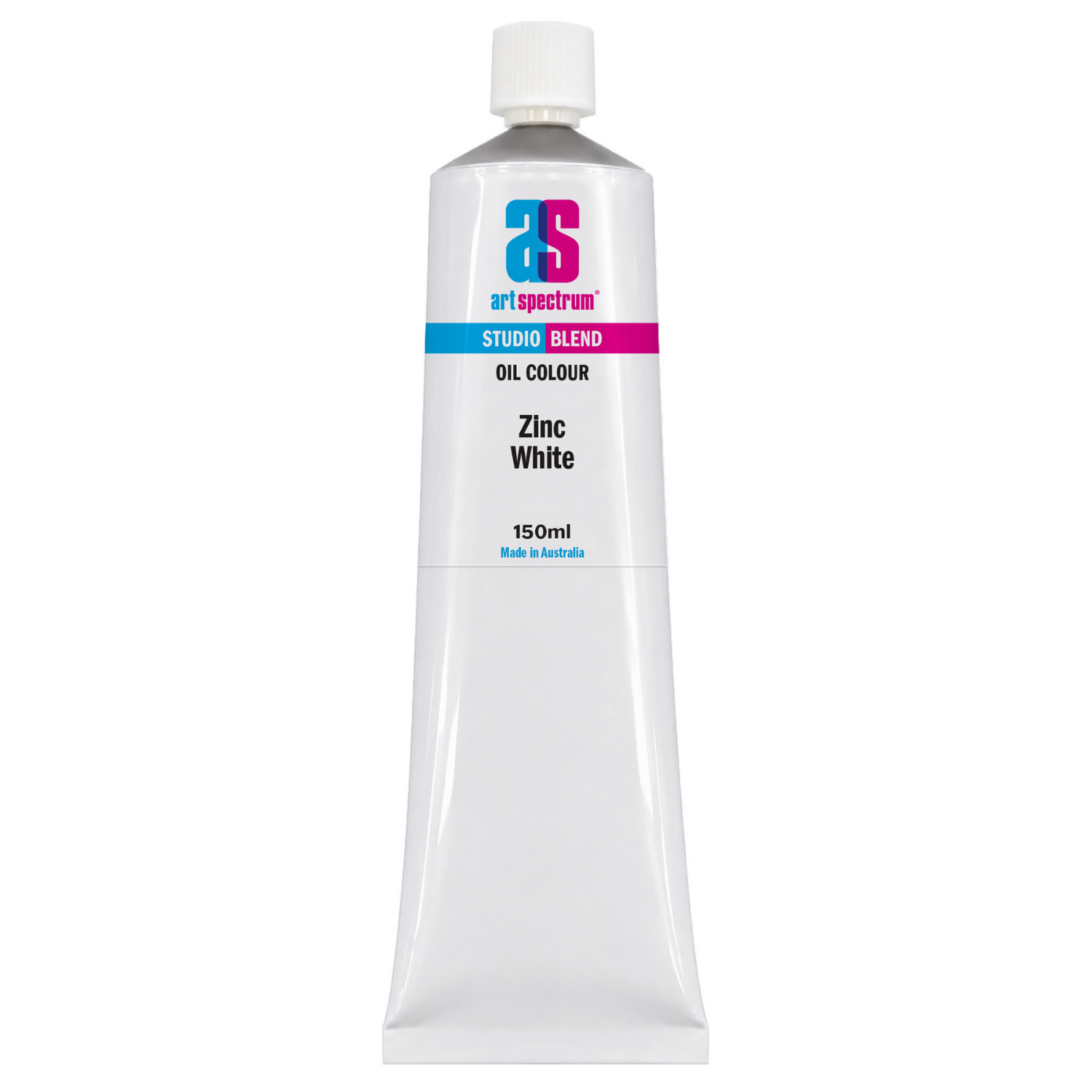

Art Spectrum Studio Blend Oil 150ml Zinc White
Our everyday low price
or 4 interest-free installments of $9.99 with

Own it now, pay later

Zinc White is the specialist white for tinting and glazing in oil painting. Where Titanium White (PW6) is opaque and high in tinting strength, Zinc White (PW4) is semi-transparent with far lower tinting strength, making it the white of choice whenever subtlety and luminosity matter more than coverage. It produces soft, cool, slightly grey-tinted tints rather than the chalky, opaque tints that result from over-using Titanium White. For portrait highlights, glazed whites, tinting transparent colours without obscuring their luminosity, and any passage where a white must recede rather than advance, Zinc White is the correct technical tool. Art Spectrum Studio Blend Oil Zinc White uses single-pigment PW4 to deliver this specialised white with ASTM I lightfastness.
What Makes This Colour Special
The technical difference between Zinc White and Titanium White comes down to refractive index. Titanium dioxide (PW6) has a very high refractive index, which is why it is so opaque and why it lightens mixes so powerfully with even a small addition. Zinc oxide (PW4) has a lower refractive index, which is why it appears semi-transparent in oil medium and why its tinting strength is significantly lower. In practical terms, this means Zinc White can be added to mixes in larger relative quantities without the mix instantly going pale and opaque. The resulting tints are softer, more luminous, and often more convincing for subjects viewed in diffused light or in the soft, lower-contrast register of overcast or indoor subjects.
The classic studio use for Zinc White is portrait and figure work, particularly in the handling of skin highlights and the pale, lit passages of skin tones. Where Titanium White added to a skin tone mix produces a stark, flat, chalky light tone, Zinc White added to the same mix produces a softer, slightly more luminous pale tone that reads as a gentle highlight rather than an abrupt value jump. Portrait painters often keep both whites on the palette: Titanium White for the highest, most direct light highlights and Zinc White for the broader areas of lit skin and soft highlights where coverage is less important than luminosity.
Why Art Spectrum Studio Blend Oil Belongs on Your Palette
- The specialist tinting white. Zinc White's low tinting strength gives fine control over pale tints, allowing larger additions of white without immediately washing out the colour. This is the correct technical white for subtle tinting work where Titanium White is too powerful.
- Semi-transparent for veils and glazes. Applied thin, Zinc White creates a softening, misty veil over underlying colour. This is the correct approach for depicting atmospheric haze, mist, fog, and the soft, diffused quality of light on overcast days.
- ASTM I lightfastness. Zinc oxide is a chemically stable white pigment with excellent permanence. The colour will not yellow or degrade under normal display conditions.
- The portrait painter's highlight white. For skin highlights that need to read as luminous rather than chalky, Zinc White is the standard choice. Its lower tinting strength produces pale skin tones that remain warm and connected to the flesh colours below rather than becoming pale, flat white patches.
- Australian-made since 1966. Art Spectrum has produced artists' materials from their Epping, Victoria facility for over six decades.
Getting the Most Out of This Tube
For portrait work, keep Zinc White alongside Titanium White as two separate tools with different functions. Use Titanium White for the highest, most direct highlights: the specular reflection on the tip of the nose, the brightest point of a catch-light in the eye, the sharpest highlight on a lip. Use Zinc White for the broader areas of pale, lit skin: the forehead in full light, the cheek turning toward the light, the pale areas of skin in soft, diffused illumination. The gradation from Zinc White passages into the mid tones of the face will be smoother and more luminous than the same passage handled with Titanium White.
For landscape, Zinc White is the correct white for atmospheric effects. To paint morning mist over water or valley fog in Australian mountain country, apply a thin, semi-transparent veil of Zinc White (with a touch of pale blue or grey) over the dried, darker passages of tree line and distant terrain. The transparency allows the darker tones to show through the white veil at partial strength, creating the characteristic visual effect of the darker landscape shapes being partially obscured by mist without being completely erased. Titanium White over the same dark passages would produce an opaque smear rather than a transparent, luminous fog.
For tinting chromatic colours (blues, reds, greens, violets), test the tint with Zinc White first before reaching for Titanium White. The lower tinting strength of Zinc White often allows the chromatic character of the original colour to persist into the mid-pale range, giving tints that still read as a pale blue, pale green, or pale violet rather than as a pale grey with a hint of colour. Where greater opacity or more effective lightening is needed, Titanium White remains the correct choice. The two whites work in combination, not competition.
About Art Spectrum Studio Blend Oil: Melbourne Made Since 1966
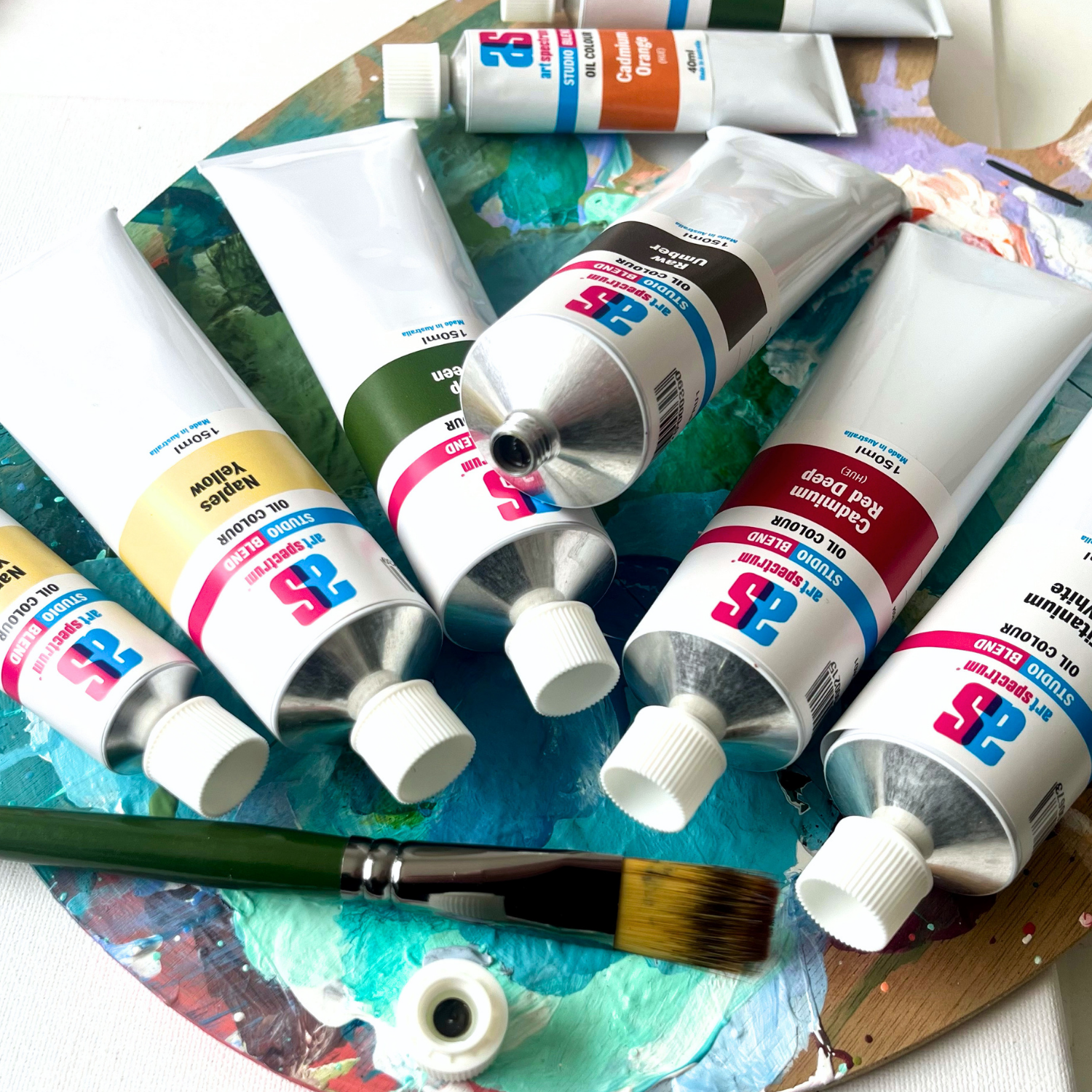
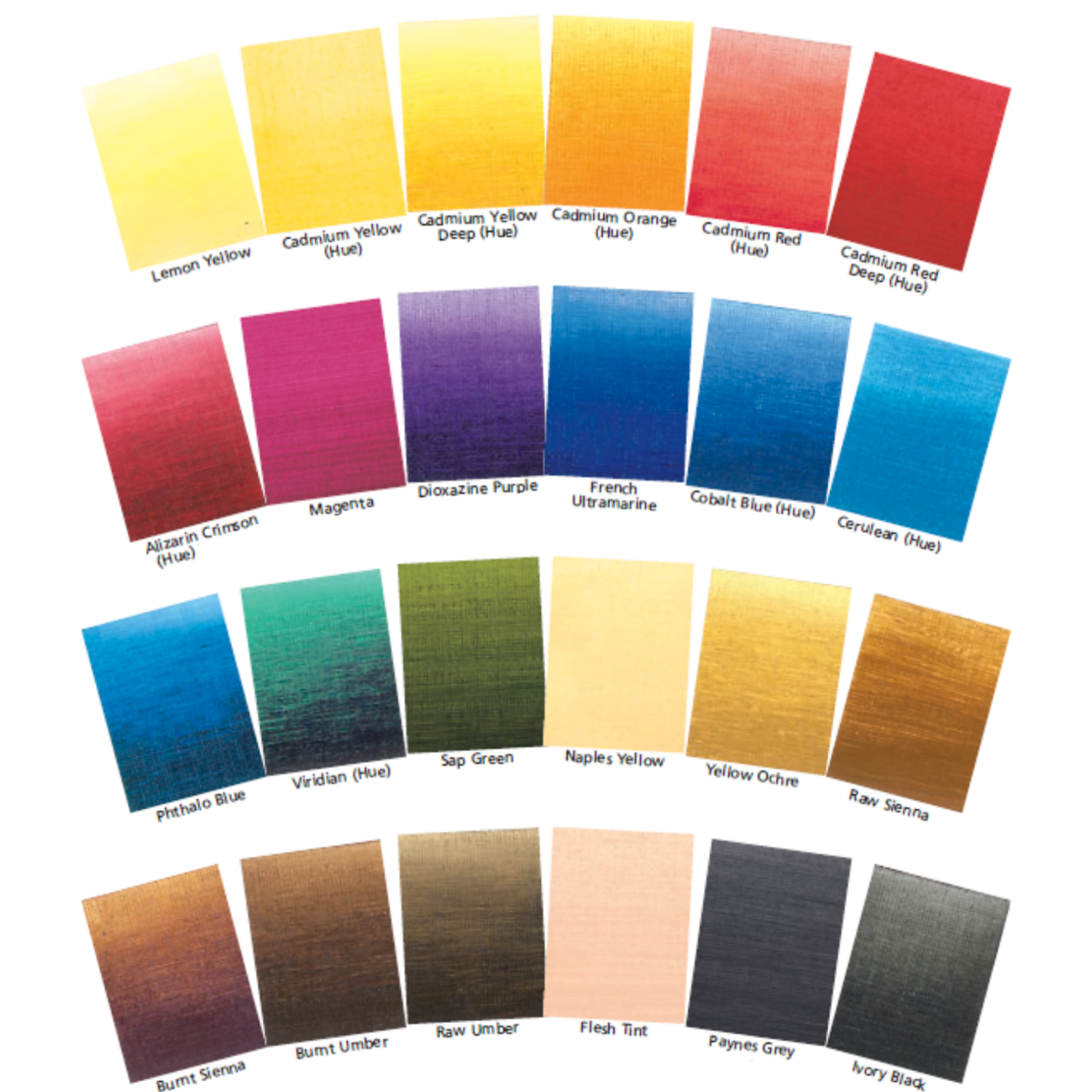
Art Spectrum has been manufacturing artists' materials in Epping, Victoria since 1966. The Studio Blend Oil range is the rebrand of the former Art Prism range, with fresh new packaging and artwork. The formula is unchanged: same pigments, same linseed oil base, same manufacturing standards. It is a studio-grade oil paint designed for working artists who want reliable, lightfast colour at a practical price. The 26-colour palette covers the complete mixing spectrum and is fully compatible with all Art Spectrum oil mediums and varnishes.
What is the difference between Zinc White and Titanium White in oil painting?
Titanium White (PW6) is highly opaque with very high tinting strength: a small addition has a large lightening effect and quickly makes mixes opaque and chalky. Zinc White (PW4) is semi-transparent with low tinting strength: larger additions are required for the same degree of lightening, and the resulting tints are softer and more luminous because the colour does not become fully opaque. In practice: Titanium White is used where coverage and maximum lightening are the goal (blocking out dark passages, maximum-value highlights, general heavy tinting). Zinc White is used where subtlety and luminosity are the goal (portrait skin highlights, tinting transparent glazing colours, soft atmospheric effects, pale tints where chalkiness would be a problem).
Can I use Zinc White as my only white in oil painting?
Technically yes, but it is not recommended as a single white. Zinc White's low tinting strength means that achieving very pale tints or very bright, opaque highlights requires large quantities of paint, making it inefficient for these applications. Most painters who use Zinc White keep it alongside Titanium White and use each for its specific strengths: Titanium White for opaque, high-value work and strong lightening; Zinc White for subtle tinting, soft highlights, and transparent veil effects. Using both whites gives a wider range of pale tone quality than either alone.
Is Zinc White safe to use in oil painting?
Yes. Zinc oxide (PW4) in its dry pigmented and oil-bound form is not classified as a health hazard under normal studio conditions. Art Spectrum Studio Blend Oil is a non-toxic product line. Zinc oxide is also used in sunscreen and other cosmetic products in its fine particulate form. The only consideration is to avoid sanding dried paint or creating dust from any oil paint film, as this is a general best practice for all oil paint media, not specific to Zinc White. Normal handling, brush application, and cleanup with standard studio solvents or soap are all safe.
Why does Zinc White produce better portrait highlights than Titanium White?
In portrait painting, skin highlights need to read as pale, luminous flesh tones rather than as opaque white patches. Titanium White has such high tinting strength and opacity that a modest addition to a skin tone mix produces a flat, chalky pale colour that disconnects visually from the warmer tones below. Zinc White, with lower tinting strength and semi-transparency, lightens the same skin tone more gently, preserving more of the warm colour character of the mix while raising the value. The resulting pale skin tones read as luminous, warm-pale flesh rather than as stark white highlights. For the same reason, Zinc White is useful for any passage where a pale tone must still read as warm or saturated rather than as a pale grey.
Is Art Spectrum Studio Blend Oil the same as Art Prism?
Yes. Art Spectrum Studio Blend Oil is the direct successor to the Art Prism range with new packaging and artwork only. The formula, pigments, and linseed oil base are unchanged. If you have used Art Prism Zinc White previously, this product is identical in colour and performance.
Art Shed Online is an authorised Australian stockist of Art Spectrum products. All Art Spectrum Studio Blend Oil colours are sourced through official distribution channels. We ship Australia-wide.
(APZ1)
| SKU | APZ1 |
| Barcode # | 9323926000277 |
| Brand | Art Spectrum |
| Shipping Weight | 0.0168kg |
| Shipping Width | 0.055m |
| Shipping Height | 0.040m |
| Shipping Length | 0.200m |
| Shipping Cubic | 0.000440000m3 |
More From This Category