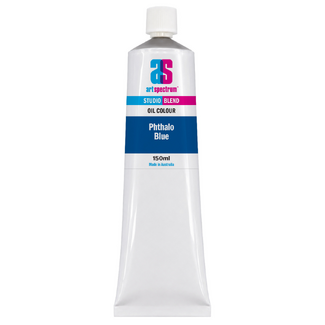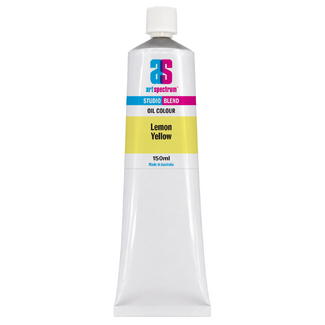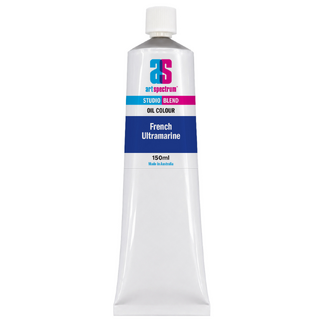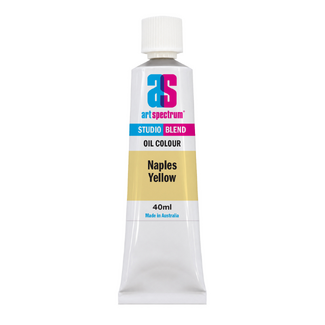


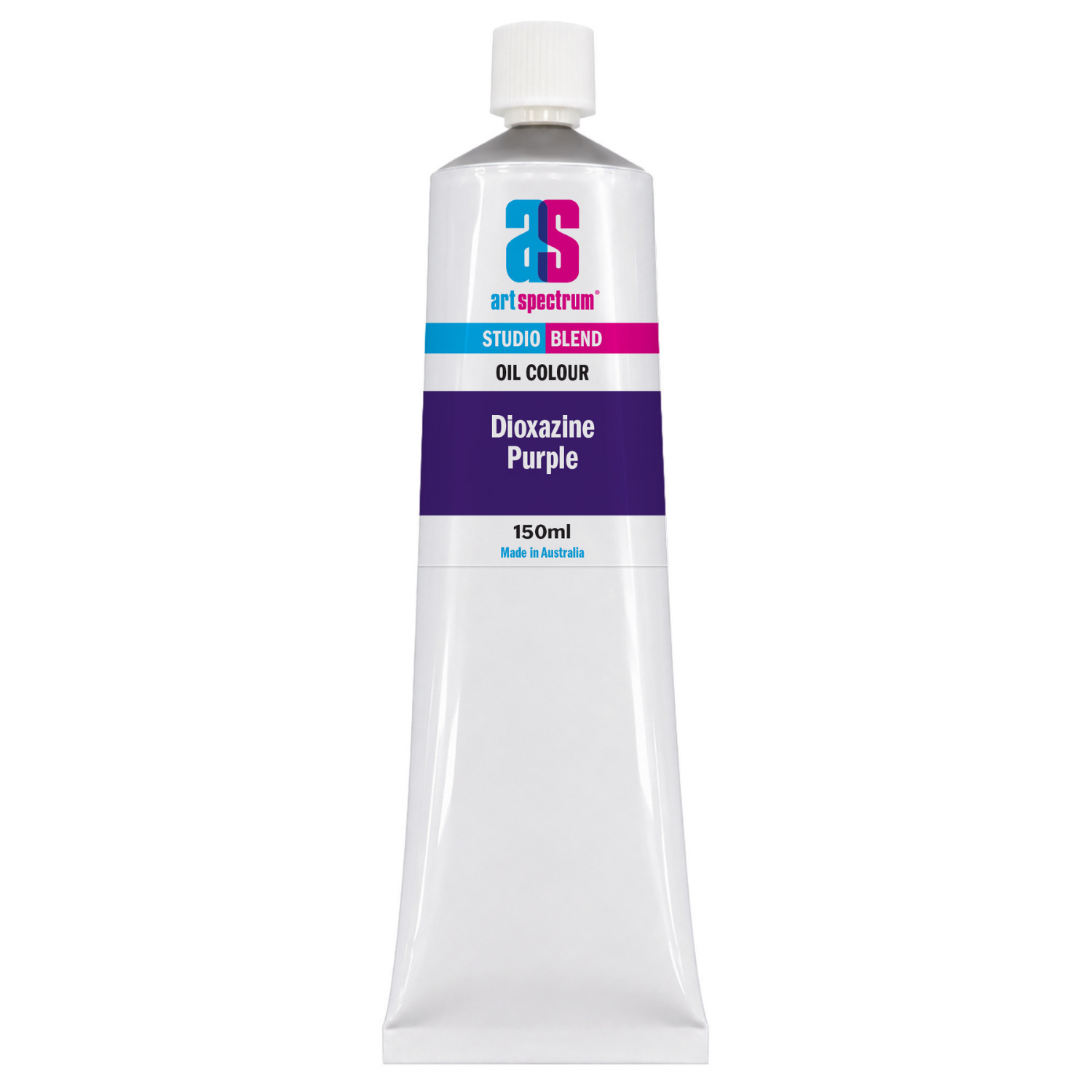
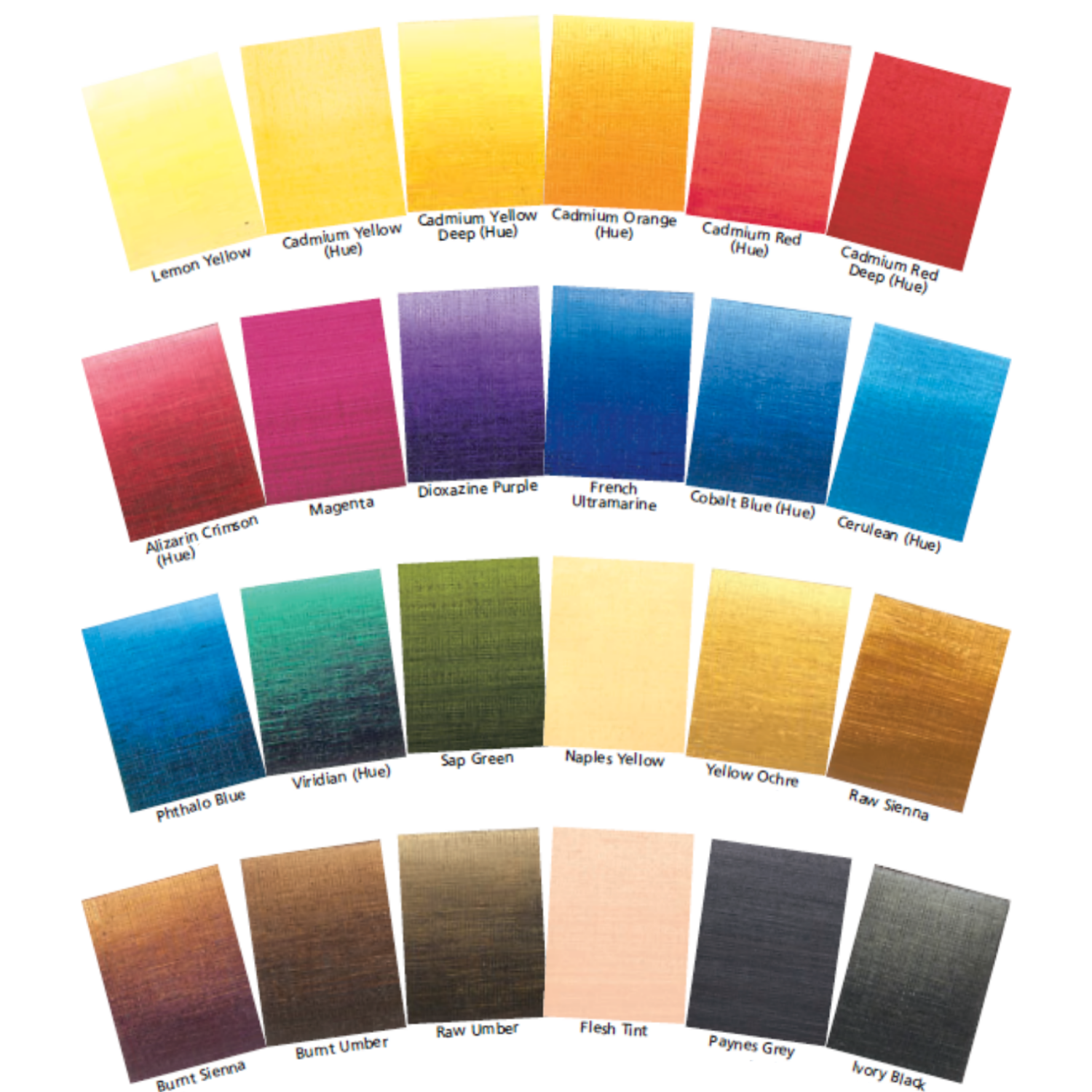
Art Spectrum Studio Blend Oil 150ml Dioxazine Purple
Our everyday low price
or 4 interest-free installments of $9.99 with

Own it now, pay later

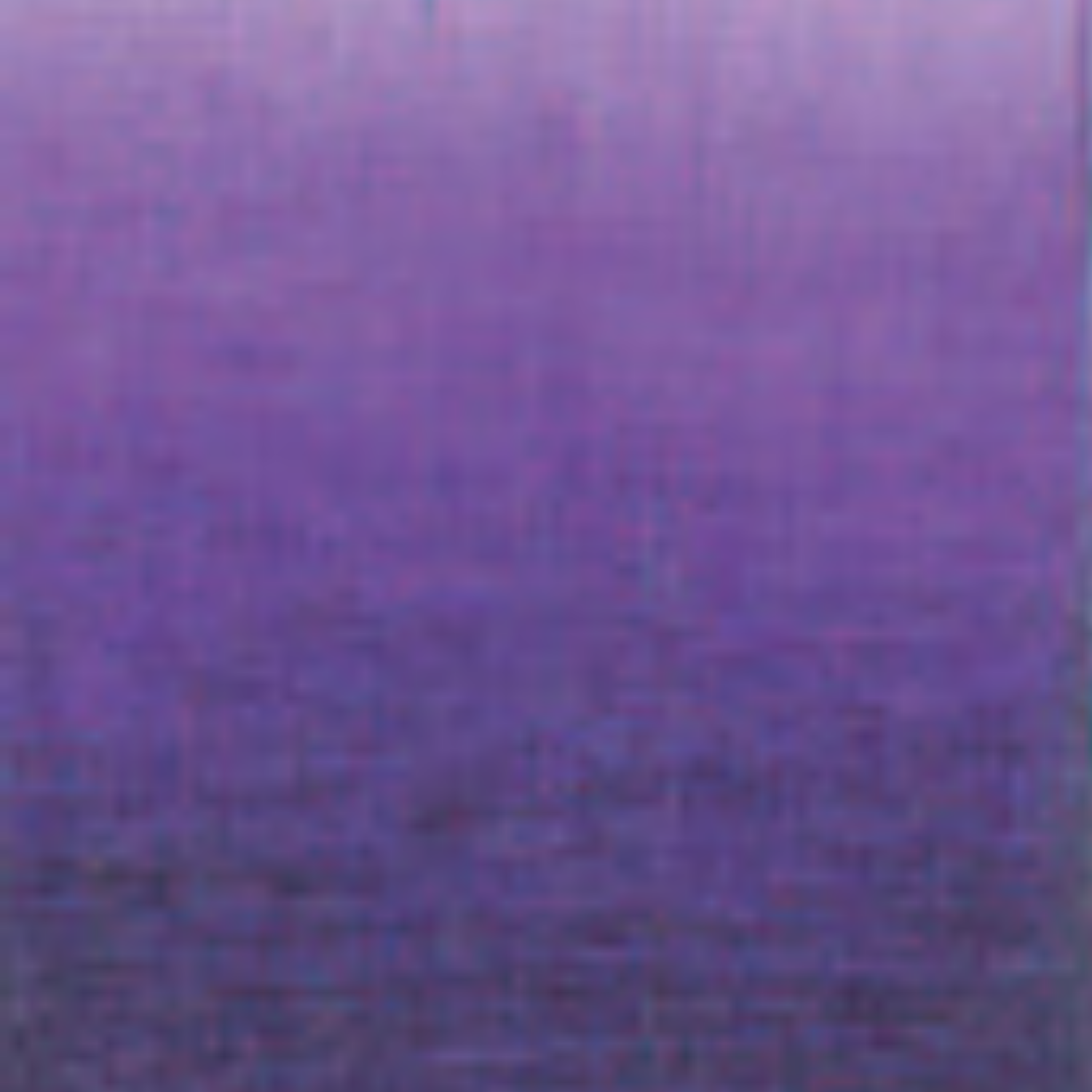
Dioxazine Purple is unlike any other colour on the oil painter's palette. Based on the PV23 carbazole dioxazine pigment, it is the single most powerful tinting colour in oil painting: a deep, saturated violet-purple of extraordinary intensity that can darken and shift any mix with amounts almost too small to see. In mass tone it is a near-opaque darkness that leans toward a deep blue-purple. Thinned to a glaze, it becomes a luminous, transparent violet of remarkable depth. Art Spectrum Studio Blend Oil Dioxazine Purple uses this exceptional pigment at its full strength, giving studio painters access to the deepest purple available in oil paint at a price that makes it practical to use freely.
What Makes This Colour Special
PV23 is the deepest, most saturated violet pigment available to the oil painter and one of the most chemically complex. Before it was developed in the mid-twentieth century, painters did not have access to a true, permanent violet of this intensity. Earlier violet pigments were either fugitive or muted. Dioxazine Purple changed the range of what was achievable in oil painting, making deep, rich, transparent violets available for the first time with genuine permanence.
Its most critical practical characteristic is its tinting strength. No other common oil pigment comes close. A very small amount mixed into any other colour will shift it toward violet. This makes it extraordinarily efficient for darkening mixes without deadening them with black. Where Ivory Black or Raw Umber would add a grey, flat quality to a dark shadow mix, a trace of Dioxazine Purple adds depth and life, keeping the dark passage luminous. Flower shadow, fabric shadow, and deep natural shadow passages all benefit from this approach.
For Australian painters, Dioxazine Purple is the essential colour for jacaranda, wisteria, native violet, and the deep lavender of distant ranges at dusk. Mixed with Titanium White it gives the lavender tints of early morning light on pale surfaces. Used sparingly in dark shadow mixes, it gives the shadow passages in deep-toned Australian bush paintings that characteristic quality of depth without muddiness that distinguishes well-observed shadow from flat, grey-made darkness.
Why Art Spectrum Studio Blend Oil Belongs on Your Palette
- The deepest violet available in oil. PV23 produces a richness and depth of violet-purple that no other pigment can match. One tube covers the full range from pale lavender tint to near-black violet-dark.
- Replace black in dark mixes. A trace of Dioxazine Purple darkens a mix without the deadness of Ivory Black, keeping shadows luminous and optically complex. The most useful darkening tool on the palette.
- ASTM I lightfastness. Outstanding permanence despite its high intensity. A modern synthetic pigment with the stability required for serious, long-term work.
- Exceptional for glazing. The semi-transparent quality of PV23 gives glazed violet passages a luminous depth that opaque painting cannot achieve. Applied thinly over a lighter dry layer, it transforms.
- Australian-made since 1966. Art Spectrum has produced artists' materials from their Epping, Victoria facility for over six decades.
Getting the Most Out of This Tube
The most common mistake with Dioxazine Purple is using too much. Start with an amount you think is insufficient and it will almost certainly be enough. When mixing lavenders, start from a large pile of Titanium White and add Dioxazine Purple a tiny amount at a time. The reverse approach, starting from the purple and adding white, wastes enormous amounts of white trying to dilute an overwhelming quantity of tinting strength.
For darkening mixes without black, add the smallest possible trace of Dioxazine Purple to an existing dark mix. It will drop the value of the mix and shift it slightly toward violet without the flat, chalky quality that black introduces. This technique is particularly useful for deep floral shadows, dark foliage, and the shadow side of dark-coloured objects where opaque darks tend to look dead.
For glazing, thin Dioxazine Purple significantly with an oil glazing medium and apply over a pale, dry passage. One thin layer is usually enough to produce a dramatic violet shift. Multiple thin layers can build extraordinary depth. Allow each layer to dry fully before the next. The fat over lean principle applies: glazing layers must be at least as oil-rich as the layer beneath.
About Art Spectrum Studio Blend Oil: Melbourne Made Since 1966
Art Spectrum has been manufacturing artists' materials in Epping, Victoria since 1966. The Studio Blend Oil range is the rebrand of the former Art Prism range, with fresh new packaging and artwork. The formula is unchanged: same pigments, same linseed oil base, same manufacturing standards. It is a studio-grade oil paint designed for working artists who want reliable, lightfast colour at a practical price. The 26-colour palette covers the complete mixing spectrum and is fully compatible with all Art Spectrum oil mediums and varnishes.
Why is Dioxazine Purple so much more intense than other purple paints?
The PV23 carbazole dioxazine pigment has an unusually complex molecular structure that absorbs a very wide range of light wavelengths, leaving only the deepest violet to reflect back. This makes it appear darker and more saturated than most other pigments at equivalent concentrations. It also has the highest tinting strength of any commonly used oil pigment, meaning very small amounts have a dramatic effect on other colours in a mix. This combination of depth, saturation, and tinting strength is unique to PV23 among artist pigments.
Can I use Dioxazine Purple instead of black to darken mixes?
Yes, and many experienced oil painters do exactly this. Black pigments (PBk9 ivory black, PBk7 lamp black) tend to desaturate and deaden the colours they are mixed into, producing flat, grey-tinged darks. Dioxazine Purple darkens with much greater efficiency while adding a violet luminosity rather than a grey flatness. The result is shadow and dark passages with more optical complexity and depth. Used in very small amounts, the violet shift is subtle and reads simply as darkness, not as purple.
Is PV23 (Dioxazine Purple) lightfast?
Yes. PV23 carries an ASTM I lightfastness rating, the highest classification for oil paint permanence. This is noteworthy because many older violet pigments used in oil painting were considerably less stable. PV23 was developed in the twentieth century specifically to provide a permanent, high-intensity violet. Art Spectrum Dioxazine Purple can be used confidently in any work requiring long-term stability, including exhibit and commissioned pieces.
How do I mix lavender and soft violet tints with Dioxazine Purple?
Always start from white and add Dioxazine Purple, not the reverse. Put out a generous amount of Titanium White, then add the smallest possible touch of Dioxazine Purple and mix thoroughly before assessing the result. Because PV23 has such high tinting strength, starting from white lets you control the level of tint with far more precision. Starting from the purple and adding white will consume large amounts of white before the mix lightens noticeably. A warm lavender can be achieved by adding a trace of Cadmium Red Hue to the mix; a cooler blue-violet by adding a trace of French Ultramarine.
Is Art Spectrum Studio Blend Oil the same as Art Prism?
Yes. Art Spectrum Studio Blend Oil is the direct successor to the Art Prism range with new packaging and artwork only. The formula, pigments, and linseed oil base are unchanged. If you have used Art Prism Dioxazine Purple previously, this product is identical in colour and performance.
Art Shed Online is an authorised Australian stockist of Art Spectrum products. All Art Spectrum Studio Blend Oil colours are sourced through official distribution channels. We ship Australia-wide.
(APDP1)
| SKU | APDP1 |
| Barcode # | 9323926000437 |
| Brand | Art Spectrum |
| Shipping Weight | 0.0168kg |
| Shipping Width | 0.055m |
| Shipping Height | 0.040m |
| Shipping Length | 0.200m |
| Shipping Cubic | 0.000440000m3 |
More From This Category