

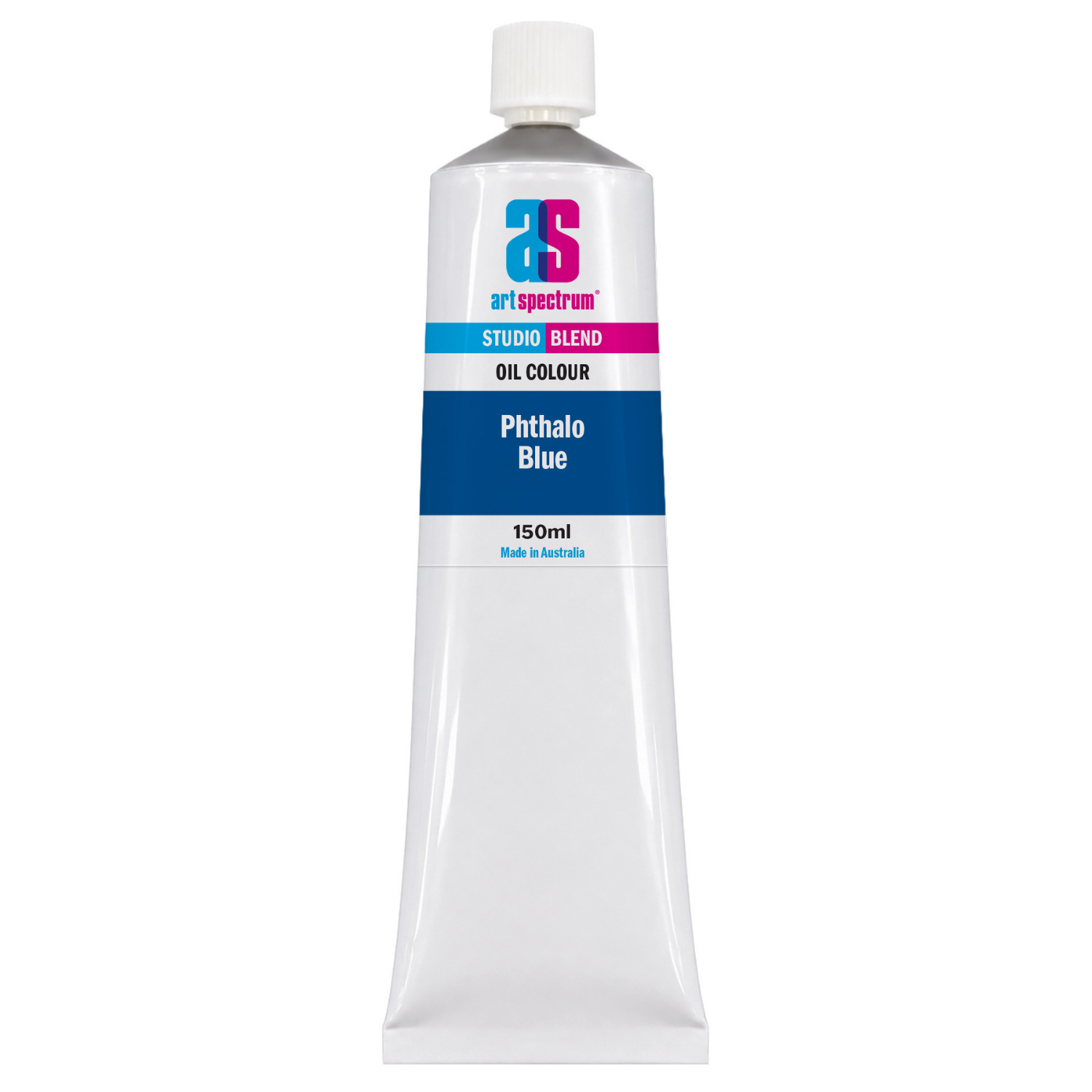
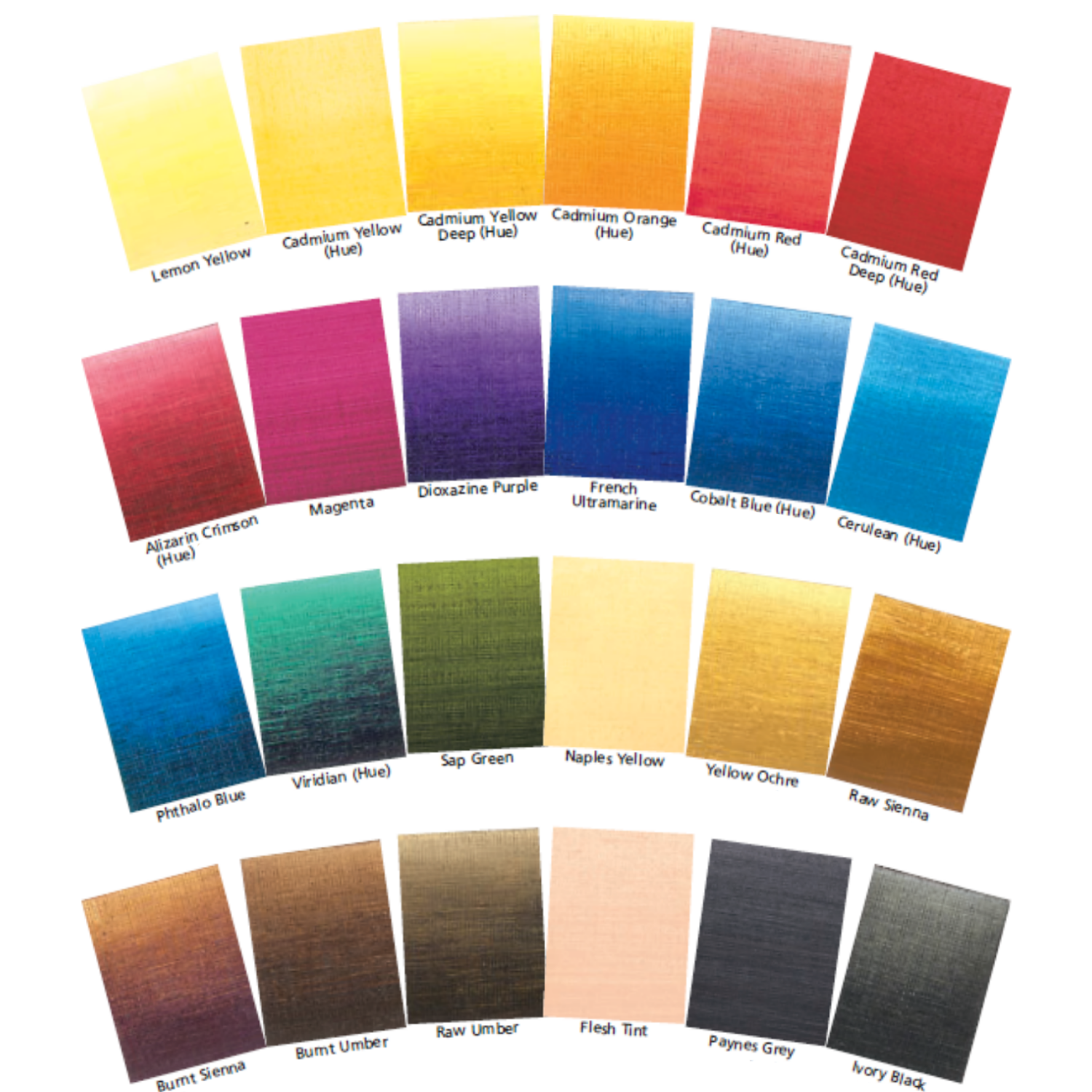
Art Spectrum Studio Blend Oil 150ml Phthalo Blue
Our everyday low price
or 4 interest-free installments of $9.99 with

Own it now, pay later

Phthalo Blue is the most intense blue pigment available to oil painters. It is a synthetic phthalocyanine blue of extraordinary strength and transparency, capable of staining a mix out of recognition with a fraction of the amount that any other blue would require. The green-shade variety (PB15:3) has a slight cool, green bias that distinguishes it from the warmer, more violet bias of Ultramarine: it is the blue of deep ocean water, clear tropical sea, and the intense blue of a saturated midday sky. Art Spectrum Studio Blend Oil Phthalo Blue uses PB15:3 to deliver this maximum-intensity blue in a transparent oil paint that is the go-to colour for any passage requiring the deepest, most saturated blue possible.
What Makes This Colour Special
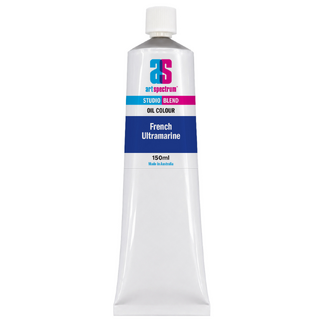
The difference between Phthalo Blue and the other blues on the palette is a matter of intensity. French Ultramarine is the warmer blue, sitting closer to violet; Cerulean Blue Hue is the sky blue, lighter and more muted; Cobalt Blue Hue is the neutral mid-blue. Phthalo Blue is none of these: it is the blue at maximum saturation and maximum intensity, leaning toward green rather than violet, with a depth and strength that no other pigment approaches. When a painting calls for the deep blue of open water, the intense blue of a clear midday sky in Queensland, or the vivid blue-green of a coral sea passage, Phthalo Blue is the only pigment that reaches that intensity.
Its tinting strength is both its greatest asset and the most common source of mistakes by painters using it for the first time. A small amount of Phthalo Blue on the brush, transferred to a pile of white on the palette, will immediately stain the white to a vivid blue. Larger amounts will overpower almost any mix. The correct technique is to use Phthalo Blue the way you would use a highly concentrated dye: in extremely small quantities, added incrementally to the base colour, with patience and control. Once this habit is established, Phthalo Blue becomes one of the most useful and reliable pigments on the palette.
For Australian marine and coastal painters, Phthalo Blue is essential for the specific colour of Australian tropical water. The extraordinarily clear, intense blue-green of the Whitsundays, the Coral Sea, and the waters around the Great Barrier Reef is a colour that no other blue reaches convincingly. Phthalo Blue mixed with a trace of Phthalo Green or Viridian Hue and added to Titanium White gives this tropical water colour directly and reliably.
Why Art Spectrum Studio Blend Oil Belongs on Your Palette
- Maximum blue intensity. No other pigment reaches the saturation of Phthalo Blue. When a subject requires the deepest, most vivid blue available in paint, this is the only option. There is no equivalent from mixing.
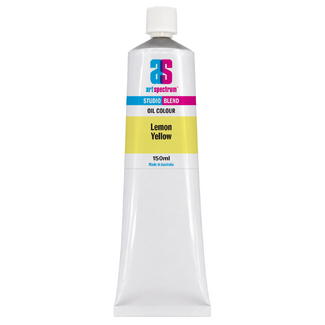
- The vivid green foundation. Mixed with Lemon Yellow, Phthalo Blue produces the brightest greens achievable in oil paint: essential for tropical foliage, coral water, and any subject requiring maximum green saturation.
- ASTM I lightfastness. Phthalocyanine pigments are among the most permanent organic pigments ever produced. This is a fully archival blue.
- Transparent for glazing. Layered thinly over a lighter passage, Phthalo Blue creates deep, luminous blue effects of extraordinary quality that direct opaque application cannot achieve.
- Australian-made since 1966. Art Spectrum has produced artists' materials from their Epping, Victoria facility for over six decades.
Getting the Most Out of This Tube
Always add Phthalo Blue to the base colour, not the base colour to Phthalo Blue. Put the base colour (Titanium White, a yellow, or another colour) onto the palette first. Then pick up a very small amount of Phthalo Blue on the tip of the palette knife or brush and work it into the base colour gradually. The habit of starting with Phthalo and trying to correct with other colours leads to wasted paint and frustration. Starting with a small amount and building up is faster and more economical.
For the vivid ocean colours of the Australian tropics, mix Phthalo Blue with a small amount of Viridian Hue or Sap Green and then lighten with Titanium White. Vary the proportions: more Phthalo Blue gives deeper blue water; more green gives the turquoise-green of shallow reef water; more Titanium White gives the pale, almost-white blue of very shallow sand-bottomed tropical water. A set of pre-mixed ocean tones across this range will cover the full depth variation of a tropical marine painting.
To tone down Phthalo Blue for less saturated, more naturalistic sky or ocean colours, add a very small amount of Burnt Sienna or Raw Umber. These warm earth colours are Phthalo Blue's complementary colour direction and small additions will reduce the intensity without shifting the hue much, producing the natural, slightly greyed blue of real skies and water rather than the maximum-intensity version.
About Art Spectrum Studio Blend Oil: Melbourne Made Since 1966
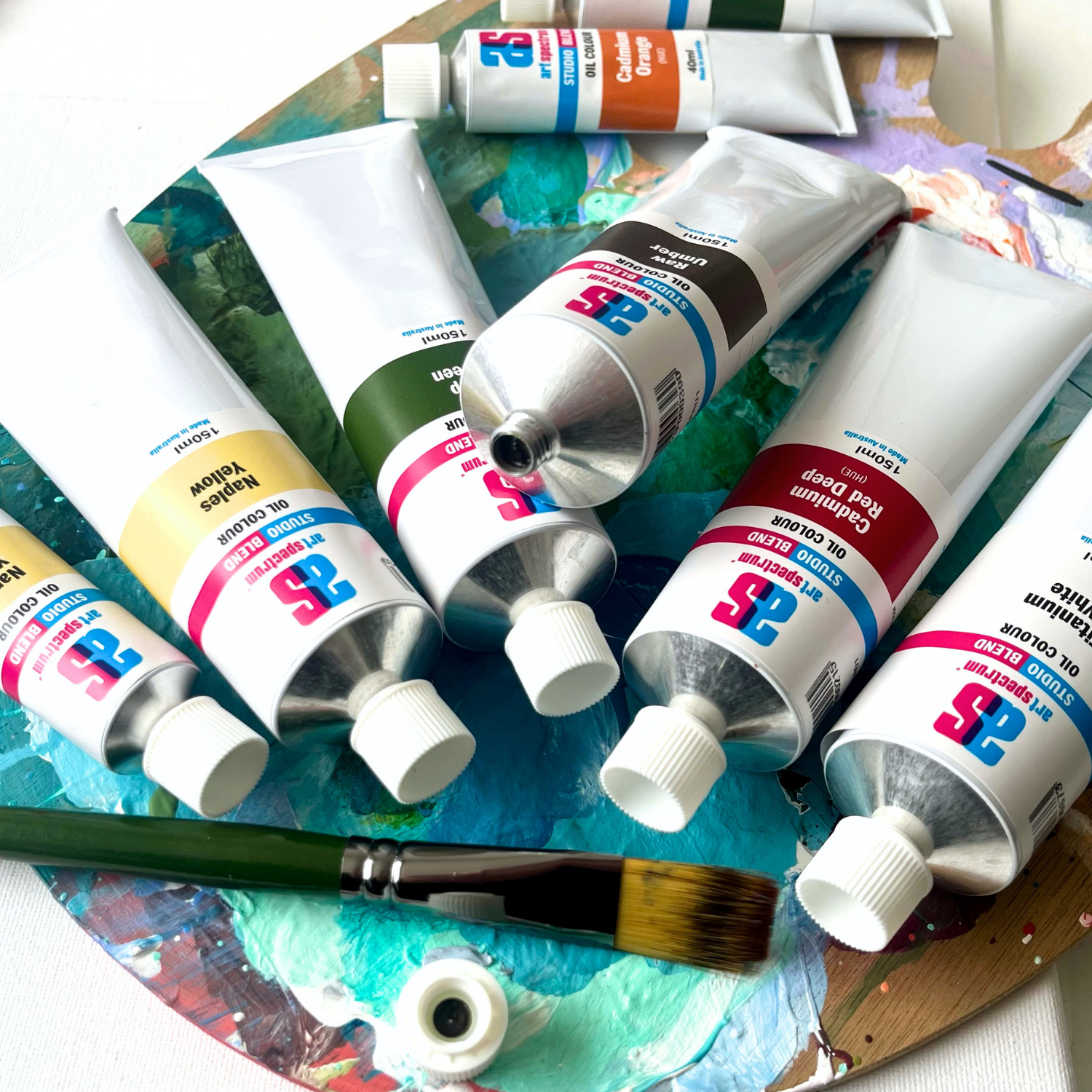
Art Spectrum has been manufacturing artists' materials in Epping, Victoria since 1966. The Studio Blend Oil range is the rebrand of the former Art Prism range, with fresh new packaging and artwork. The formula is unchanged: same pigments, same linseed oil base, same manufacturing standards. It is a studio-grade oil paint designed for working artists who want reliable, lightfast colour at a practical price. The 26-colour palette covers the complete mixing spectrum and is fully compatible with all Art Spectrum oil mediums and varnishes.
What is the difference between Phthalo Blue and Ultramarine Blue in oil painting?
Phthalo Blue (PB15:3) is a cool, green-biased blue of maximum intensity and very high tinting strength. French Ultramarine (PB29) is a warmer, violet-biased blue of somewhat lower intensity and moderate tinting strength. Phthalo Blue is better for vivid sky and ocean blues, bright green mixing, and any passage requiring maximum blue saturation. Ultramarine is better for warm shadows, violet mixing, and the deeper, richer blue of skies in landscape context. Most working palettes benefit from having both: Phthalo Blue for maximum intensity and green mixing, Ultramarine for the warmer blue that better represents distance and shadow.
Why is Phthalo Blue so powerful and how do I control it?
Phthalo Blue (PB15:3) is a synthetic phthalocyanine pigment with exceptionally fine particle size and high molar absorptivity, meaning it absorbs and transmits colour at the molecular level more efficiently than most other pigments. The practical consequence is that very small amounts produce very strong colour effects. To control it: always add Phthalo Blue to the base colour in tiny increments, never the reverse. Use a palette knife rather than a brush to transfer small amounts, so you have precise control over the quantity. Once you adjust to working with very small amounts, it becomes straightforward to use.
Can I mix bright greens with Phthalo Blue?
Yes, and Phthalo Blue with Lemon Yellow or Cadmium Yellow produces the brightest greens available in oil paint. Phthalo Blue's green shade (cool, blue-green bias) aligns well with yellow on the colour wheel, producing clean, very saturated greens rather than the neutralised result from warmer blues. For the brightest possible green, use Phthalo Blue with Lemon Yellow. For slightly warmer, less intense greens, use Phthalo Blue with Cadmium Yellow Hue. Both combinations produce greens more vivid than any pre-mixed green pigment on the palette.
How do I paint Australian tropical water colours with Phthalo Blue?
Start with Titanium White as the base and add Phthalo Blue in very small increments. For deeper, bluer water, stop when the mix reaches the right blue tone. For turquoise-green tropical water (the Whitsundays, Great Barrier Reef), add a small amount of Viridian Hue or Sap Green alongside the Phthalo Blue before mixing with white. For the very pale, almost-white blue of extremely shallow tropical water over white sand, use just a trace of Phthalo Blue in a large amount of Titanium White. Working these three mixes alongside each other allows you to describe the full depth gradient of a tropical seascape in a way that closely matches photographic reference.
Is Art Spectrum Studio Blend Oil the same as Art Prism?
Yes. Art Spectrum Studio Blend Oil is the direct successor to the Art Prism range with new packaging and artwork only. The formula, pigments, and linseed oil base are unchanged. If you have used Art Prism Phthalo Blue previously, this product is identical in colour and performance.
Art Shed Online is an authorised Australian stockist of Art Spectrum products. All Art Spectrum Studio Blend Oil colours are sourced through official distribution channels. We ship Australia-wide.
(APPB1)
| SKU | APPB1 |
| Barcode # | 9323926000512 |
| Brand | Art Spectrum |
| Shipping Weight | 0.0168kg |
| Shipping Width | 0.055m |
| Shipping Height | 0.040m |
| Shipping Length | 0.200m |
| Shipping Cubic | 0.000440000m3 |
More From This Category