

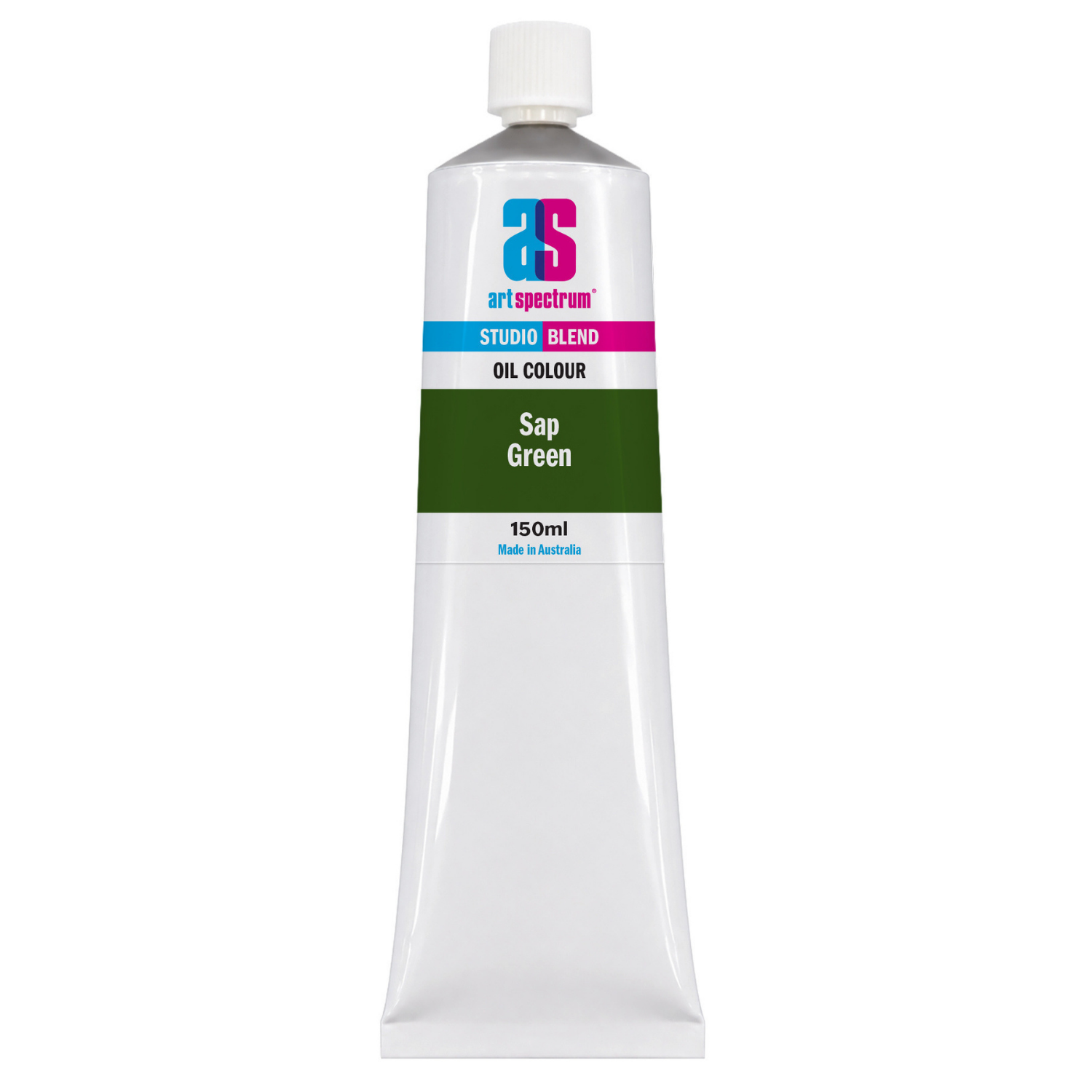
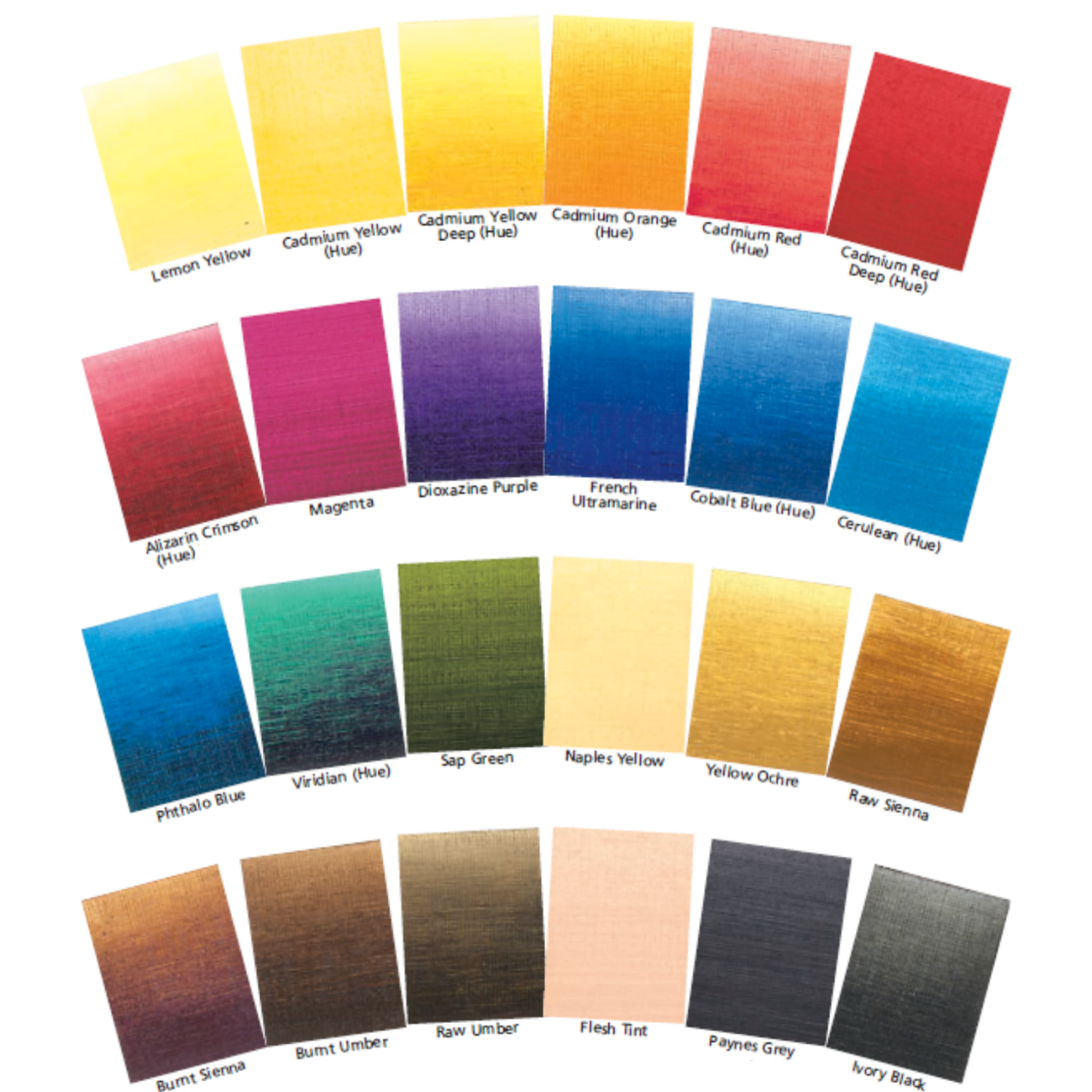
Art Spectrum Studio Blend Oil 150ml Sap Green
Our everyday low price
or 4 interest-free installments of $9.99 with

Own it now, pay later

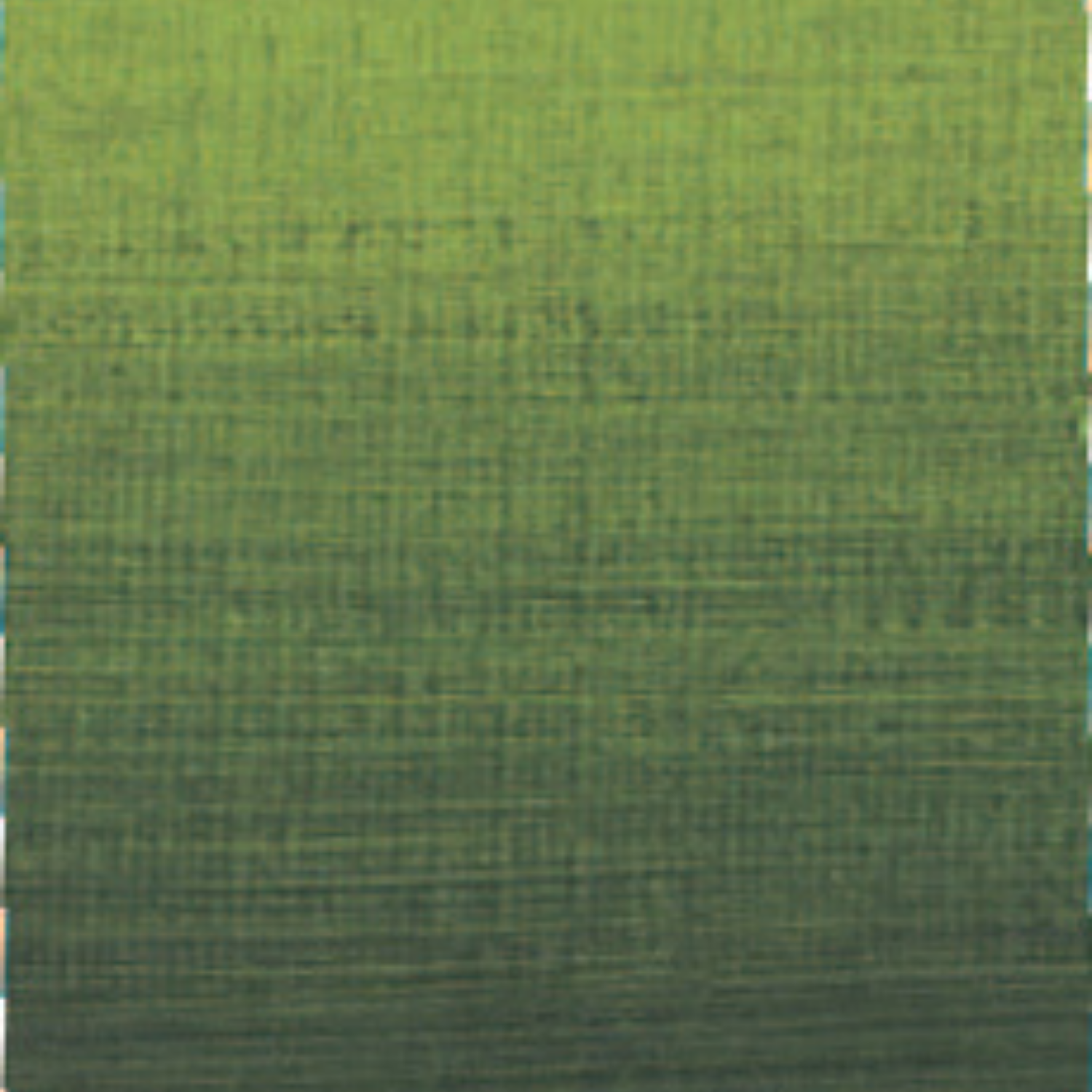
Sap Green is the most naturalistic green in oil painting, the colour that most closely matches the observed green of living foliage in normal light. Where Phthalo Green reads as vivid and chemical and Viridian reads as cool and slightly blue, Sap Green sits in the warm, yellow-green register where most plant tissue, grass, and tree foliage actually falls. Art Spectrum Studio Blend Oil Sap Green uses a modern, lightfast three-pigment formulation (PY83+PR101+PG7) that replaces the traditional plant-based sap green, which was notoriously fugitive, with a paint that delivers the same warm, muted naturalistic green permanently and with excellent transparency for glazing and layering.
What Makes This Colour Special
The warm, earthy character of Sap Green comes primarily from its PR101 (Red Iron Oxide) component, which shifts the green away from the cold, chromatic intensity of pure Phthalo Green and toward the warm, brownish-green that most plant tissue displays in natural light. This is the quality that makes Sap Green the most immediately naturalistic green on the palette. Without any mixing, Sap Green placed on the canvas reads as foliage rather than as a colour swatch, because the warm-red component already approximates the way vegetation absorbs and reflects light across the visible spectrum.
For painting Australian bush and eucalyptus, Sap Green is the foundation colour from which all other greens are built. The characteristic grey-green of eucalyptus foliage, the khaki-olive of dry summer grass, and the deep, shadowed masses of dense bush are all achievable from Sap Green as the starting point. Mixed with Paynes Grey or Raw Umber, it gives the dark green-greys of dense foliage in shadow. Mixed with Yellow Ochre, it gives the warm, sunlit face of lit foliage. Lightened with Titanium White, it gives the pale, blue-grey tone of distant Australian bush as it recedes through atmospheric haze. This single colour manages the full tonal and temperature range of Australian green subjects more naturally than any other green on the palette.
Why Art Spectrum Studio Blend Oil Belongs on Your Palette
- The most naturalistic green in oil painting. Sap Green's warm-earthy character from PR101 makes it immediately match the green of living foliage in natural light, without the chromatic intensity or coolness that makes Phthalo and Viridian greens require significant neutralising before they read as believable vegetation.
- Permanently lightfast where the original was not. Traditional sap green faded badly. This modern formulation gives the same naturalistic character permanently with ASTM I-rated pigments throughout.
- Transparent for glazing. Applied thin over dry earth colour underpainting, transparent Sap Green glazes warm ochre-brown terrain into warm, living green, preserving the luminosity and depth of the underpainting beneath.
- The essential Australian bush colour. Eucalyptus foliage, summer scrub, coastal vegetation, and the grey-green of distant Australian bush are all Sap Green territory. It is the anchor of the Australian landscape green palette in the same way that Yellow Ochre is the anchor of the warm earth palette.
- Australian-made since 1966. Art Spectrum has produced artists' materials from their Epping, Victoria facility for over six decades.
Getting the Most Out of This Tube
For landscape work, establish the full green value structure by pre-mixing three Sap Green tones before beginning: a light (Sap Green with Titanium White for pale, receding distance tones), a mid (straight Sap Green or with a touch of Yellow Ochre for sunlit foreground foliage), and a dark (Sap Green with Raw Umber for shadowed masses and the darkest understory). Having these three tones ready allows confident painting of the large green passages without constant remixing during the session.
For transparent glazing, apply Sap Green thinned with linseed oil over dry, lighter passages that need to read as shaded or cooler green. This technique is particularly effective for depicting the way canopy shadow falls across lighter ground: a glaze of Sap Green over a pale ochre-yellow ground gives the appearance of warm earth seen through the shadow of overhanging leaves, with the luminosity of the ochre showing through the transparent green.
For painting eucalyptus leaves directly, note that individual leaves are rarely a single colour. Use warmer Sap Green (with Yellow Ochre) for the lit upper leaf surfaces and cooler, darker Sap Green (with Raw Umber or Paynes Grey) for the undersides and leaves in shadow. The edges of leaves in strong light may catch the light so strongly they read almost as pale gold rather than green: add Yellow Ochre and Titanium White for these highlighted edges to correctly separate them from the body of the foliage mass.
About Art Spectrum Studio Blend Oil: Melbourne Made Since 1966
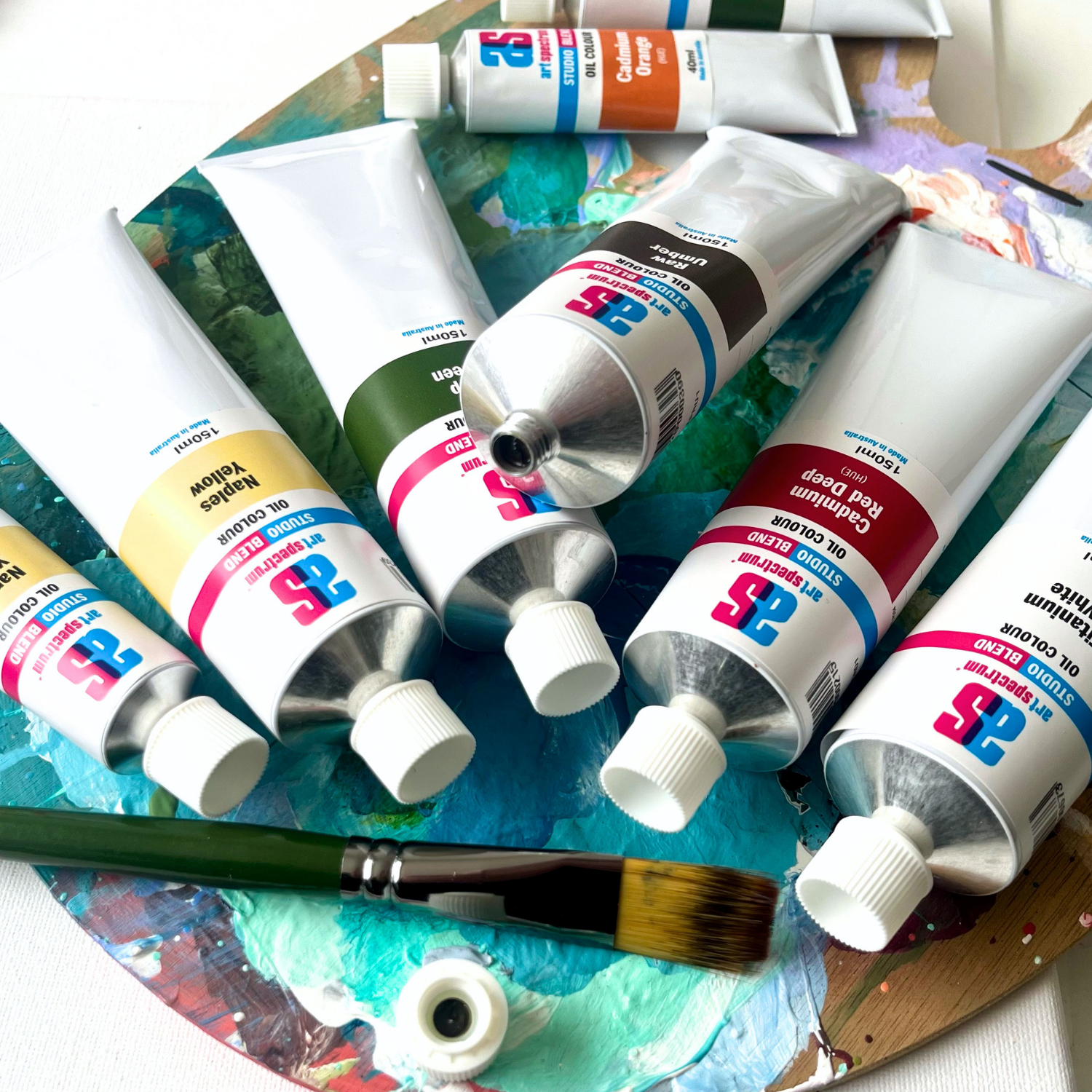
Art Spectrum has been manufacturing artists' materials in Epping, Victoria since 1966. The Studio Blend Oil range is the rebrand of the former Art Prism range, with fresh new packaging and artwork. The formula is unchanged: same pigments, same linseed oil base, same manufacturing standards. It is a studio-grade oil paint designed for working artists who want reliable, lightfast colour at a practical price. The 26-colour palette covers the complete mixing spectrum and is fully compatible with all Art Spectrum oil mediums and varnishes.
Why does Sap Green look more natural than other greens?
Sap Green contains a red-orange pigment component (PR101, Red Iron Oxide) that shifts the colour away from the cold, chromatic intensity of pure blue-green (like Phthalo or Viridian) and toward the warmer, more muted green that plant tissue displays in natural light. Most vegetation reflects some red and near-infrared light, giving it a warmer, more complex colour than a simple chromatic blue-green. Sap Green's pigment composition approximates this complexity directly, producing a green that reads as observed foliage rather than as a colour-chart green. The alternative, mixing pure chromatic greens with earths or reds to neutralise them, takes more time and materials to achieve a similar result.
Is modern Sap Green lightfast? The original was fugitive.
The traditional plant-based sap green, made from plant extracts (buckthorn berries), was notoriously fugitive and would fade significantly on exposure to light. Modern formulations of Sap Green do not use plant extracts. Art Spectrum Studio Blend Oil Sap Green uses PY83, PR101, and PG7, all of which are rated ASTM I (Excellent Lightfastness), the highest available rating. This Sap Green is fully permanent and will not fade under any normal conditions of display. The name is kept for its descriptive accuracy as a paint colour category, not for continuity with the fugitive pigment.
How do I use Sap Green for Australian bush and eucalyptus painting?
Set up three Sap Green mixes: a light (Sap Green + Titanium White, with a touch of Paynes Grey for the cool, silvery grey-green of distant eucalyptus in aerial perspective), a mid (Sap Green + small amount of Yellow Ochre for warm, sunlit mid-foliage), and a dark (Sap Green + Raw Umber for shadow masses and the darkest passages under the canopy). Work from dark to light, establishing the shadow masses first, then adding the mid tones of the main foliage, then placing the lighter highlights last. The greeny-grey character of Sap Green already approximates the distinctive silvery-grey-green of mature eucalyptus without significant adjustment, making it the correct starting point for this subject.
Can I use Sap Green as a glazing colour?
Yes. Sap Green is transparent and works well as a glazing colour. Thinned with linseed oil or a glazing medium and applied over a dried, lighter earth colour passage, it shifts warm ochre, yellow, and pale brown tones toward warm, living green. This is a useful technique for depicting shadow falling across sunlit ground, or for adjusting passages that read as too warm or too ochre after the initial lay-in. The transparency means the luminosity of the underlying layer shows through the glaze, giving greater depth than an opaque green applied directly.
Is Art Spectrum Studio Blend Oil the same as Art Prism?
Yes. Art Spectrum Studio Blend Oil is the direct successor to the Art Prism range with new packaging and artwork only. The formula, pigments, and linseed oil base are unchanged. If you have used Art Prism Sap Green previously, this product is identical in colour and performance.
Art Shed Online is an authorised Australian stockist of Art Spectrum products. All Art Spectrum Studio Blend Oil colours are sourced through official distribution channels. We ship Australia-wide.
(APSG1)
| SKU | APSG1 |
| Barcode # | 9323926000253 |
| Brand | Art Spectrum |
| Shipping Weight | 0.0168kg |
| Shipping Width | 0.055m |
| Shipping Height | 0.040m |
| Shipping Length | 0.200m |
| Shipping Cubic | 0.000440000m3 |
Others Also Bought
More From This Category