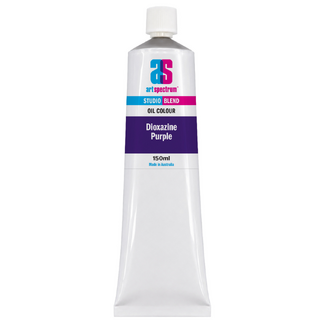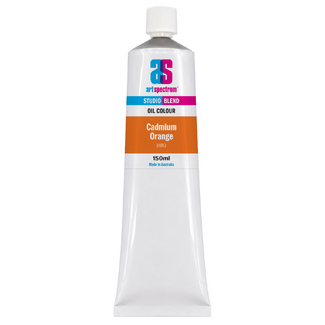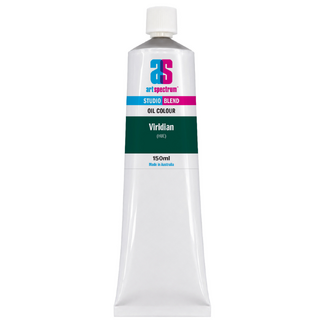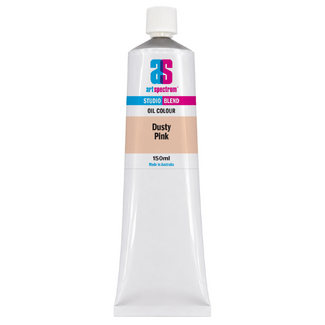


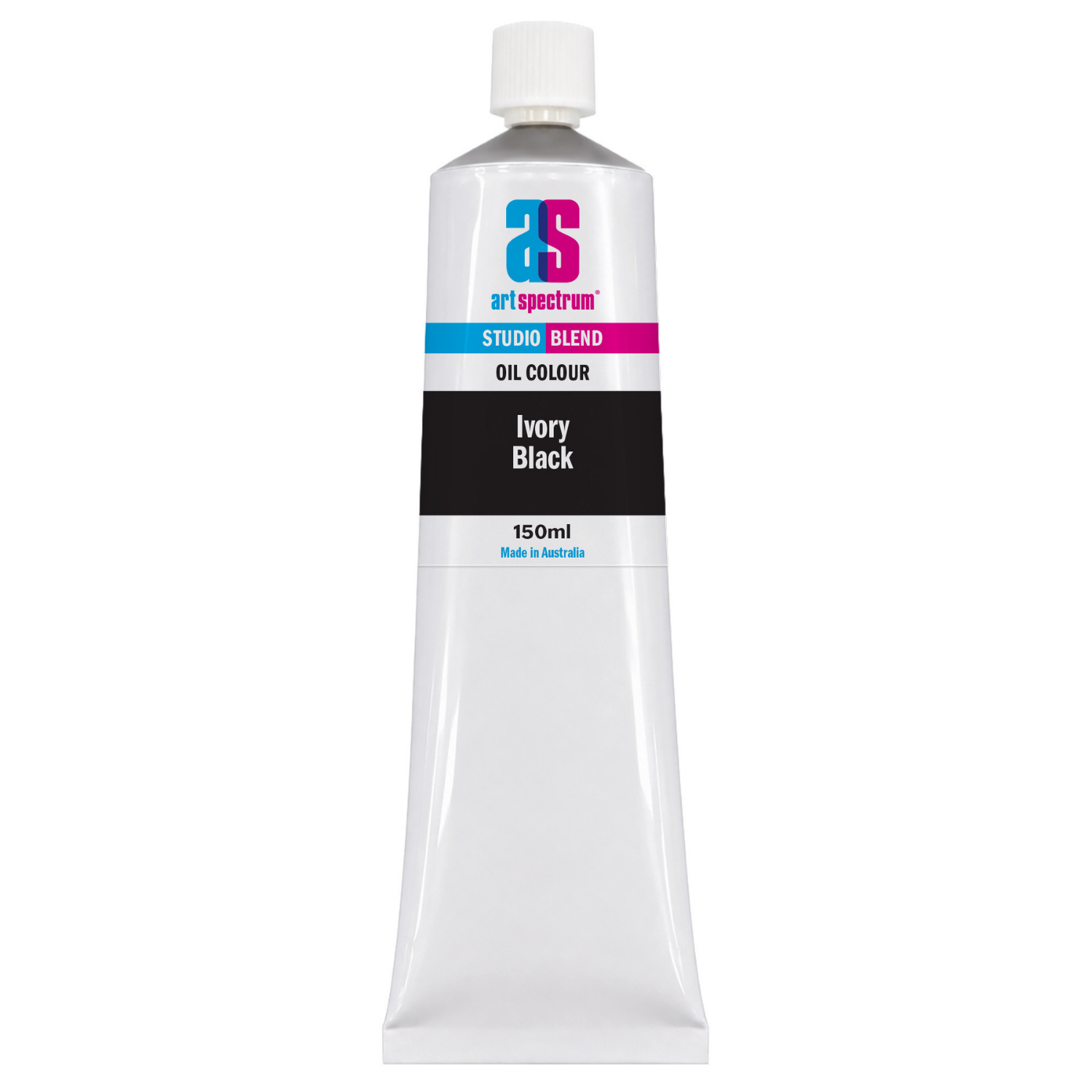
Art Spectrum Studio Blend Oil 150ml Ivory Black
Our everyday low price
or 4 interest-free installments of $9.99 with

Own it now, pay later

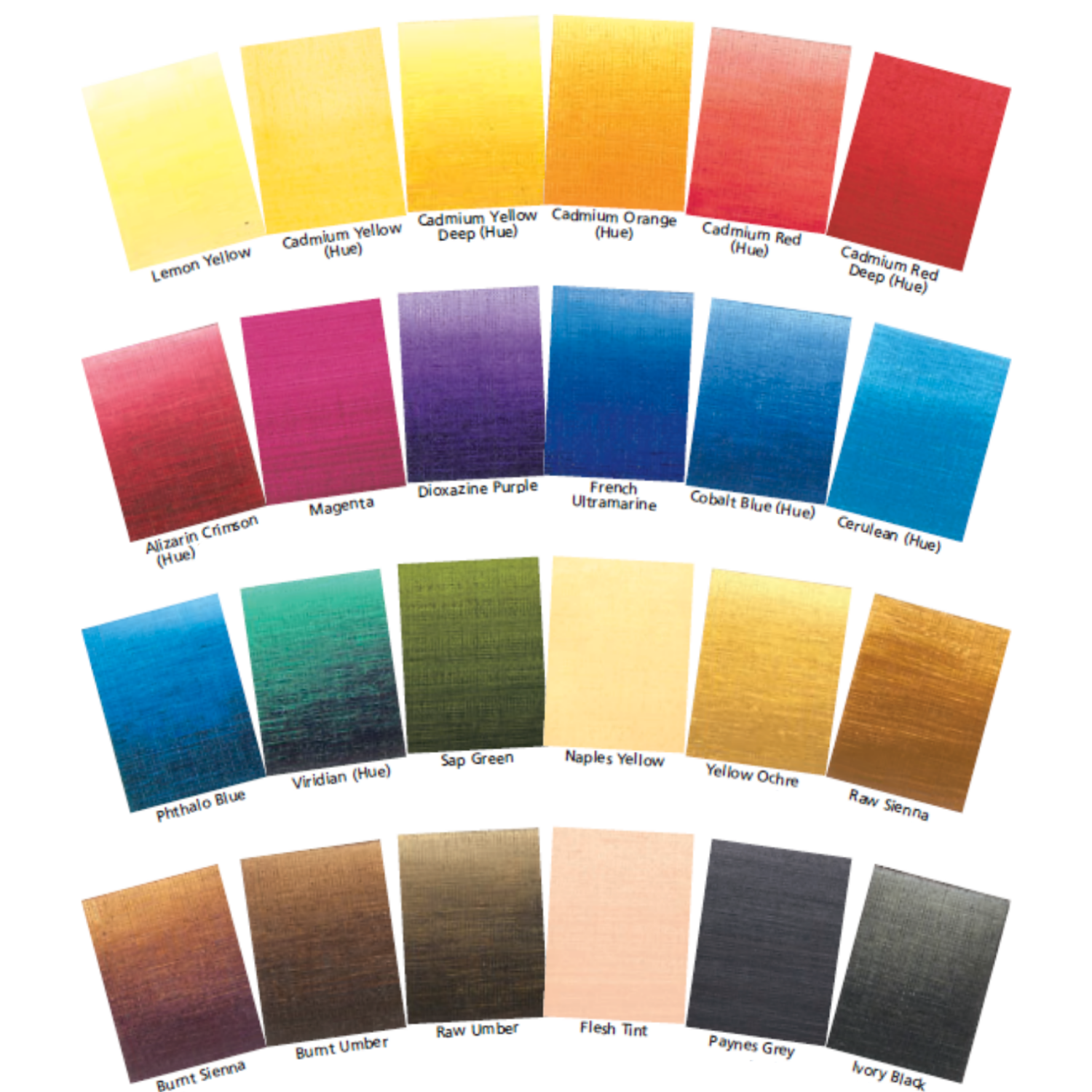
Ivory Black is the black of the Old Masters and the most widely used black in oil painting history. Made from calcined bone, it has a slight warm brownish undertone that distinguishes it from the cooler, bluer character of Lamp Black. This warmth gives it a natural affinity with the earthy, warm palette of traditional oil painting, and means the greys it produces with Titanium White lean gently toward warm rather than cold. Art Spectrum Studio Blend Oil Ivory Black uses the PBk9 pigment in its classic form: a dense, opaque, richly dark paint with the characteristic warmth and depth that has made ivory black the standard black on oil palettes for centuries.
What Makes This Colour Special
Ivory Black has been the principal black in European oil painting since at least the fifteenth century. Its slightly warm character, compared to cooler lamp black alternatives, is one of its most valued properties. When mixed with Titanium White, it produces a range of greys that lean ever so slightly warm and therefore tend to harmonise more naturally with the warm earth tones that form the backbone of traditional oil painting. The greys of stonework, weathered wood, aged linen, and overcast skies painted in this palette often match well with Ivory Black-based grey mixes precisely because those natural tones have a slight warmth of their own.
One important technical note for oil painters: PBk9 is inherently slow to dry. In thick impasto it can take considerably longer than most other colours. This is partly because the pigment itself has some oil-absorbing properties that affect the polymerisation of the linseed oil binder. Thin applications in lean early stages are not significantly affected, but heavy passages of pure Ivory Black should be allowed to dry fully before overpainting. Mixing Ivory Black into other colours will slightly slow the drying of those mixes as well, which is worth bearing in mind when planning the layering of a painting.
Many experienced oil painters use Ivory Black more for toning and grey-mixing than for darkening bright colours, where alternatives like Dioxazine Purple or Burnt Umber mixed with French Ultramarine produce richer, more luminous results. Ivory Black's greatest strengths are its role as a toned ground colour, in grisaille underpainting, in near-black shadow passages where the slight warmth of the pigment adds depth, and in producing the full range of warm grey tones for still life, figurative, and tonal landscape work.
Why Art Spectrum Studio Blend Oil Belongs on Your Palette
- The classical oil painting black. PBk9 has been on oil painters' palettes since the Renaissance. Its warm undertone and compatibility with earth pigments make it the natural choice for traditional technique.
- Warm greys straight from the mix. Ivory Black plus Titanium White produces naturally harmonious warm greys that suit the tonal ranges of most classical and representational subject matter.
- ASTM I lightfastness. Outstanding permanence. PBk9 is one of the most stable pigments in oil painting; it will not fade or change over any foreseeable timeframe.
- Ideal for toned grounds. Diluted with solvent or alkyd medium, Ivory Black tones a canvas to any desired mid-dark value quickly and uniformly. A warm toned ground speeds the painting process significantly.
- Australian-made since 1966. Art Spectrum has produced artists' materials from their Epping, Victoria facility for over six decades.
Getting the Most Out of This Tube
Respect the slow drying. In the early, lean layers of a painting, thin Ivory Black considerably with solvent or alkyd medium to ensure it dries quickly and does not trap wet paint beneath later layers. In alla prima work where the whole painting is completed in one session, the slow drying is less critical, but always avoid using thick, pure Ivory Black in early stages of multi-session work.
For a grisaille underpainting, mix Ivory Black with Titanium White in the proportions needed for a full value scale from near-white to near-black, and block in the tonal structure of the composition before adding colour in subsequent sessions. The warm grey palette this produces is an excellent foundation for glazed colour layers.
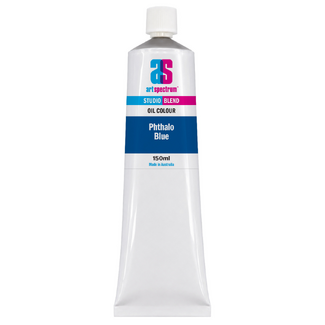
For mixing greens of great depth and naturalism, add small amounts of Ivory Black to yellow greens made from Cadmium Yellow Hue and Viridian Hue or Phthalo Blue. The black drops the value and slightly mutes the saturation, producing the range of dark, complex greens seen in dense Australian bush foliage and deep-shadow tree canopy. Begin with far less black than you think you need and build up slowly.
About Art Spectrum Studio Blend Oil: Melbourne Made Since 1966
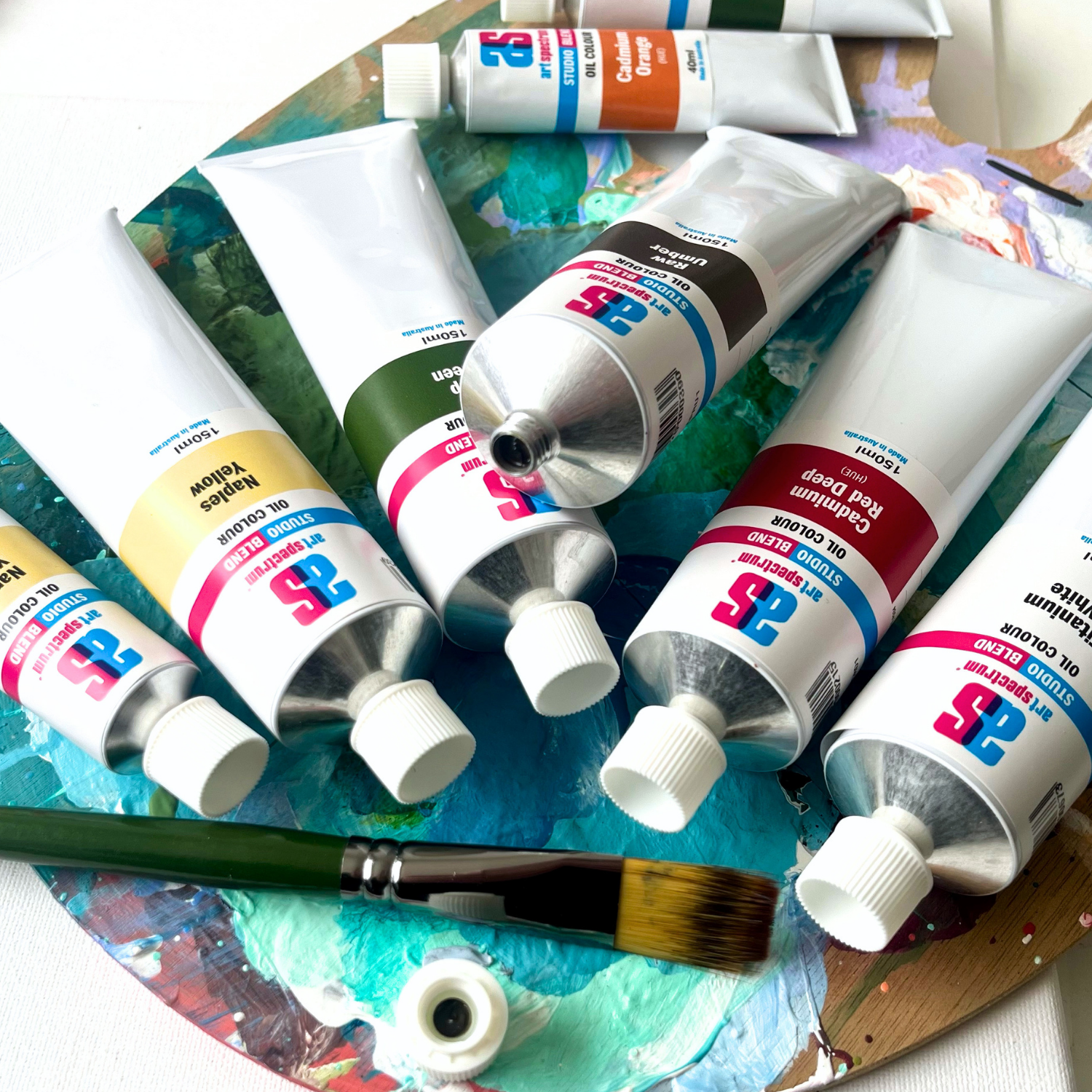
Art Spectrum has been manufacturing artists' materials in Epping, Victoria since 1966. The Studio Blend Oil range is the rebrand of the former Art Prism range, with fresh new packaging and artwork. The formula is unchanged: same pigments, same linseed oil base, same manufacturing standards. It is a studio-grade oil paint designed for working artists who want reliable, lightfast colour at a practical price. The 26-colour palette covers the complete mixing spectrum and is fully compatible with all Art Spectrum oil mediums and varnishes.
What is the difference between Ivory Black and Lamp Black in oil painting?
Ivory Black (PBk9, bone black) has a slight warm, brownish undertone and produces warm greys when mixed with white. Lamp Black (PBk7, carbon black) is cooler and bluer, producing cool blue-grey tones with white. Ivory Black is generally preferred for warm-palette and earth-tone based painting because its greys harmonise naturally with ochres, siennas, and umbers. Lamp Black suits cooler, more neutral palettes. Both have outstanding lightfastness. Art Spectrum Studio Blend Oil includes Ivory Black as the standard black for the range.
Why does Ivory Black dry so slowly?
Ivory Black (PBk9) is made from calcined bone, which contains calcium phosphate. This material absorbs some of the drying oils used as the binder, which interferes with the normal polymerisation process that cures oil paint. The result is significantly slower drying compared to most other oil colours, particularly in thick applications. Thin layers with plenty of medium will dry more quickly. To speed drying in thick passages, use an alkyd-based medium or ensure the paint is applied as thinly as practical. Colours mixed with Ivory Black will also dry somewhat more slowly than usual.
Should I use Ivory Black to darken colours in oil painting?
With some caution. Black is effective for darkening values but tends to desaturate and deaden the colours it is mixed into, pushing them toward grey. For darkening earth tones, ochres, and siennas in shadow passages, a touch of Ivory Black often works well because those colours have a natural affinity with warm darks. For brightening the dark version of more saturated colours (blues, greens, reds), it is usually better to darken with a darker version of the same colour or a complementary dark rather than black. Dioxazine Purple, Raw Umber, or dark versions of the same hue typically give more luminous shadow tones.
What is grisaille underpainting and why use Ivory Black for it?
Grisaille is a monochromatic underpainting technique in which the full tonal (light and dark) structure of a composition is established using only black and white before colour is added in subsequent layers, typically as transparent glazes. Ivory Black is the traditional pigment for this technique because its warmth and compatibility with the earth tones used in classical oil painting makes the underlying tonal structure harmonise naturally with the glazed colour layers above. The grisaille approach allows the painter to resolve tonal problems before committing to colour, simplifying the painting process significantly.
Is Art Spectrum Studio Blend Oil the same as Art Prism?
Yes. Art Spectrum Studio Blend Oil is the direct successor to the Art Prism range with new packaging and artwork only. The formula, pigments, and linseed oil base are unchanged. If you have used Art Prism Ivory Black previously, this product is identical in colour and performance.
Art Shed Online is an authorised Australian stockist of Art Spectrum products. All Art Spectrum Studio Blend Oil colours are sourced through official distribution channels. We ship Australia-wide.
(APB1)
| SKU | APB1 |
| Barcode # | 9323926000413 |
| Brand | Art Spectrum |
| Shipping Weight | 0.0168kg |
| Shipping Width | 0.055m |
| Shipping Height | 0.040m |
| Shipping Length | 0.200m |
| Shipping Cubic | 0.000440000m3 |
Others Also Bought
More From This Category