


| Quick answer: Calligraphy supplies fall into two worlds. Flexible brush pens suit quick, modern lettering, while steel nibs, holders and ink suit traditional scripts. To get started you need a nib, a holder, ink and smooth paper that can take it, and a complete set is the usual starting point because the parts are matched for you. |
Calligraphy covers everything from a flexible brush pen used to write a place card to a pointed steel nib in an oblique holder, used for wedding invitations. The supplies for each are almost entirely different, so it helps to know which kind of lettering you want before you buy. This page is the full range of calligraphy supplies at Art Shed, and each type has its own dedicated section: calligraphy pens, brush pens, lettering markers and complete calligraphy sets.
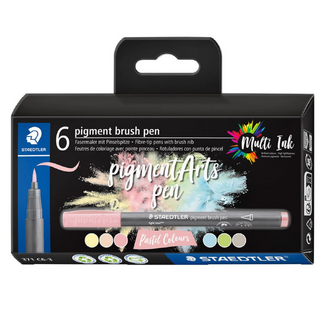
If you're after something to get you lettering today, our Calligraphy Beginner Essentials Kit comes with an introductory guide, and the Faber-Castell Pitt Artist Pen hand lettering set is a ready-made option for brush-style lettering. For more, browse our wider art pens. Fast Australia-wide shipping on every order.
What You Need to Start Calligraphy
What do I need to start calligraphy?
You need four things: a nib, a holder, ink and smooth paper that can handle wet ink. The nib shapes your style, the holder has to fit the nib, and the ink and paper decide whether your lines stay crisp. A complete calligraphy set matches the parts for you.
Each choice commits you to something, so here is what to look for:
- Nib: Nibs vary in flexibility and width. A flexible pointed nib produces thick and thin strokes from pressure alone, while a firmer or chisel-shaped nib gives a more consistent line.
- Holder: Holders come straight or oblique. An oblique holder has an angled fitting that holds the nib at a slant, which suits some scripts (more on that below).
- Ink: It needs to be thin enough to flow off the nib, but not so thin that it spreads on contact with the paper.
- Paper: It needs to be smooth and sized, which means treated so ink sits on the surface instead of soaking in.
This is why a complete set is the usual starting point. It pairs compatible parts and removes the risk of buying a nib that doesn't fit your holder. See our calligraphy sets for ready-matched options, or our calligraphy pens if you want to choose each part yourself.
One detail catches out most beginners. New steel nibs ship with a factory coating that repels ink, so ink beads up and won't flow. Wash a new nib gently with a little toothpaste or washing-up liquid on an old toothbrush, then rinse and dry it thoroughly. Some calligraphers pass a nib very briefly through a flame instead, but the steel is thin, so holding it there can blacken or weaken it. Washing is the safer way.
Modern Brush Lettering or Traditional Pointed and Broad Edge Pens
What is the difference between pointed pen, broad edge and brush lettering?
Each one makes thick and thin strokes in a different way. Pointed pens spread their tines under pressure. Broad edge pens change thickness with stroke direction. Brush pens flex their tips. Brush pens are the fastest way in, while metal nibs take more setup but last far longer.
The real difference between the three routes is how stroke thickness is made:
- Pointed pen scripts such as Copperplate and Spencerian use a flexible metal nib. Pressing down spreads its two tines, the halves of the nib tip, so more ink flows and the stroke widens. Easing off gives a fine hairline. These scripts are written at a steep slant, which is why an oblique holder helps, particularly for right-handed writers.
- Broad edge scripts such as Gothic, Italic and Uncial use a chisel-shaped nib held at a fixed angle. Thickness comes from the direction of the stroke, not from pressure, so pressure control matters far less.
- Modern brush lettering uses a flexible brush tip or brush pen. There's no dipping, cleaning or ink to manage, so it's the fastest route in for anyone starting from scratch, which is why it dominates hand lettering and bullet journalling.
If you're drawn to the modern look, start with our brush pens or lettering markers. There's an honest trade-off to know about, too. Brush pens are convenient, but their tips soften and fray with use. Metal nibs are replaceable and last far longer per dollar.
Choosing Ink and Paper That Will Not Feather or Bleed
What paper is best for calligraphy?
Smooth, sized paper is best. Hot pressed, marker and Bristol papers resist ink spreading, and a hard, smooth finish and good weight matter more than brand. A cheap smooth paper beats an expensive textured watercolour paper, because texture catches the nib.
The reason is how paper absorbs ink. Standard copy paper is unsized and absorbent, so ink wicks along the paper fibres, which is what feathering is, and soaks through to the other side, which is bleed through. Smooth, sized surfaces resist both. Texture is the enemy for a nib too, because the tooth of the paper catches the tip and splays the tines apart. Our Bristol paper is a good place to start.
What type of calligraphy ink should I use?
Choose by the job. Water-based inks suit practice and everyday work. Shellac and sumi-based inks give a dense, opaque black that sits on the surface. Acrylic and metallic inks add colour and coverage on dark paper, but dry hard, so wash your nib straight away.
That last point matters. Acrylic ink dries hard and will ruin a nib that isn't washed immediately. Browse our full range of drawing inks to compare.
Calligraphy Styles at a Glance
| Style | How thickness is made | Good to know |
|---|---|---|
| Pointed pen (Copperplate, Spencerian) | Pressure spreads the nib's tines | Suits an oblique holder. Takes practice, and nibs are replaceable. |
| Broad edge (Gothic, Italic, Uncial) | Stroke direction against a fixed nib angle | Pressure control matters far less |
| Brush lettering | A flexible brush tip | No dipping or ink. Tips soften with use. |
Calligraphy FAQs
What is the difference between a calligraphy pen and a fountain pen?
A calligraphy pen is built to vary line thickness for lettering. Dip pens use a replaceable nib you dip into ink, and brush pens and markers have flexible or chisel tips. A fountain pen holds its own ink and is designed for everyday writing at a steady line width. Browse our calligraphy pens.
Do I need an oblique holder as well as a straight holder?
Not at the start. A straight holder works for broad edge scripts and many modern styles. An oblique holder helps with the steep slant of Copperplate and Spencerian, especially for right-handed writers. Start with one, and add the other if you move into pointed pen scripts.
How do I clean and store metal nibs so they do not rust?
Rinse the nib in clean water after every session and dry it thoroughly with a soft cloth, taking care that no fibres catch between the tines. Never leave a nib sitting in ink or damp, because thin steel rusts quickly. Store nibs dry.
Are calligraphy inks waterproof once dry?
It depends on the ink. Water-based inks are usually not waterproof and can lift or smudge if they get wet. Shellac-based and acrylic inks are generally waterproof once dry. Check the label, and let lettering dry fully before painting a wash over it.
What are the best calligraphy supplies to buy as a gift for a complete beginner?
A complete calligraphy set, because the parts match and nothing is missing on the day. Add a pad of smooth paper, and consider a brush pen for instant results while they learn nib control. It's also a lovely gift for anyone who likes making cards.