





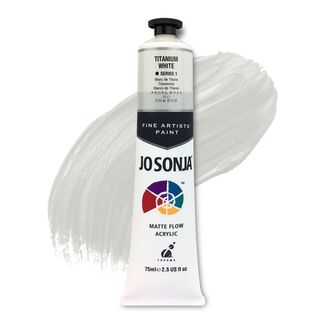
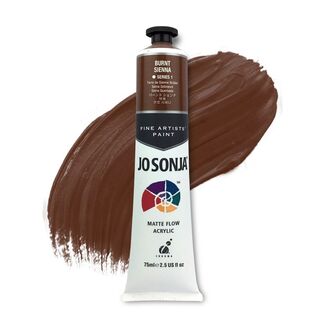
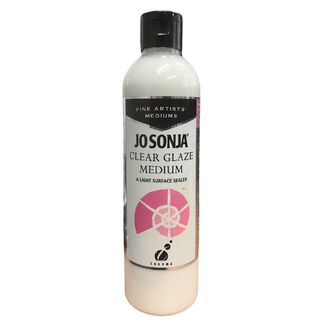
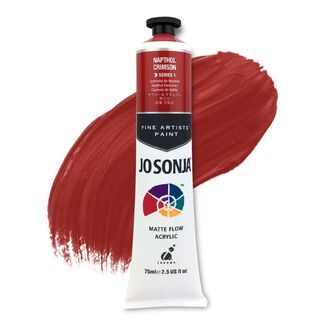
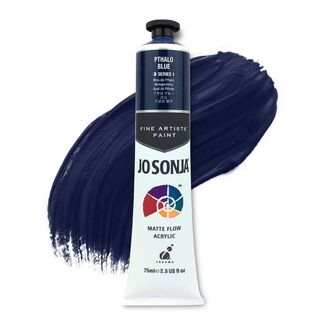
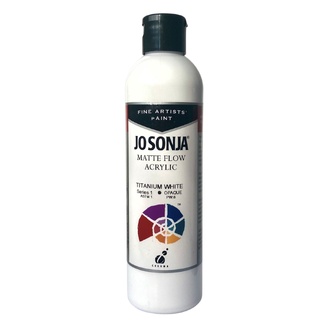
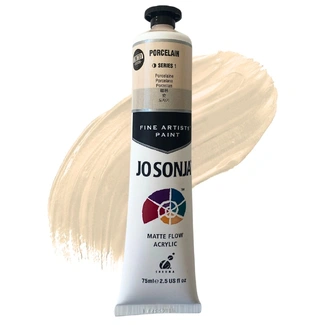
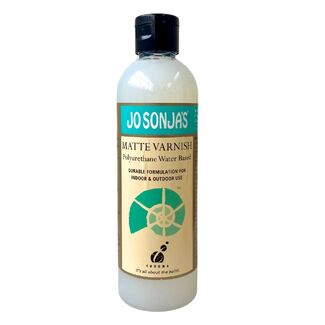
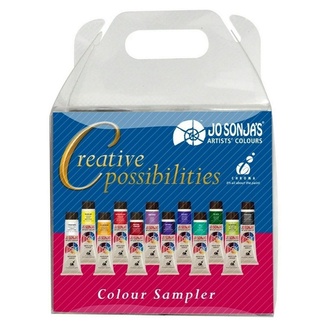
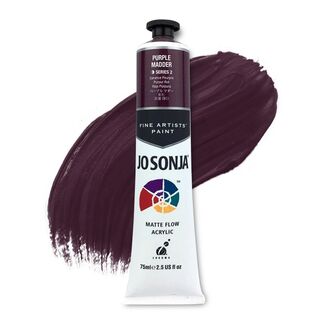
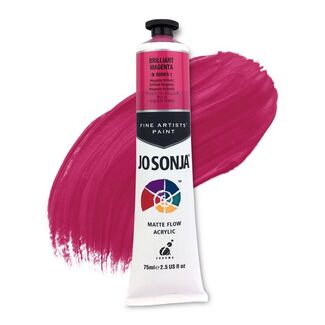
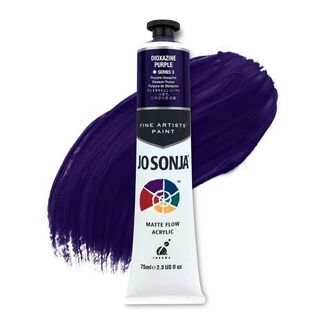
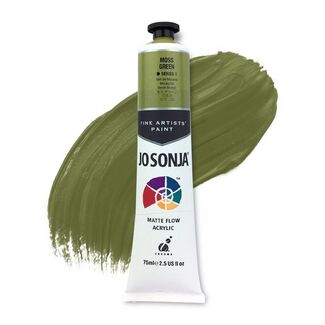
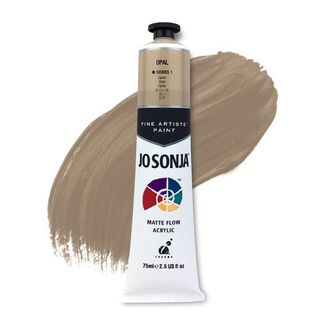
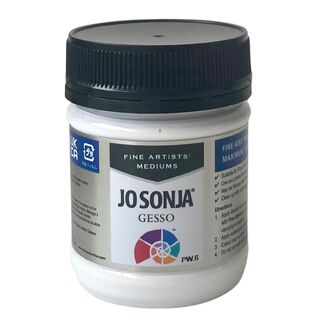
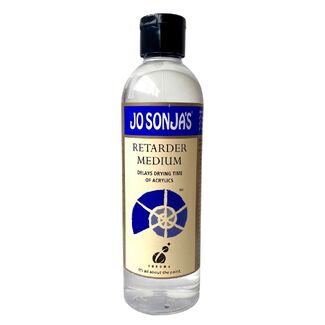
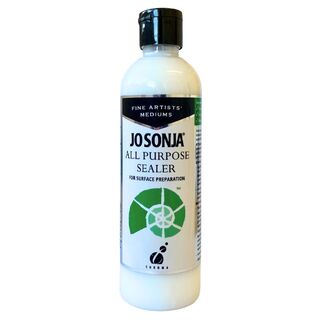
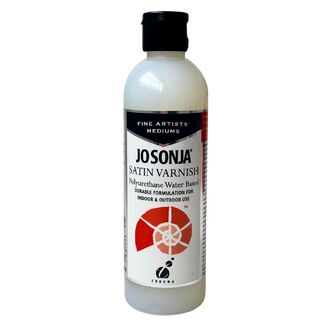
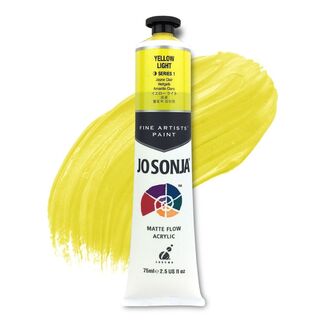
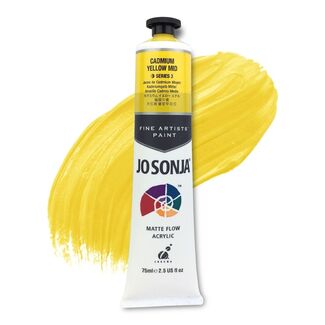
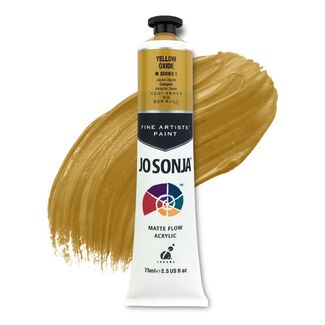
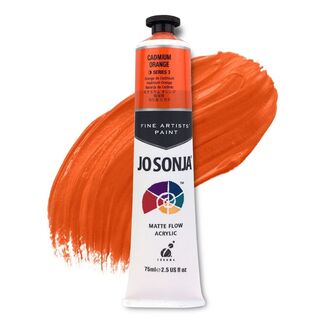
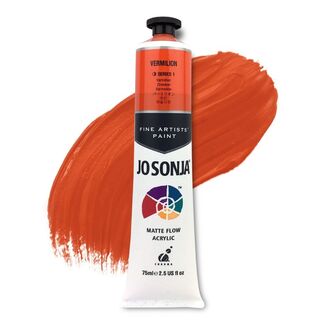
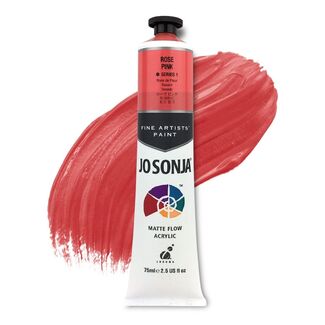
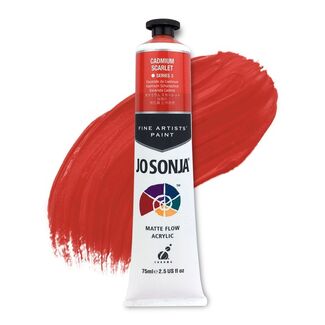
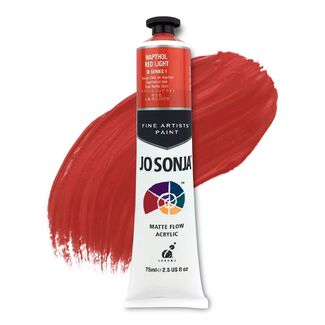
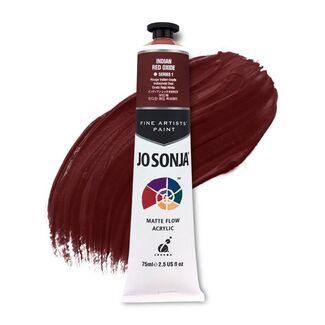
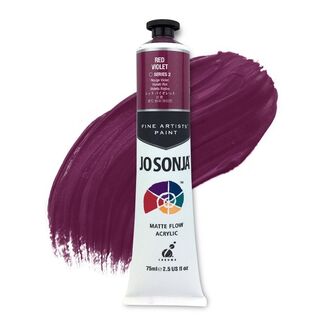
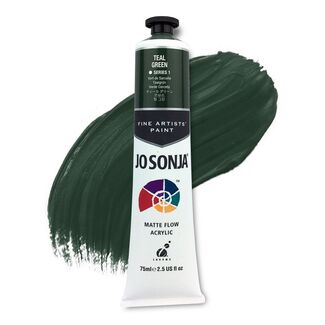
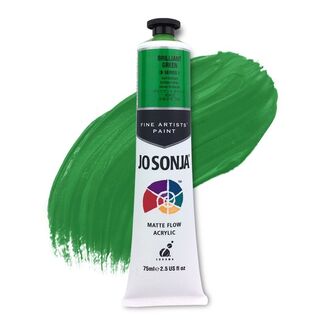
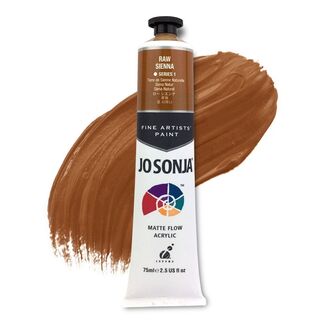
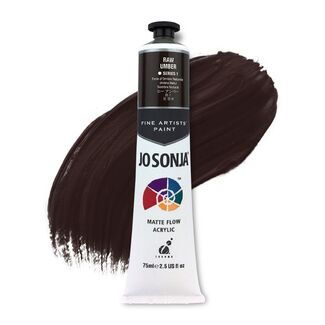
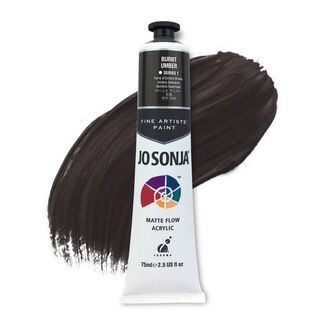
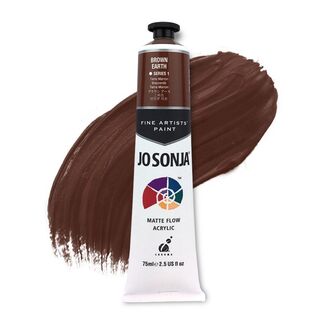
Jo Sonja's has been the reference point for decorative and folk art acrylics since 1985, when Chroma developed the range with folk artist Jo Sonja Jansen. What matters more than the history is how the paint actually behaves, because it isn't a straightforward substitute for a standard artist acrylic, it's formulated specifically for smooth, opaque, matte coverage, and it responds differently to thinning than most acrylics do. Art Shed stocks 161 Jo Sonja products across paint and mediums.
The one thing worth knowing before you thin it
Jo Sonja is a flow-formula acrylic, which already makes it smoother and easier to lay down in clean, even coats than a standard heavy-body acrylic paint. The gotcha is what happens when you thin it. Chroma's own guidance is direct on this: thinning with water, rather than their Flow Medium, can over-dilute the paint and weaken its coverage and adhesion to the surface. This matters specifically for decorative work, where basecoating in thin, even layers is the standard technique, reach for Flow Medium rather than water when you need to loosen the paint for a smooth basecoat, and keep water to a minimum. It's a small distinction, but it's the difference between a clean basecoat and a patchy one that doesn't want to hold to the surface.
What the matte flow formula is actually for
The finish is matte by design, not by limitation, folk art and tole painting rely on flat, clean colour rather than the sheen of a satin or gloss acrylic, and Jo Sonja is built around that from the ground up. Strong pigmentation means coverage stays even across a piece, which matters more in decorative work than in painterly, textured techniques where brush marks are part of the effect.
Surfaces and finishing
The range works across wood, canvas, terracotta, metal, fabric, ceramics, glass, and paper, which is a wider surface list than most decorative paints attempt, part of why Jo Sonja shows up as often on painted furniture and homewares as it does on canvas. For anything that will be handled regularly, such as furniture or functional homewares, a sealer or varnish over the finished paint protects it; for canvas or paper work intended for display, sealing is optional rather than necessary.
Frequently asked questions
Should I thin Jo Sonja paint with water or with a medium?
Chroma recommends their own Flow Medium for thinning, since water alone can over-dilute the paint and reduce both coverage and adhesion. Keep water to a minimum and use Flow Medium when a smoother, thinner basecoat is needed.
What is the difference between Jo Sonja and a standard artist acrylic?
Jo Sonja is a flow-formula acrylic developed specifically for decorative and folk art painting, with a matte finish and a smoother, more forgiving consistency for basecoating than the satin or gloss finish and thicker body typical of standard artist acrylics.
Is Jo Sonja suitable for beginners?
Yes. Its smooth flow and forgiving handling make it accessible to beginners, particularly for folk art and tole painting techniques that rely on clean, controlled basecoats rather than heavy texture.
What surfaces can Jo Sonja paint be used on?
Wood, canvas, paper, terracotta, metal, fabric, ceramics, and glass, making it suited to both painting on canvas and decorative craft work on functional objects.
Do I need to seal or varnish a piece painted with Jo Sonja?
For items that will be handled, such as furniture or homewares, a sealer or varnish protects the finish. For paintings on canvas or paper intended for display rather than handling, sealing is optional.
How many Jo Sonja products does Art Shed stock?
161, spanning the core acrylic paint range and the mediums that support decorative technique, including Flow Medium.
Not sure whether to thin with water or medium for your project, or which sealer suits what you're painting on? Send our team a photo of the piece, and we'll help you get the finish you're after.