





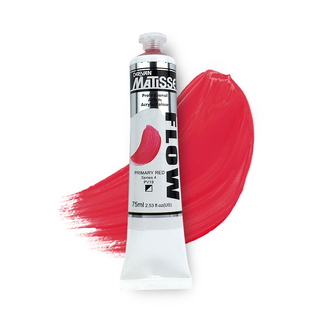
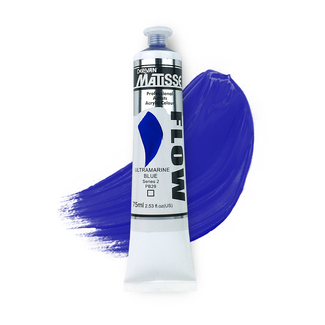
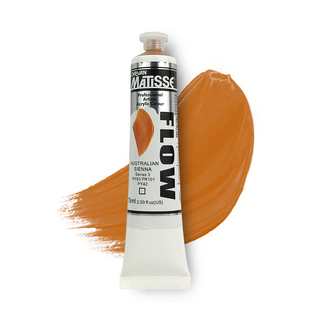
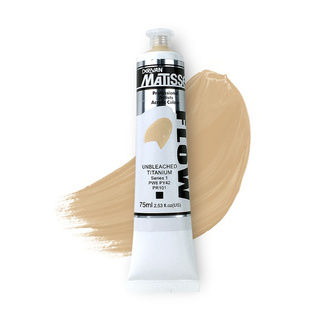
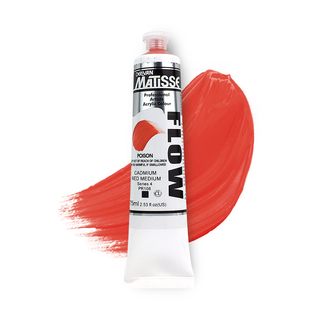
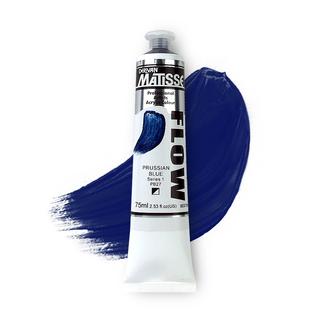
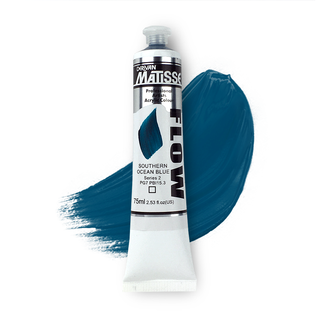
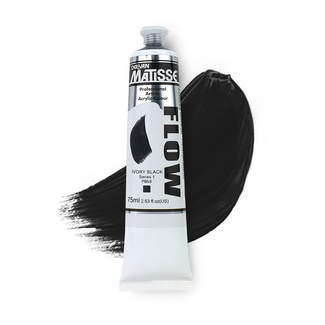
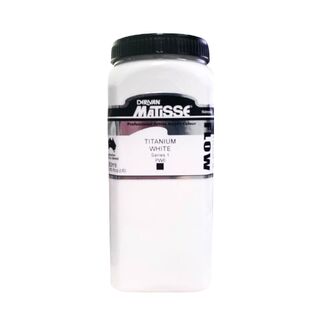
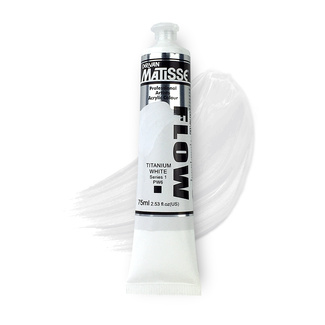
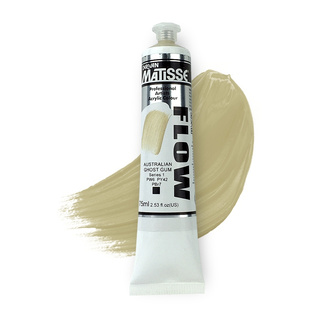
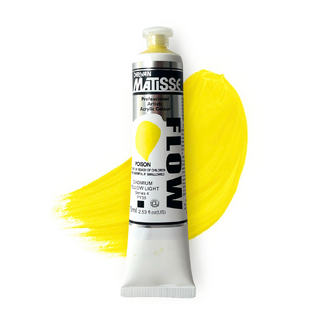
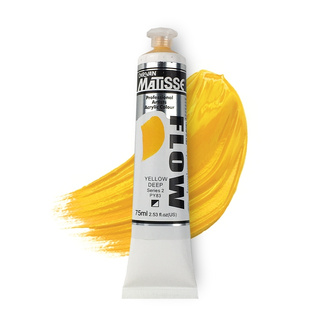
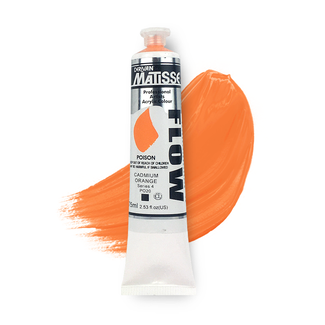
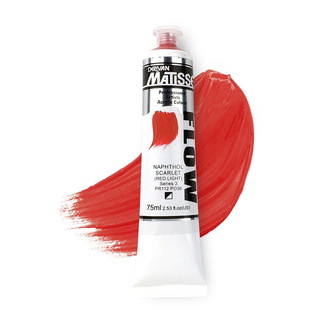
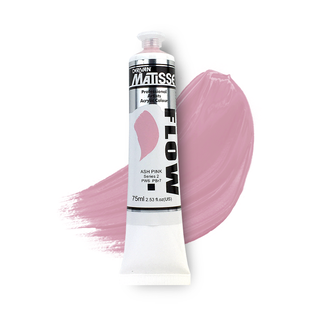
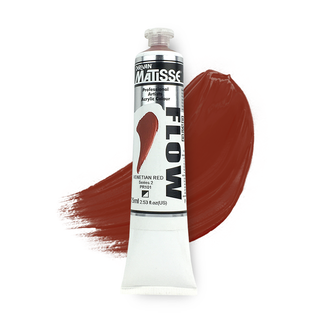
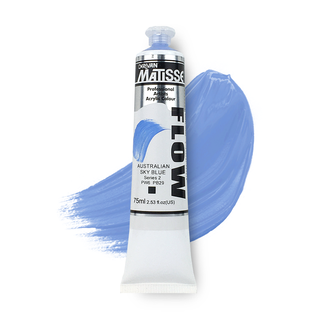
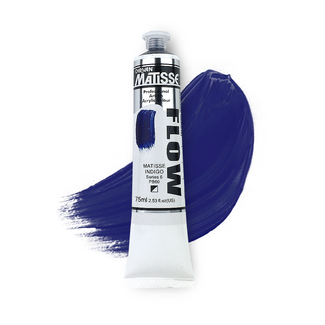
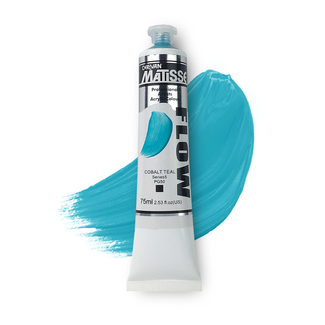
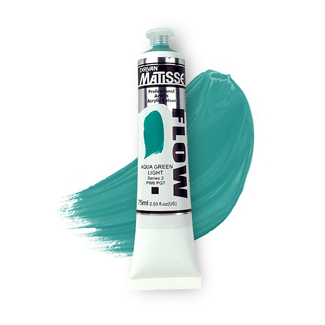
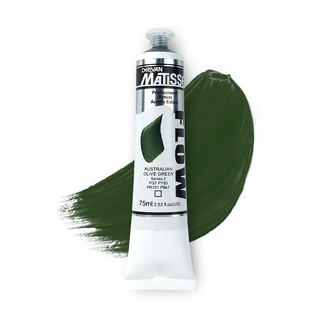
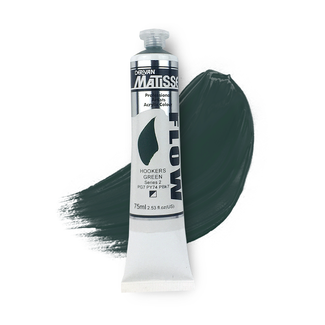
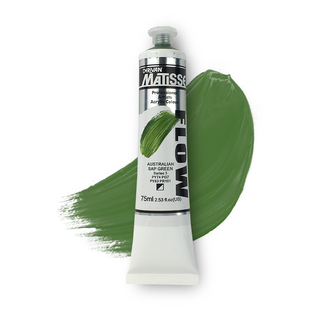
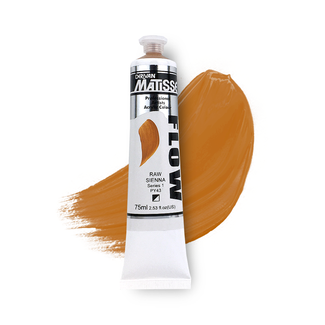
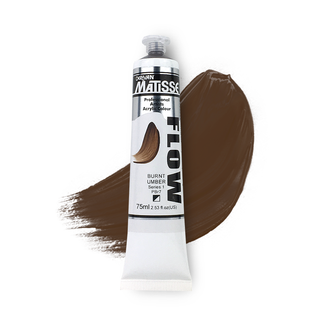
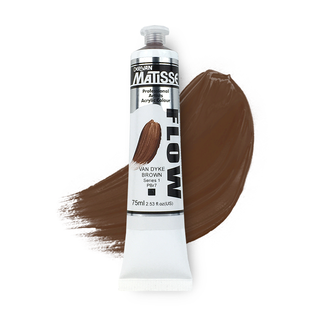
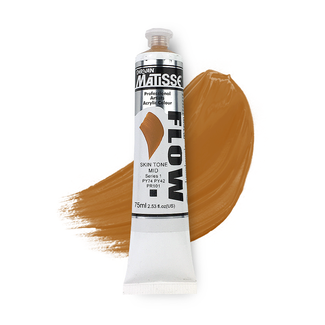
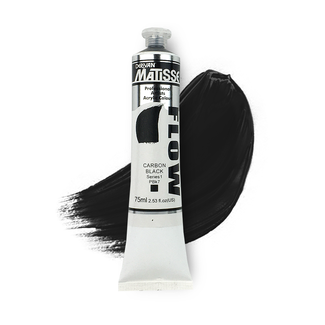
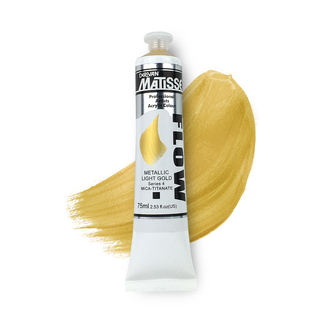
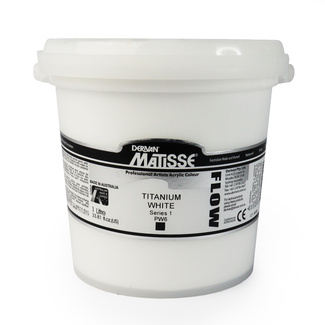
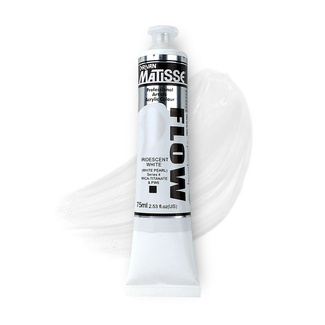
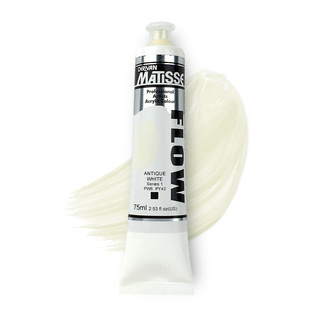
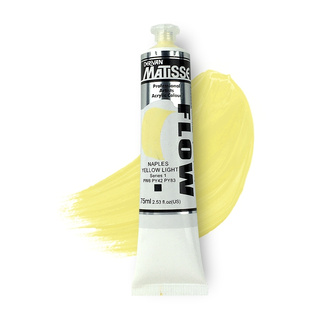

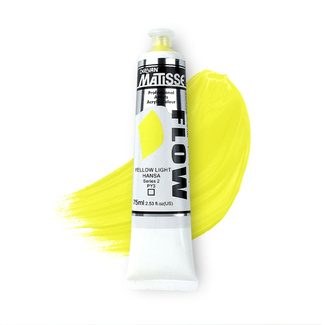
For artists who want acrylic paint that moves effortlessly without sacrificing colour strength, Matisse Flow Acrylic offers an exceptionally versatile solution. Developed with a lower viscosity than traditional heavy-bodied acrylics, Matisse Flow delivers smooth, fluid application while maintaining the high pigment loading associated with Matisse Structure Acrylics.
Available from Art Shed, Matisse Flow is a professional-quality acrylic that’s suited to everything from detailed brushwork and large washes to contemporary fluid art and pouring. Its free-flowing consistency gives artists greater control over how paint travels across a surface, making it easier to create smooth transitions, flowing marks and expressive effects.
The Benefits of Low-Viscosity Matisse Flow Acrylics
The defining feature of Matisse Flow is its low-viscosity consistency. Unlike thick, heavy-bodied acrylics, Flow is trained in the ways of moving readily across canvas and paper, allowing artists to achieve smooth, level applications without relying on excessive dilution.
That makes it useful for a remarkably broad range of techniques. Illustrators can use it for fine details and controlled lines, while muralists and large-scale artists can take advantage of its ability to cover broad areas efficiently. It is equally useful for artists who prefer their paint to move freely and naturally across the surface.
Despite its thinner consistency, Matisse Flow does not simply sacrifice pigment for fluidity. Its strong colour intensity allows artists to create vibrant washes, gradients and layered applications while maintaining the character expected from a professional acrylic.
For traditional painting, its fluid nature can be particularly effective when smooth transitions and precise details are more important than thick texture. Explore our wider acrylic paint range to compare different consistencies.
Using Matisse Flow for Fluid Art and Pouring
Matisse Flow is particularly well suited to fluid art and acrylic pouring, where paint needs to move predictably across a surface. Its already-fluid consistency means less effort is required to achieve a pourable consistency compared with thicker acrylics.
When combined with a suitable pouring medium, Matisse Flow can create flowing colour interactions, cells, lacing and other distinctive pouring effects. The paint’s strong pigmentation also helps finished pieces retain vibrant colour rather than appearing overly diluted.
Experiment with different paint-to-medium ratios to find the consistency that suits your technique and desired effects. For best results, work on an appropriate canvas and allow the finished artwork to dry according to the product instructions.
Frequently Asked Questions
What is the difference between Matisse Flow and Matisse Structure?
The key difference is viscosity. Flow is thin and fluid, making it ideal for smooth applications and flowing techniques, while Structure is thick and heavy-bodied for impasto and textured applications.
Do I need to dilute Matisse Flow for fluid art?
Although Flow is already low-viscosity, a suitable pouring medium is recommended to achieve optimal movement and help create effects such as cells and lacing.
Can Matisse Flow be used for traditional canvas painting?
Absolutely. Its smooth consistency makes it particularly useful for fine details, washes, gradients and controlled transitions.
Is Matisse Flow lightfast and professional quality?
Matisse Flow uses the same high-quality pigments as the Structure range and is designed as a lightfast, archival-quality acrylic.
Can I mix Matisse Flow with other acrylic brands?
Yes. It can generally be mixed with compatible artist-grade acrylic paints and mediums. Always test combinations before committing to a finished artwork.