






Faber-Castell Pencils, Pens & Art Sets
Art Shed stocks the full Faber-Castell range in Australia, 150 products across Polychromos, Albrecht Dürer, Pitt Artist, Goldfaber, Black Edition, Castell 9000, Grip and Creativity for Kids. We are an Australian art supplies retailer with stores in Moorabbin, Melbourne and West End, Brisbane, and we ship Australia wide.
Faber-Castell have been making pencils in Stein, near Nuremberg, since 1761, and the company is still run by the founding family. That matters less as history than as manufacturing: they bond the lead to the casing along its full length, which is why a Faber-Castell pencil survives being dropped when other pencils shatter internally and crumble every time you sharpen them.
Polychromos: the flagship
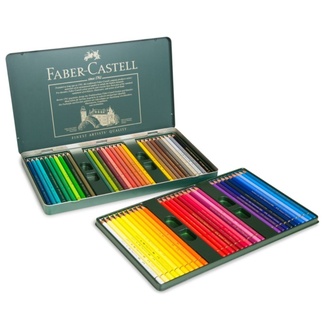
Polychromos is Faber-Castell's flagship colour pencil and the range the company is best known for. It has been in production since 1908, it runs to 120 colours, and it is the pencil a large share of professional colour pencil artists work in. If you have heard one Faber-Castell name, it is this one.
What sets it apart is the binder. Polychromos is oil-based, and it is the only Faber-Castell colour pencil range that is. No wax means no wax bloom, the cloudy film that surfaces on wax-pencil drawings weeks after they are finished. It also means the point sharpens finer and holds longer, the colour layers eight or ten deep before the paper gives up, and the lightfast colours stay put. That combination is why botanical and portrait artists standardise on it and stay there.
Which Faber-Castell range do you need?
Faber-Castell make several colour pencil ranges and they are not simply better and worse versions of each other. The binder is what separates them, and the binder decides what the pencil can do.
| Faber-Castell range | What it is | Best for |
|---|---|---|
| Polychromos | Oil-based colour pencil | Professional work, layering, burnishing |
| Albrecht Dürer | Watercolour pencil | Washes, botanical work, travel sketching |
| Goldfaber | Wax-based colour pencil | Students and serious hobbyists |
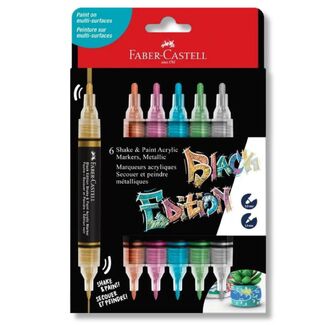
| Black Edition | Soft wax colour pencil, black barrel | Colouring, blending, a first set |
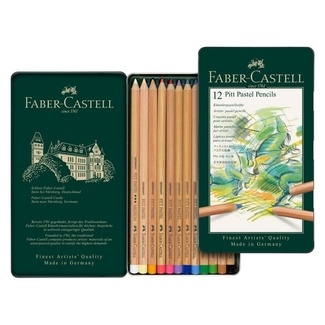
| Pitt Pastel | Dry pastel in pencil form | Portraits, controlled pastel detail |
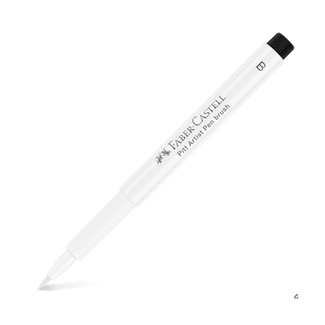
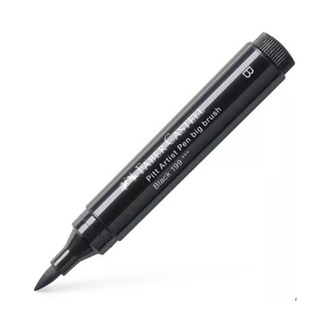
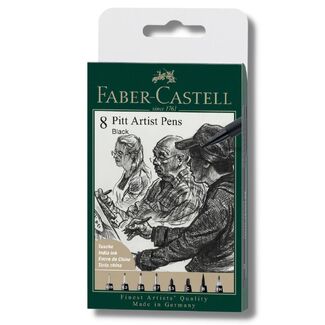
| Pitt Artist Pen | Pigmented India ink pen | Line work, lettering, ink that will not fade |
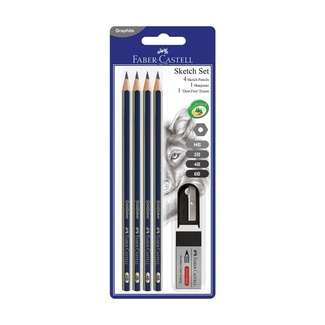
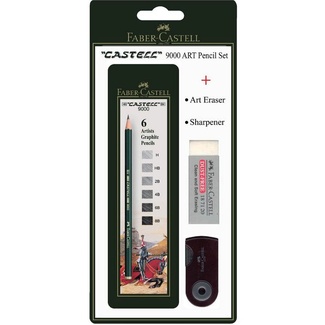
| Castell 9000 | Graphite pencil, 16 grades | Drawing, shading, technical work |
| Grip 2001 | Graphite pencil with grip dots | Everyday writing, school, note taking |
The questions people actually ask
What is the difference between Polychromos and Albrecht Dürer?
Polychromos is oil-based and stays where you put it. Albrecht Dürer is a watercolour pencil and dissolves when you add water. Both are Faber-Castell professional ranges with the same pigment quality and the same lightfastness ratings, so this is a choice about technique, not about which is better. Polychromos suits layering, burnishing and dry work that needs crisp edges. Albrecht Dürer suits washes, botanical illustration and anyone who travels with a waterbrush. Plenty of people own both and use them on the same page. Start with the Polychromos tin of 36 or the Albrecht Dürer tin of 36.
Is Polychromos wax-based or oil-based?
Polychromos is oil-based, and it is the only Faber-Castell colour pencil range that is. Because there is no wax in the binder, Polychromos does not develop wax bloom, the cloudy film that appears on wax-pencil drawings weeks after you finish them. It also sharpens to a finer point and holds it longer, which is why it is the range botanical and portrait artists tend to standardise on.
Polychromos or Goldfaber, is the step up worth it?
Polychromos is Faber-Castell's oil-based professional pencil; Goldfaber is their wax-based student range. The practical difference is layering. Polychromos will take eight or ten layers before the tooth of the paper fills, where a wax pencil clogs sooner and starts resisting. If you are building up realistic work in layers, that difference is the whole job. If you are colouring, sketching, or still deciding how serious you are, Goldfaber Aqua does the work without the outlay.
What is the difference between Black Edition and Polychromos?
Both are Faber-Castell. Black Edition is a soft wax pencil built for colouring and blending; Polychromos is the oil-based professional pencil built for finished work. Black Edition is soft and lays down colour fast, which is exactly what you want in a colouring book and exactly what you do not want when you are trying to control a gradient. Neither is a substitute for the other. Black Edition 36 is one of the best value colouring sets we sell.
Which Pitt should I buy, the pen or the pastel pencil?
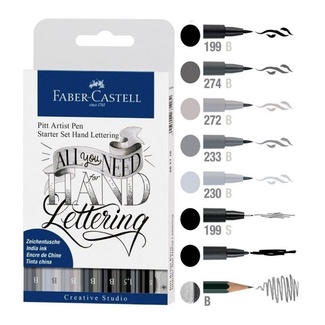
Pitt Artist Pens are pigmented India ink for line work; Pitt Pastel Pencils are dry pastel in a wooden casing for tonal work. They share a Faber-Castell family name and nothing else. The pens are archival, waterproof once dry, and will not bleed through decent paper, which is why illustrators and letterers use them. The pastel pencils give you pastel control at the detail end, particularly for hair and skin. Try the hand lettering set or the Pitt Pastel tin of 24.
Castell 9000 or Grip 2001 for drawing?
Castell 9000 for drawing, Grip 2001 for writing. Castell 9000 comes in 16 grades from 8B to 2H and is the graphite most people learned to shade with. Grip 2001 has the moulded grip dots, comes in a narrow grade range, and is built for everyday writing and school use. If you want one drawing tin, take the Castell 9000 Art set.
Which Polychromos set should you buy?
For most people the answer is 36. Twelve is not enough to mix from and you will hit its limits inside a month. Thirty-six covers a full working palette with enough range in each colour family to layer properly. Sixty earns its place if you work in one subject a lot, portraits or botanicals, where the extra skin tones or greens do real work. A hundred and twenty is a beautiful object and mostly a gift, and almost nobody uses all of them.
The other thing worth knowing: Polychromos is an open stock range, so you never have to replace a whole set because you have worn the White 101 down to a stub. Buy the tin, then top up the colours you burn through.
| Polychromos set | Who it suits |
|---|---|
| Polychromos tin of 12 | Testing whether the range suits you |
| Polychromos tin of 24 | A first proper set |
| Polychromos pencil roll of 34 | Working away from a desk |
| Polychromos tin of 36 | The one most people should buy |
| Polychromos wooden case of 48 | Portrait and botanical work |
| Polychromos tin of 60 | When 36 starts feeling tight |
| Polychromos wooden case of 72 | Serious range without the full set |
| Polychromos tin of 120 | The complete range, in a tin |
| Polychromos wooden case of 120 | The complete range, as a gift |
The rest of the Faber-Castell range
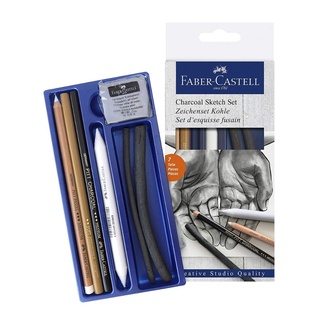
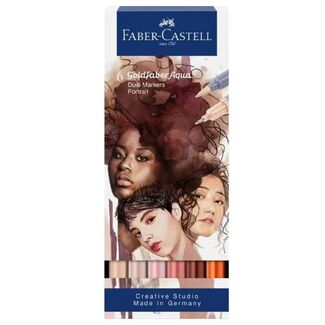
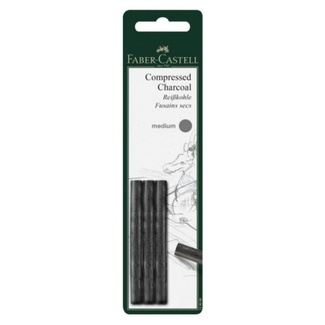
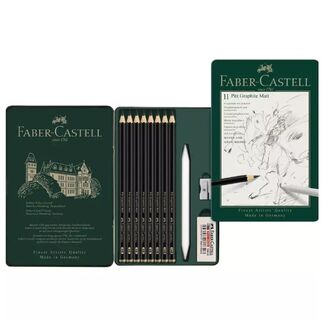
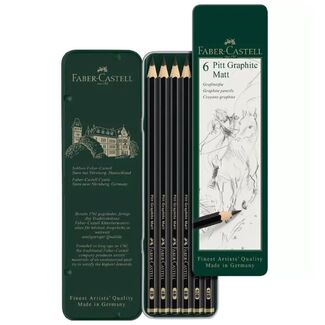
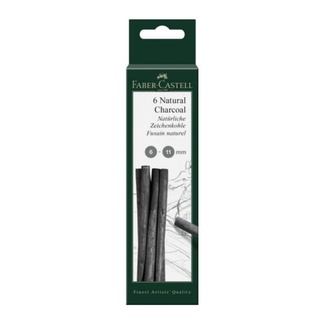
Beyond the colour pencils, Faber-Castell make most of a working drawing kit. Pitt compressed charcoal and natural charcoal sticks for tone. Pitt Graphite Matt for shading that photographs without glare, which is the reason it exists. Aquarelle graphite for graphite you can wash. Pitt Artist Pen dual markers and Goldfaber Aqua dual markers for brush and fine nib in one barrel. Albrecht Dürer watercolour markers for watercolour without a palette.
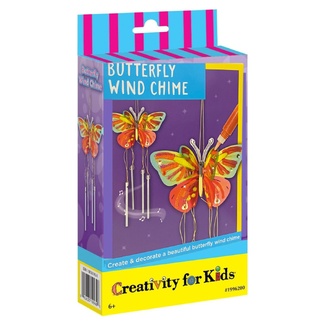
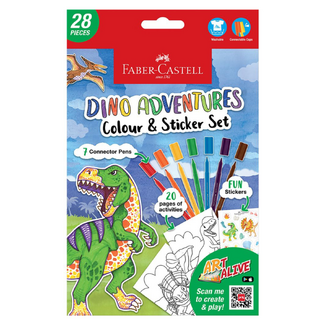
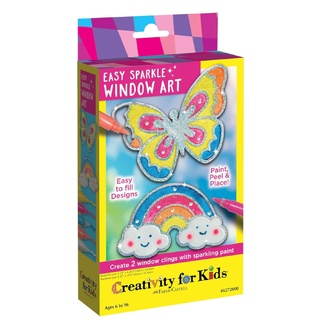
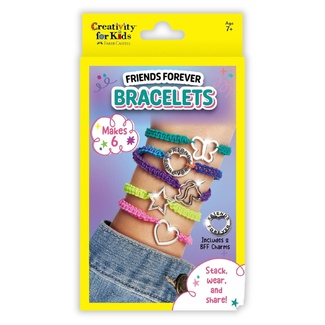
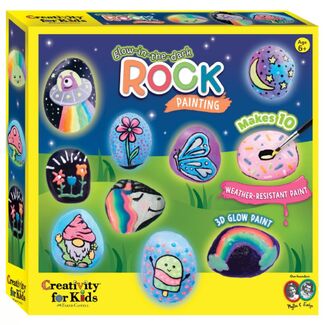
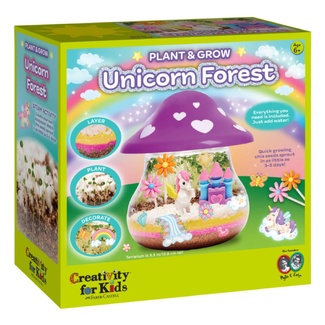
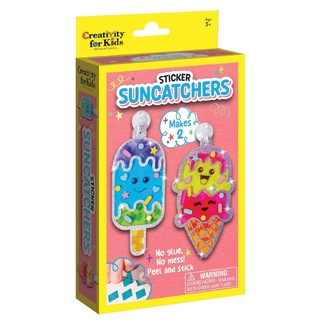
For children, Connector Pens click together into chains and the caps are ventilated, and the Creativity for Kids and Little Creatives ranges cover craft kits and first crayons. The Polychromos and Pitt Graphite gift sets are the ones people buy for someone else.
Colour 4 Life art competition
Faber-Castell's Colour 4 Life art competition is open from 1 September to 31 October 2026, and the major prize is a trip to Germany.
Entry forms are at the counter in both our Moorabbin and West End stores. Ask the team and they will talk you through it. Entries stay open for a month after the September sale finishes, so there is no rush on the artwork.
Common questions
Where can I buy Faber-Castell in Australia?
Art Shed stocks the full Faber-Castell range and ships Australia wide from our Moorabbin warehouse. You can also buy in person at our Moorabbin store in Melbourne or our West End store in Brisbane. Staff in both stores draw, so ask if you want a second opinion before you commit to a set.
Is Polychromos a Faber-Castell brand?
Yes. Polychromos is Faber-Castell's professional oil-based colour pencil range, not a separate brand. So are Albrecht Dürer, Pitt Artist, Pitt Pastel, Goldfaber, Black Edition, Castell 9000, Grip and Connector. They are all ranges within Faber-Castell, aimed at different jobs and different levels of experience.
Are Faber-Castell pencils lightfast?
Polychromos, Albrecht Dürer and Pitt Artist products are rated for lightfastness on a three-star scale printed on each pencil or pen, where three stars is the highest permanence rating in the range. Student ranges such as Black Edition and Classic are not rated, because they are made for colouring and school work rather than for work that has to last on a wall.
Can you buy Polychromos pencils individually?
Yes. Polychromos is an open stock range, so any colour can be replaced on its own rather than buying another tin. That matters most for White 101 and Black 199, which every colour pencil artist runs out of first.
What does the number on a Faber-Castell pencil mean?
On graphite pencils it is the grade, running from 8B at the softest and darkest through HB in the middle to 2H and harder for fine technical lines. On colour pencils the three digit number is the colour number, and it stays the same across every Faber-Castell range, so a 110 in Polychromos and a 110 in Albrecht Dürer are the same hue in a different binder.
Do Faber-Castell colour pencils work on toned or black paper?
Yes, and the opaque colours work particularly well. Polychromos and the Pitt Pastel pencils both hold their colour on mid-tone and black stock where thinner wax pencils disappear. White and the light tints are the ones to buy doubles of if you work on toned paper.
Is Faber-Castell good for beginners?
Yes, and you do not need to start at the top of the range. Black Edition 24 or a Goldfaber set gives you genuine Faber-Castell manufacturing without the outlay, and the habits transfer directly if you upgrade later. Buying the biggest set before you know how you work is the most common mistake we see.
Written by the Art Shed team. Art Shed is a family owned Australian art supplies retailer with stores in Moorabbin, Melbourne and West End, Brisbane. We have sold Faber-Castell for years and the recommendations on this page come from using the pencils, not from the catalogue.