Types of Art Paper: A Guide to GSM, Textures and Choosing the Right Paper
Author: The Art Shed Team Date Posted:18 November 2026
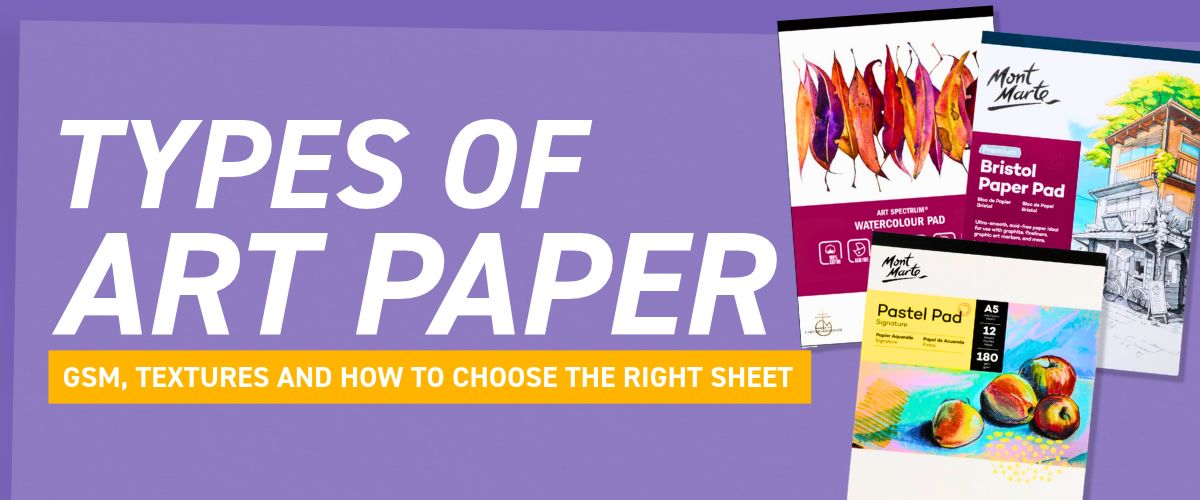
| Quick answer Art paper comes in many types, but four things decide how it behaves: weight (GSM), surface, fibre and sizing. Match those to your medium and you will get fewer buckled sheets and bleeding lines. Watercolour wants heavy absorbent paper, markers want smooth bleed-resistant paper, and pastel wants paper with tooth. |
We've seen it all at Art Shed. Customers convinced their paints are faulty because they won't blend properly, beginners wondering why their watercolour keeps buckling, and the occasional basket full of beautifully researched, high-quality paints and brushes... paired with a paper pad from the kids' craft aisle. Cue our very loving facepalm.
And we get it! Paper isn't exactly the most exciting art supply to shop for. But it might just be one of the most important. The right paper can make your favourite supplies shine, while the wrong one can leave you questioning your technique (or blaming a perfectly innocent paintbrush).
So, we're giving paper the recognition it deserves! In this guide, we'll break down the different types of art paper, what GSM, textures, fibres and sizing actually mean, and how to choose the right paper for your medium. Whether you're just getting started or wondering why your latest piece turned into a soggy potato chip, we've got you covered.
Start with the quick reference table if you are in a hurry. Read on if you would like to understand the why behind it.
Which art paper should I use? Quick reference by medium
|
Quick answer |
| Medium | Paper to look for | Usual weight | Surface |
|---|---|---|---|
| Watercolour | Watercolour paper, cotton or cellulose | 300gsm (190gsm to 200gsm for light practice) | Hot pressed, cold pressed or rough |
| Gouache | Watercolour, mixed media or toned paper | 200gsm or heavier | Smooth to medium |
| Acrylic | Acrylic paint pad or mixed media paper | 300gsm to 400gsm | Medium to textured |
| Oil | Oil paint pad, which is primed for oil | 300gsm | Medium |
| Graphite and pencil | Cartridge, sketch or drawing paper | 110gsm to 200gsm | Smooth to medium |
| Coloured pencil | Drawing paper or Bristol | 150gsm and up | Smooth to light tooth |
| Pastel and charcoal | Pastel paper or primed pastel surface | 160gsm and up | Toothy |
| Markers | Bleedproof marker paper or smooth Bristol | 70gsm bleedproof, or 200gsm and up Bristol | Smooth |
| Ink and pen | Smooth Bristol or cartridge paper | 110gsm to 250gsm | Smooth |
| Mixed media | Mixed media paper | 250gsm to 300gsm and up | Light texture |
Every row in that table gets its own section below, along with what to look for and a few picks from the Art Shed shelves.
If the table settled it for you, you can stop reading. If it raised more questions, the next few sections are for you.
What makes art paper different from ordinary paper?
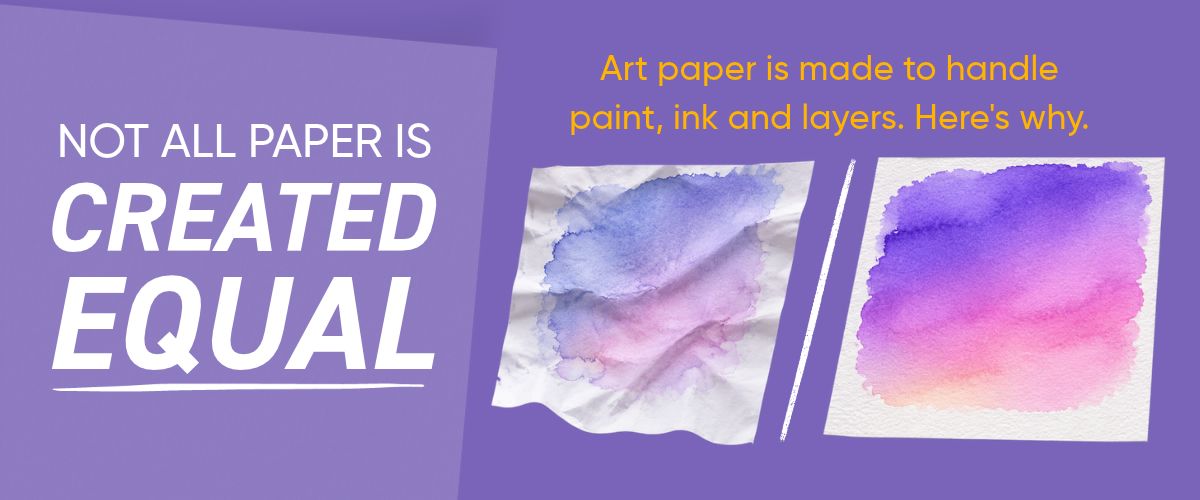
| Quick answer Art paper is made to cope with paint, ink and layers. It is heavier, treated with sizing so liquid does not soak straight in, and often made from cotton or long fibres. Ordinary printer paper is thin, absorbent and designed for dry toner, so it buckles, bleeds and tears under wet media. |
Here's the thing: printer paper and art paper have two very different jobs. One needs to survive a trip through the printer, while the other might need to handle layers of paint, plenty of water, a little scrubbing and whatever creative experiments you throw at it.
The difference comes down to four things: weight, surface, fibre and sizing. These determine how your paper handles everything from a light pencil sketch to a generous watercolour wash, and we'll break down each one below.
And before you start eyeing off the most expensive paper on the shelf, don't worry! You don't need professional-grade paper to create beautiful art. Student-grade paper is a fantastic place to start, and there's plenty of good-quality art paper that won't blow your budget.
Think of it this way: great paper won't magically turn you into the next Picasso, but the right paper will let your art supplies actually do their job. And we reckon that's a pretty good start!
What does GSM mean in art paper?
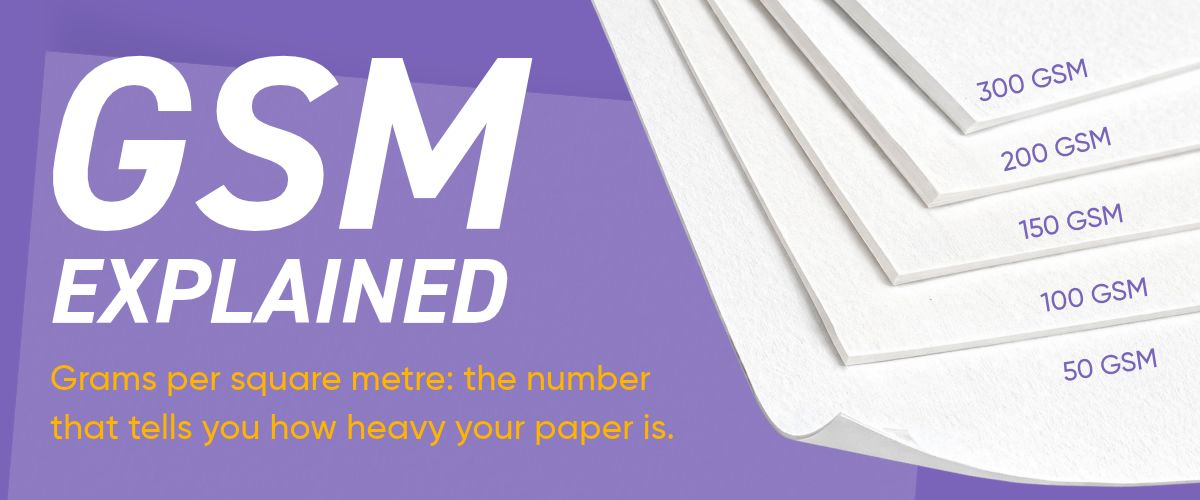
| Quick answer GSM means grams per square metre. It tells you how heavy a sheet of paper is, and heavier paper is thicker and sturdier. Around 110gsm suits drawing, 150gsm to 200gsm suits heavier drawing and light wet work, and 300gsm is the standard for watercolour because it resists buckling. |
Think of GSM as the weight of one square metre of the paper. The higher the number, the more paper is in the sheet, and the better it copes with water, erasing and layers. It is also a useful shortcut when you are standing in front of a wall of pads.
| GSM range | What it feels like | Good for | Example at Art Shed |
|---|---|---|---|
| Up to about 110gsm | Light, like good printer paper | Pencil, pen, quick studies | Art Spectrum Cartridge Paper Pad, 110gsm |
| About 140gsm to 200gsm | Sturdy, like light card | Heavier drawing, markers, light washes | Art Spectrum Classic Drawing Pad, 200gsm |
| About 250gsm to 300gsm | Thick and stiff | Watercolour, mixed media, gouache | Art Spectrum 100% Cotton Watercolour Pad, 300gsm |
| 400gsm and up | Very heavy, board-like | Acrylic, thick paint, heavy mixed media | Art Spectrum Acrylic Paint Pad, 400gsm |
One catch: GSM is weight, not quality. A heavy sheet can still be a poor surface for the wrong medium, and a lighter sheet can be perfect for the right one. Weight tells you how much the paper can take. The next sections tell you what kind of paper it is.
| Tip from the Shed If you are unsure, go heavier than you think you need. A heavier sheet forgives a lot of beginner habits, such as extra water and a lot of erasing. |
Remember it as light for dry, heavy for wet, and you will be right most of the time.
Paper surface: hot pressed, cold pressed, rough and smooth
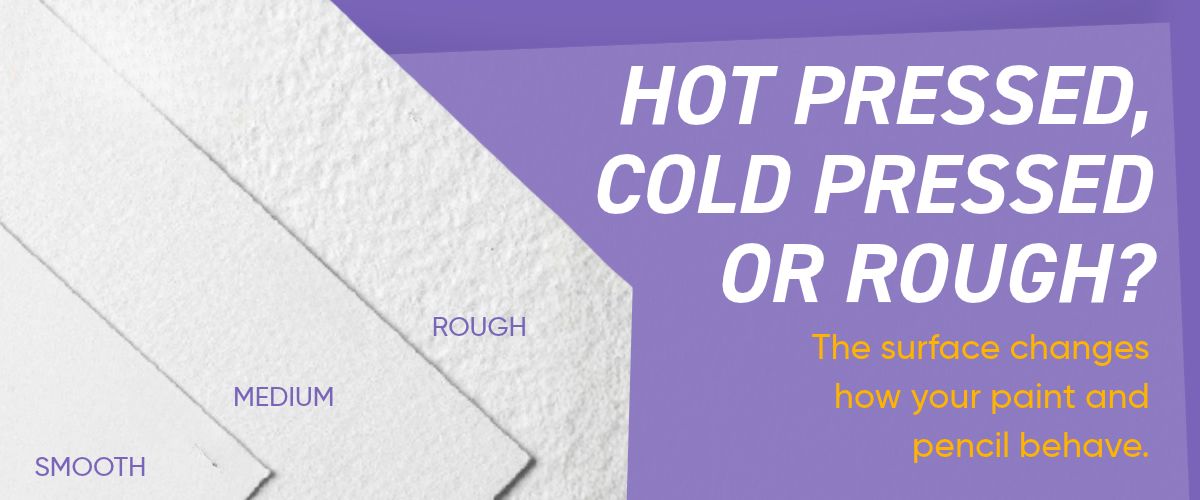
| Quick answer Paper surface is simply how textured your paper feels. Hot pressed is smooth and perfect for fine detail, cold pressed (also called medium or NOT) has a little texture and is a watercolour favourite, and rough has the most texture for lovely broken washes. Surface changes how paint flows, how pencil grips and how much detail you can achieve. |
Ever noticed how your pencil glides across one sheet but feels a little scratchy on another? That's paper texture doing its thing!
Watercolour paper generally comes in three main finishes. Hot pressed paper is pressed between heated rollers for a lovely smooth surface. Cold pressed paper keeps a gentle texture, while rough paper has the most noticeable bumps and valleys, which gives you lovely broken washes and that sparkly effect where the white paper peeks through. You'll also spot labels like "smooth" and "medium", which are just simpler ways of describing the surface.
And it's not just watercolour that cares about texture! Pens and POSCA paint markers are great on smoother surfaces when you want crisp, clean lines. Pencils and pastels love a little tooth to grip onto, while acrylic paint can pick up the texture of the paper for beautiful dry-brush effects (just make sure your paper is sturdy enough for acrylics!).
| Surface | Also called | How it feels | Best for |
|---|---|---|---|
| Hot pressed | Smooth | Flat and even | Fine detail, botanical work, ink and pen, POSCA markers and smooth washes |
| Cold pressed | Medium, NOT | Light, even texture | Watercolour, pencil, mixed media and textured acrylic effects on suitable paper. A great all-rounder for beginners! |
| Rough | Heavy texture | Pronounced bumps and valleys | Loose landscapes, expressive watercolour washes, pastels and textured effects |
Several Art Shed papers come in more than one surface, so you can choose. The Art Spectrum 100% Cotton pad, the Saunders Waterford pad and the Fabriano Artistico block are each available as smooth, medium and rough, or the hot pressed, cold pressed and rough equivalents. If you are not sure, start with cold pressed or medium.
Surface matters beyond watercolour. Pencil and charcoal grab onto toothy paper and slide across smooth paper. Ink and fine liners look crisp on smooth paper. Choose the surface for the effect you want, not just the label.
| Tip from the Shed Swatch before you commit. Paint the same colour on a scrap of each surface and the difference is obvious in about ten seconds. |
There is no wrong surface, only a surface that suits a different style from yours.
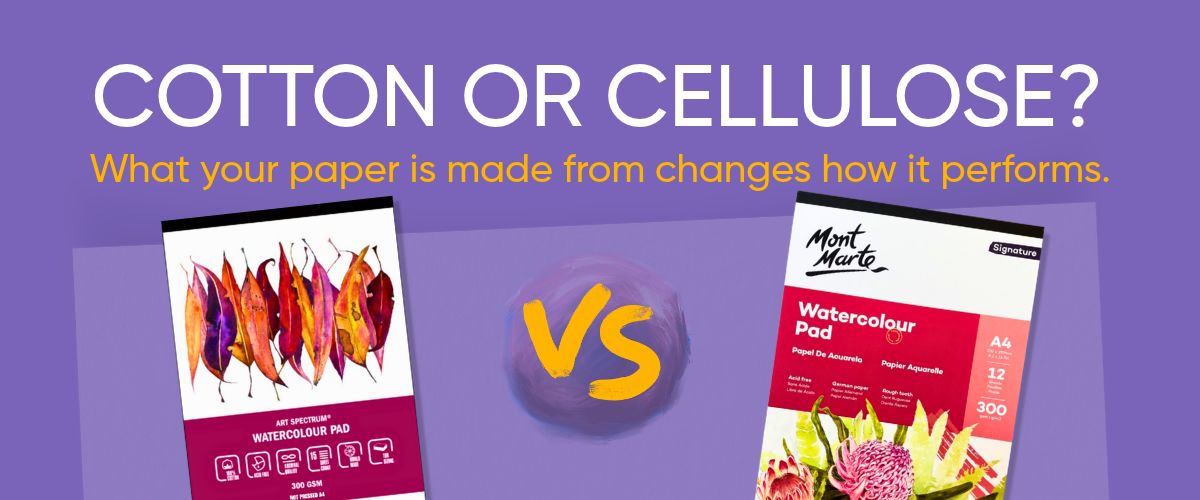
Cotton vs cellulose paper: what is the difference?
| Quick answer Cotton paper is made from cotton fibres, while cellulose paper is made from wood pulp. Both are excellent for watercolour, but cotton generally stays workable for longer and is more forgiving when lifting or layering paint, while cellulose often dries faster. The best choice depends on your painting style, techniques and personal preference. |
This one comes down to what's actually inside your paper! Cotton paper is made from strong, flexible cotton fibres that can handle plenty of water. It's especially lovely for watercolour techniques that involve lots of blending, soft washes and lifting colour. The paint generally stays workable for longer, giving you more time to move things around before everything dries. It also tends to buckle less when wet.
Cellulose paper, on the other hand, is made from wood pulp and is a fantastic option for everything from loose watercolour landscapes to detailed botanical illustrations and finished artworks. It's often more affordable and widely available, with a surface that can produce lovely, vibrant colours and crisp details. It generally absorbs and releases water differently from cotton, so washes may dry faster, and repeated scrubbing or lifting can be a little trickier.
Here's a handy example: imagine painting a watercolour landscape. Both papers can give you beautiful skies, rich colours and delicate details. But if you're planning to keep a large wash wet for ages, blend several colours together or repeatedly lift out cloud highlights, cotton paper might give you a little more flexibility. Cellulose can absolutely handle wet-on-wet blending too; you may just need to work a little quicker!
| Cotton paper | Cellulose paper | |
|---|---|---|
| Made from | Cotton fibres | Wood pulp |
| Water | Holds more, dries slower | Absorbs quickly, dries faster |
| Layering and lifting | More forgiving | Needs a lighter touch |
| Buckling | Usually less | Usually more |
| Good for | Finished pieces, techniques that need time | Practice, studies, learning and everyday painting |
| At Art Shed | Art Spectrum 100% Cotton Watercolour Pad | Mont Marte Watercolour Pad, German Paper |
| Tip from the Shed Don't think of cellulose as the beginner paper and cotton as the professional paper! A good-quality cellulose pad can produce artwork worthy of framing, gifting or selling. Try both and see how they feel with your favourite paints. You might find you love the way colours behave on cellulose, prefer the blending time cotton offers, or keep a pad of each for different projects! |
A handy way to split it: keep a cellulose pad for everyday creativity and save your cotton paper for the projects where you want a little extra wiggle room.
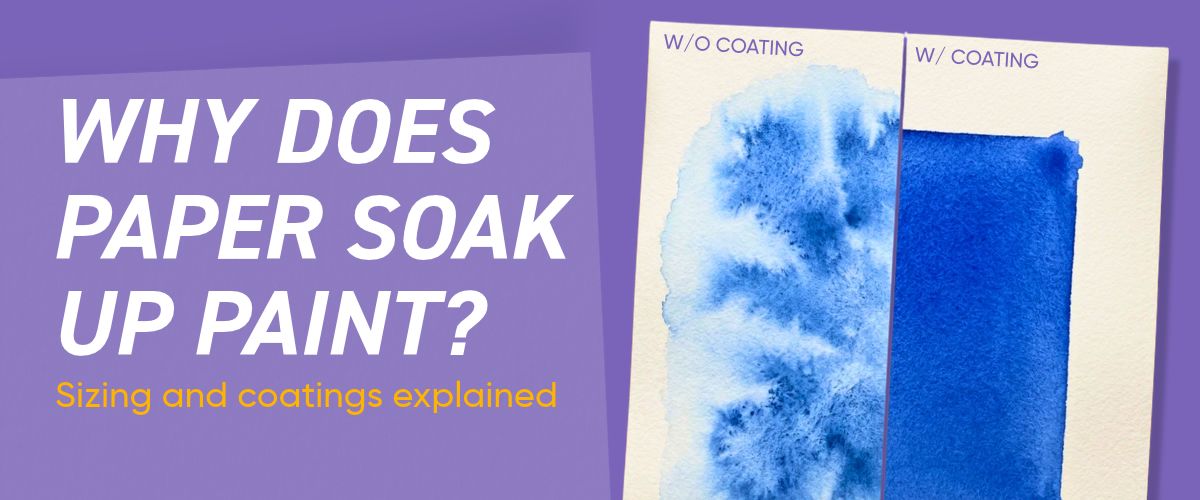
What is paper sizing and why does it matter?
| Quick answer Sizing is a treatment added to paper that controls how quickly it soaks up water and paint. Without it, paint sinks in and spreads too fast, a bit like water on a paper towel. Sizing gives you more time to move colour around. Some papers add coatings too, like the gritty surface that helps pastels grip. |
Sizing is a treatment added to paper during or after it's made, traditionally using gelatine, although synthetic alternatives are common today. Think of it as giving your paper a little control over how quickly it drinks up water! It helps slow absorption so your watercolour has time to flow, blend and settle beautifully on the surface, rather than disappearing straight into the fibres.
Coatings take things a step further, giving different types of art paper special surfaces for specific mediums. For example, Art Spectrum Colourfix pastel paper has a slightly gritty, primed surface that helps pastel pigment grip and build up in layers. Oil paint pads, on the other hand, are specially primed to stop oil from soaking into the paper fibres.
Different treatments for different mediums, all designed to help your art supplies do their best work!
| Treatment | What it does | Where you will notice it |
|---|---|---|
| Little or no sizing | Soaks up liquid quickly | Newsprint and basic drawing paper |
| Sized paper | Slows absorption so paint sits on top | Watercolour paper, mixed media paper |
| Primed or coated surface | Adds grip or seals the sheet | Colourfix pastel paper, oil and acrylic paint pads |
| Synthetic surface | Does not absorb liquid at all | Yupo and other synthetic papers |
|
Tip from the Shed |
Sizing is the reason good paper feels like it is helping you.
What does acid-free or archival paper mean?
| Quick answer Acid-free paper has a neutral or slightly alkaline pH, helping prevent the yellowing and brittleness that can develop over time. Archival paper is designed for longevity and is usually acid-free, often lignin-free or cotton-based. If you're creating artwork you want to keep, frame, gift or sell, acid-free or archival paper is worth looking for. |
Ever found an old drawing tucked away in a drawer, only to discover the paper has turned yellow? That's often acidity at work!
Here's an easy way to think about it: imagine an old newspaper compared to a beautiful art print. Newspapers are designed to be affordable and used for a short time, so they're often made with wood pulp that contains lignin, a natural substance found in trees. Over time, lignin can break down and contribute to acids forming in the paper, causing it to yellow and become brittle. That's why an old newspaper might look like it's been sitting in the sun for fifty years, even if it's been tucked away in a cupboard!
Not all paper is acid-free because different papers have different jobs. Making paper acid-free can involve additional processing or treatments, which aren't always necessary for everyday printing, packaging or other short-term uses.
Acid-free paper is made or treated to help prevent this deterioration, while cotton paper is naturally low in lignin, making it a great long-lasting option.
Now, a little tip when shopping for archival paper: the word archival doesn't have one universally regulated definition, so it's worth checking the details. Look for acid-free, lignin-free or 100% cotton paper from a trusted brand rather than relying on the label alone.
Does every doodle need to last a lifetime? Of course not! For everyday sketches, practice and studies, longevity might not be your biggest priority. But for that watercolour you're planning to frame, a special piece you're gifting or artwork you're hoping to sell, choosing archival-quality paper is a lovely way to give your creation the best chance of looking beautiful for years to come.
| If you are making | Does acid-free matter? |
|---|---|
| Daily sketches and practice | Not really. Use whatever suits the medium |
| Gifts and cards | A little. Longer-lasting paper is a nice touch |
| Work you will frame, sell or keep | Yes. Choose acid-free or cotton paper |
Paper that lasts is a small kindness to your future self.
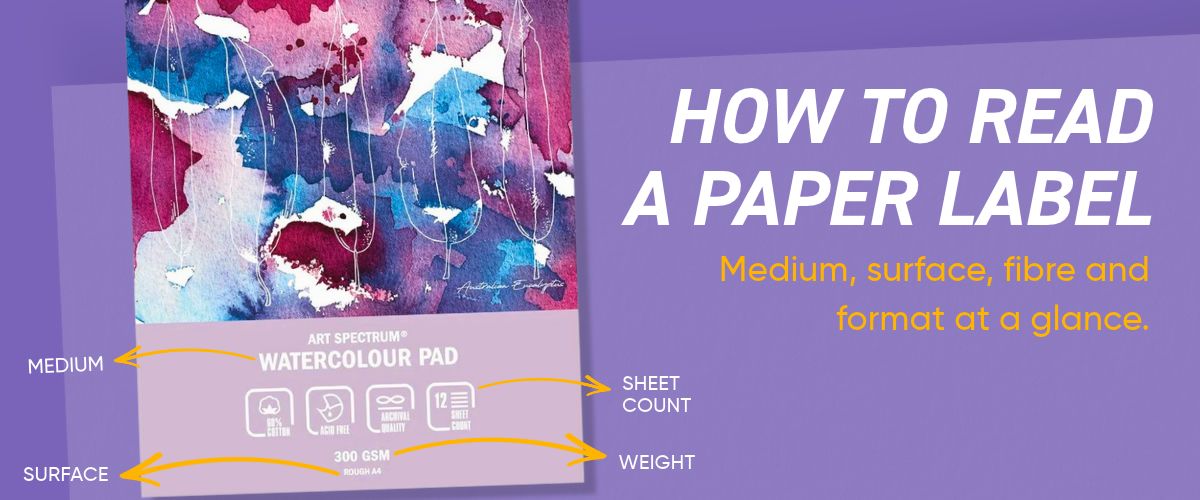
How do you read an art paper label?
| Quick answer Art paper labels look confusing at first, but they tell you everything you need to know. Most list the medium, weight (GSM), surface, fibre, sheet count and size. A watercolour pad labelled 300gsm, rough, A4, 12 sheets is heavy, textured paper in A4 (210 x 297mm). Check the binding too, whether it is a glued pad, spiral or block. |
Ever picked up a paper pad and wondered why it has more numbers and descriptions than your average maths textbook? Don't worry, there's a method to the madness!
Take the Art Spectrum Studio Watercolour Pad, A4, 300gsm, Rough, for example. Read it from left to right and you've got everything you need: it's designed for watercolour, it's A4 sized, the paper weighs 300gsm and it has a rough, textured surface.
Once you know what to look for, choosing art paper becomes a whole lot easier. No decoding required!
| What you will see | What it tells you |
|---|---|
| Watercolour, sketch, pastel, mixed media | The medium the paper is designed for |
| 300gsm | The weight of the paper |
| Hot pressed, cold pressed, rough, smooth or medium | The surface texture |
| 100% cotton or cellulose | What the paper is made from |
| A5, A4, A3, or a size in cm or inches | The sheet size. A5 is 148 by 210mm and A3 is 297 by 420mm |
| 12 sheets, 50 sheets | How many sheets are in the pad |
| Pad, block, spiral, hardbound | How the sheets are held together |
Do not worry if one detail is missing. Many labels leave out fibre or surface, and a short product description usually fills the gap.
Once you can read one label, you can read them all.
What is the best paper for watercolour?
| Quick answer Watercolour paper should be around 300gsm, absorbent and sized so washes sit on the surface instead of soaking straight in. Choose cotton for finished work and forgiving layers, or cellulose for practice. Hot pressed suits fine detail, cold pressed is the all-rounder and rough adds texture. Pads suit practice, while blocks suit wet work. |
Watercolour is mostly water, so its paper has a much tougher job than a pencil sketch ever asks of it. It needs to drink up just enough, stay flat while it's soggy and let your colours flow exactly where you want them to. That's a lot to ask of a humble sheet!
If you take one thing from this guide, make it this: 300gsm is the standard recommendation for watercolour, because it holds water without buckling too badly. Lighter paper, around 190gsm to 200gsm, works for dry brush, sketching and light colour, and is a good use of a practice book.
Not sure which finish or fibre to pick? The surface and cotton vs cellulose sections above will help, and the picks below cover a bit of everything.
| Pick | Good for | Why it works |
|---|---|---|
| Art Spectrum 100% Cotton Watercolour Pad, A4 300gsm | Finished paintings and layering | Cotton paper in a pad, available in hot pressed, cold pressed and rough. A strong step up when you are ready for it. |
| Art Spectrum Studio Watercolour Pad, A4 300gsm Rough | Textured, expressive painting | A 300gsm rough surface that breaks up washes and adds character. |
| Mont Marte Watercolour Pad, German Paper, A4 300gsm | Learners and everyday practice | A reliable 300gsm student-grade pad, a good place to learn without worrying about waste. |
| Mont Marte Premium Cotton Watercolour Paper, A4 300gsm | Loose sheets for special pieces | Cotton paper in a small pack of sheets, handy for when you want a few good sheets rather than a whole pad. |
| Saunders Waterford Watercolour Pad, 23 x 31cm 300gsm, Medium (while stocks last) | Painters who want a classic paper | A well-loved traditional watercolour paper, also available smooth and rough. |
| Fabriano 1264 Watercolour Pad, A4 300gsm, 30 Sheets | Lots of practice sheets | Thirty sheets of 300gsm in one pad, so there is room to experiment. |
| Mont Marte Discovery Watercolour Book, A5 190gsm | Travel and sketching | A spiral-bound book with lighter 190gsm paper, easy to carry and good for small studies. |
Wondering about stretching? Heavier paper and blocks reduce the need, but thinner paper benefits from it. The Art Shed guide on how to stretch watercolour paper walks through it step by step.
See the common problems section below for the quick version.
| Tip from the Shed Paint both sides of a test sheet with a good wet wash. If it ripples badly, the paper is too light for how much water you like to use. |
Watercolour is forgiving in a lot of ways, and good paper is the biggest one.
What is the difference between sketch, cartridge and drawing paper?
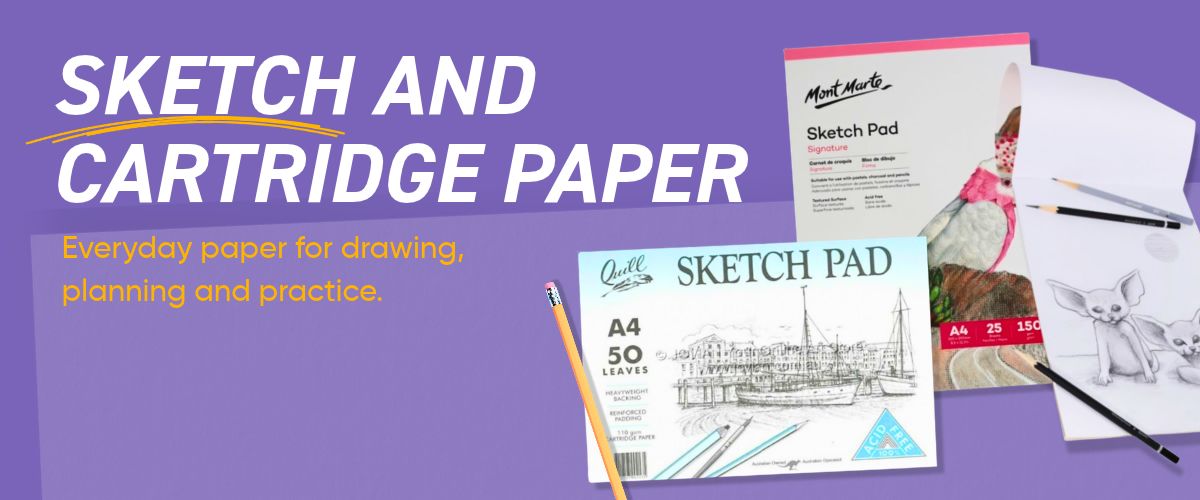
| Quick answer Sketch, cartridge and drawing paper are your everyday favourites for dry media like pencil, pen and charcoal. Cartridge paper is usually lightweight and smooth to medium, often around 110gsm, sketch pads include 150gsm, and drawing pads reach 200gsm or more. The best choice depends on what you're drawing and how you like to work. |
These are the trusty everyday papers you'll find in just about every artist's collection, and for good reason! They're versatile, easy to work with and perfect for everything from quick pencil sketches to detailed charcoal drawings.
The tricky part? Sketch paper, cartridge paper and drawing paper can overlap quite a bit. Rather than getting too caught up in the names, look at the paper weight (GSM) and surface texture.
For example, a smooth 110gsm cartridge pad is lovely for pencil sketches and fineliner drawings, while a textured 200gsm drawing pad gives you more room to build up coloured pencil layers. Neither is necessarily better, they're just suited to different creative styles!
| Pick | Good for | Why it works |
|---|---|---|
| Art Spectrum Cartridge Paper Pad, A4 110gsm, 50 Sheets | Everyday pencil and pen | Fifty sheets of classic cartridge paper, built for practice and planning. |
| Quill Cartridge Paper Sketch Pad, A4 110gsm, 50 Sheets (while stocks last) | Sketching on the go | A straightforward cartridge pad that does exactly what it says. |
| Mont Marte Sketch Pad, White Paper, A4 150gsm, 25 Sheets | Sturdier daily sketching | A heavier 150gsm sheet that handles pencil, fineliner and a lot of rubbing out. |
| Art Spectrum Classic Drawing Pad, A4 200gsm, 30 Sheets | Heavier drawing and layering | 200gsm gives you the extra body for coloured pencil, markers and light washes. |
| Mont Marte Signature Sketch Book, Hardbound, A4 110gsm, 80 Sheets | A book to keep | A hardbound sketchbook that looks like a keeper and has plenty of pages. |
One little thing to watch out for: these papers are primarily made for dry media. A tiny bit of moisture might be fine, but a generous watercolour wash can leave your lovely flat paper looking a little wavy.
Even heavier 200gsm paper isn't automatically suitable for wet media, so check the label before bringing out the paints!
| Tip from the Shed Use cartridge paper for planning and thumbnails, then move to heavier paper for the piece you want to finish. |
A full sketchbook is worth more than a perfect one that stayed blank.
What is Bristol paper?
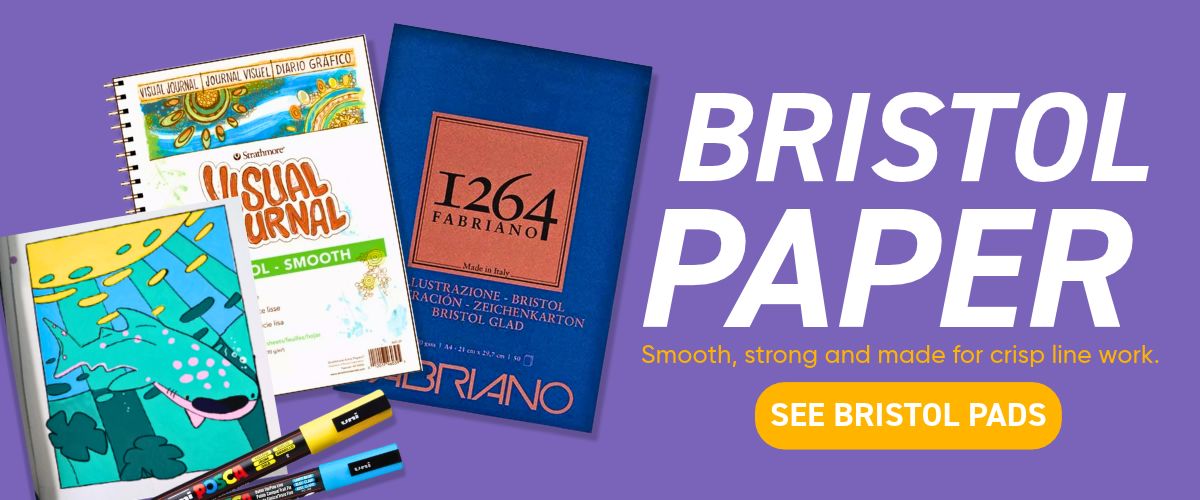
| Quick answer Bristol paper is a smooth, dense, heavyweight paper with a firm, almost card-like feel. It's brilliant for crisp line work, fine detail and illustration. Smooth Bristol is great for ink, fineliners, graphite and markers, while vellum Bristol has a little tooth for pencil and coloured pencil work. Most Bristol pads sit around 200gsm to 260gsm. |
If you've never felt Bristol paper before, imagine a really thick, silky-smooth piece of card. Some smooth Bristol surfaces almost feel a little plasticky to the touch (although they're still paper!). Unlike ordinary sketch paper, which can feel slightly soft or fuzzy, Bristol has a firm, compact surface that lets your pens glide across without catching on the fibres.
It's traditionally made by bonding layers of paper together, giving it that sturdy, almost plate-like feel. This makes it a favourite for illustrators, comic artists and anyone who loves getting lost in the tiny details.
What art supplies work well on Bristol paper?
Fineliners and ink pens: Sakura Pigma Microns, Uni Pin pens and technical drawing pens are lovely for crisp outlines, comics and detailed illustrations.
Graphite pencils: Great for smooth shading, realistic portraits and fine pencil details without too much paper texture showing through.
Coloured pencils: Faber-Castell Polychromos and other coloured pencils work beautifully, especially on vellum Bristol, which has a little extra grip for layering.
Brush pens and markers: Perfect for expressive lettering, bold ink illustrations and clean line work. Just be mindful that alcohol markers may bleed through some Bristol papers.
POSCA paint markers: Smooth Bristol can be lovely for bright, opaque designs and crisp shapes, provided the paper can handle the paint application.
| Pick | Good for | Why it works |
|---|---|---|
| Strathmore Wire Bound Bristol Paper Pad, Smooth, 9 x 12 Inch | Ink, fineliner and markers | A smooth wire-bound pad with 260gsm paper. Also available in a vellum surface for more tooth. |
| Fabriano 1264 Bristol Pad, A4 200gsm, 50 Sheets (while stocks last) | Lots of pages for line work | Fifty sheets of 200gsm Bristol, good for practice and finished pieces. |
| Mont Marte Bristol Paper Pad, A4 250gsm, 20 Sheets | A friendly starting point | A 250gsm student-grade pad, a good way to try Bristol without a big commitment. |
| Tip from the Shed Love smooth, detailed illustrations? Reach for smooth Bristol. Prefer building up pencil shading and coloured pencil layers? Give vellum Bristol a go! That little bit of texture can make a big difference. |
If your lines matter more than your washes, Bristol is your paper.
What is the best paper for pastel, charcoal, graphite and coloured pencil?
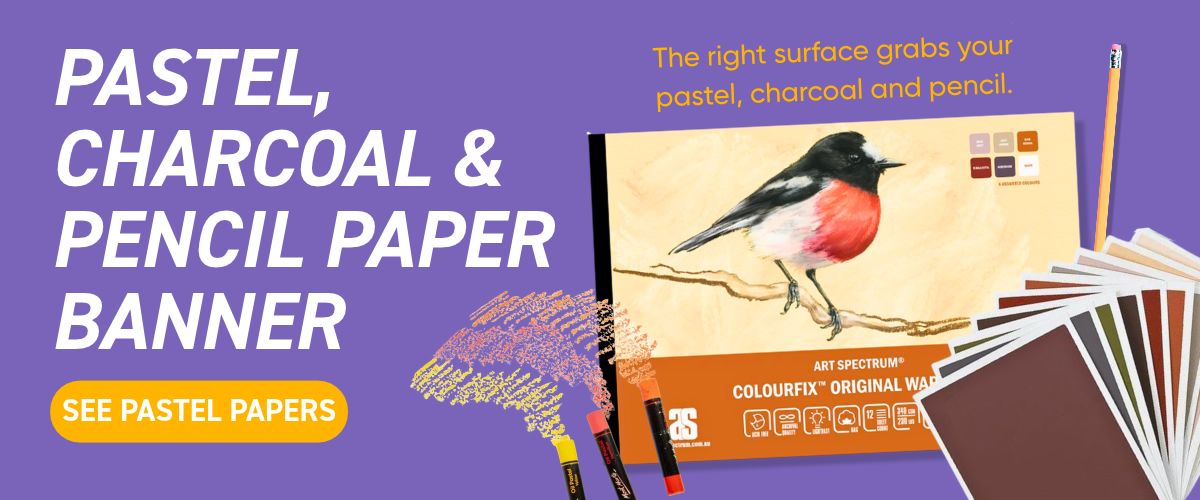
| Quick answer Pastel and charcoal work best on paper with tooth, which is just a fancy way of saying texture that helps dry pigment grip. Toned paper like Canson Mi-Teintes suits soft pastel and charcoal, while gritty primed surfaces like Art Spectrum Colourfix build heavier layers. Graphite and coloured pencil suit smooth to lightly toothy paper. |
Ever tried drawing with a soft pastel on really smooth paper? It's a bit like trying to draw on a slippery surface. The colour goes on, but there's not much for it to grab onto!
That's where paper with tooth comes in. Imagine running your fingers across a piece of textured cardstock. You can feel those tiny bumps? They help catch and hold the fine powder from charcoal and pastel, making it easier to build up colour and blend.
Different papers offer different levels of grip. Canson Mi-Teintes pastel paper feels a little like textured craft card, while Art Spectrum Colourfix has a gritty, almost fine-sandpaper feel that grabs onto pastel beautifully. Graphite and coloured pencils, on the other hand, often work best with a smoother surface for fine details or a gentle tooth for building up layers.
What art supplies work well on these papers?
Soft pastels: Rembrandt and Schmincke soft pastels love a textured surface. Try Canson Mi-Teintes for everyday pastel work or Colourfix when you want to build up plenty of colour.
Charcoal: Willow charcoal, compressed charcoal and charcoal pencils work beautifully on lightly textured or toned paper, especially for expressive sketches and portraits.
Graphite pencils: Faber-Castell 9000 and Derwent Graphic pencils are lovely on smooth to lightly toothy drawing paper for detailed shading, portraits and realistic sketches.
Coloured pencils: Faber-Castell Polychromos and Derwent Coloursoft pencils work well on paper with a gentle tooth, giving the pigment something to grip as you build up layers.
And don't forget about toned paper! Instead of starting with a white sheet, you're working on a coloured background, like warm grey, tan or black. This gives you a middle tone to work from, so you can add darker shadows and bright highlights without having to colour in the entire background first. It's a lovely trick for making charcoal portraits and pastel drawings really pop.
| Pick | Good for | Why it works |
|---|---|---|
| Canson Mi-Teintes Pastel Paper, A4 160gsm, Pearl Grey | Soft pastel and charcoal | A classic toned pastel paper, available in a big range of colours. |
| Art Spectrum Colourfix Original Medium Texture Pad, A3 340gsm, Warm Pad | Layered pastel work | A primed surface made for pastel that takes heavy layering. This pad is the warm-toned pack. |
| Art Spectrum Pastel Pad, A4 Black, 220gsm, 15 Sheets (while stocks last) | Bright pastel on dark paper | Fifteen black sheets that make pastel colours glow. |
| Mont Marte Pastel Pad, Acid Free, 4 Colour, A4 180gsm | A friendly first pastel pad | A pad with four paper colours in one, a good way to find which tone you like. |
For graphite and coloured pencil, you do not need special paper. Smooth to medium drawing paper or Bristol works well, and a little tooth helps coloured pencil build up layers.
Choose a paper that grabs, and your pastel will thank you.
What is mixed media paper?
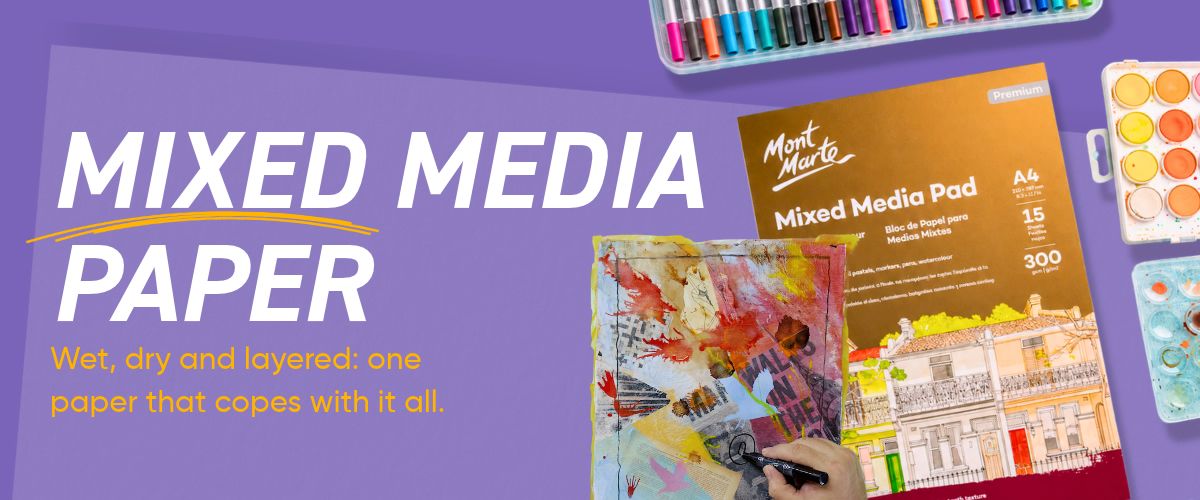
| Quick answer Mixed media paper is a versatile, heavyweight paper that handles wet and dry media on the same sheet. It usually starts around 250gsm, with enough strength for watercolour, gouache, ink and collage and enough tooth for pencil. Alcohol markers can bleed or blend differently on it. It's a fantastic all-rounder for layering and experimenting! |
Can't decide whether you're a painter, illustrator or collage artist? Good news, you don't have to! Mixed media paper is made for those creative sessions where one art supply turns into five and suddenly there's glue involved.
Imagine a sturdy piece of drawing paper with a little of the texture you'd find on watercolour paper. That's roughly how many mixed media papers feel! They're generally thicker than everyday sketch paper, with enough sizing to handle some moisture and a lightly textured surface that gives pencils and other dry media something to grip.
What art supplies work well on mixed media paper?
Watercolour paints: Mont Marte or Winsor & Newton watercolours are lovely for adding soft washes and colourful backgrounds. Just keep in mind that very wet techniques may still cause buckling.
Gouache paints: Traditional gouache, including HIMI Jelly Gouache and Winsor & Newton Designers Gouache, works beautifully for painting bold, opaque colours and layering details. Mixed media paper is great for most gouache techniques, although very watery washes may need a heavier sheet.
Fineliners and ink: Sakura Pigma Microns and Uni Pin pens are great for adding crisp outlines, illustrations and little details once your paint has dried.
Graphite and coloured pencils: Perfect for sketching your design first or adding shading and texture over painted areas.
POSCA paint markers: Great for adding bold highlights, lettering and little details over dry paint! You can create full POSCA illustrations on mixed media paper too, but the texture may show through your colours and make it harder to achieve perfectly smooth, crisp coverage. For clean, flat blocks of colour and detailed POSCA artwork, try a smoother, sturdy paper like smooth Bristol instead.
Alcohol markers: Copic, Ohuhu and other alcohol markers can be used on mixed media paper too! Just remember that the textured, absorbent surface may make blending less smooth and cause ink to feather or bleed through more than on dedicated marker paper. Pop a spare sheet underneath and test your colours first.
Collage materials: Try layering decorative papers, magazine cut-outs or tissue paper with a suitable glue or gel medium.
| Pick | Good for | Why it works |
|---|---|---|
| Mont Marte Mixed Media Pad, A4 300gsm, 15 Sheets | A good value all-rounder | Heavy 300gsm paper that copes with watercolour, ink and markers. |
| Art Spectrum Universal Mixed Media Pad, A4 300gsm, 12 Sheets | Layering and experimenting | A 300gsm pad made to be used with many different materials. |
| Art Spectrum Mixed Media Pad, A4 180gsm, 50 Sheets | Lots of practice sheets | Fifty sheets of lighter 180gsm paper for dry media and light wet work. |
| Tip from the Shed Mixed media paper is not a replacement for watercolour paper. For big, wet washes, a dedicated watercolour paper still behaves better. |
When you cannot decide, mixed media paper is the paper that does not make you.
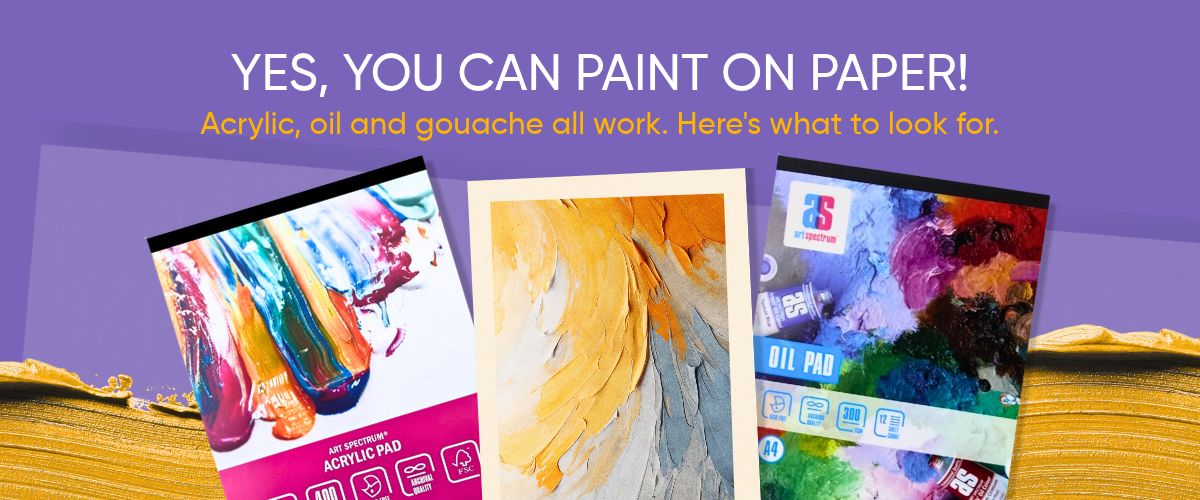
What paper can I use for acrylic, oil and gouache?
| Quick answer Yes, you absolutely can paint on paper with acrylic, oil and gouache! You just need the right type. Acrylic suits sturdy acrylic pads, mixed media or watercolour paper. Oil needs specially primed paper so it doesn't soak into the fibres. Gouache likes paper around 200gsm or heavier. Thin sketch paper may buckle or absorb too much binder. |
One of the questions we hear all the time at Art Shed is, "Can I use this paint on paper, or do I need a canvas?" And we're always happy to tell people that paper is absolutely an option!
Painting on paper is fantastic for everything from quick colour studies to finished artworks. It's easy to store, simple to frame and gives you plenty of freedom to experiment. The trick is choosing a surface that can handle your paint.
What paper works best for each paint?
Acrylic paint: Think thick, sturdy paper that feels more like flexible cardstock than your average sketchbook page. Acrylic paint pads are designed to handle paint without the surface breaking down. Heavy mixed media or watercolour paper can also work beautifully with acrylics, including brands like Liquitex Basics and Mont Marte.
Oil paint: This one's a little different! Oil painting paper needs a special primer that acts like a protective barrier, stopping oil from seeping into and damaging the fibres. Dedicated oil paint pads are ready to use, while other suitable papers need proper preparation first. Perfect for experimenting with your Winsor & Newton Winton oils without bringing out a canvas.
Gouache paint: If you love HIMI Jelly Gouache or Winsor & Newton Designers Gouache, you're in luck! Gouache works beautifully on watercolour and mixed media paper, generally around 200gsm or heavier. Smooth paper is lovely for crisp illustrations, while lightly textured paper adds a little character. You can even try toned paper to make those opaque colours really pop!
|
Tip from the Shed |
| Paint | What to look for | Pick |
|---|---|---|
| Acrylic | Heavy, sturdy paper, around 300gsm to 400gsm | Art Spectrum Acrylic Paint Pad, A4 400gsm |
| Oil | Paper primed for oil, so the oil stays on the surface | Art Spectrum Oil Paint Pad, A4 300gsm |
| Gouache | 200gsm or heavier. Toned paper makes opaque colours glow | Art Spectrum Toned Paper Pad, A4 Grey, 250gsm, 40 Sheets |
| Tip from the Shed Give your paper a little support! Tape the edges to a flat board or secure it with clips before painting. Even heavyweight paper can ripple when things get wet, and keeping it secure helps minimise movement while you work. Just remember, tape won't completely prevent buckling if you're using lots of water! |
Paint on paper has a lovely freedom to it, because nobody is precious about a pad.
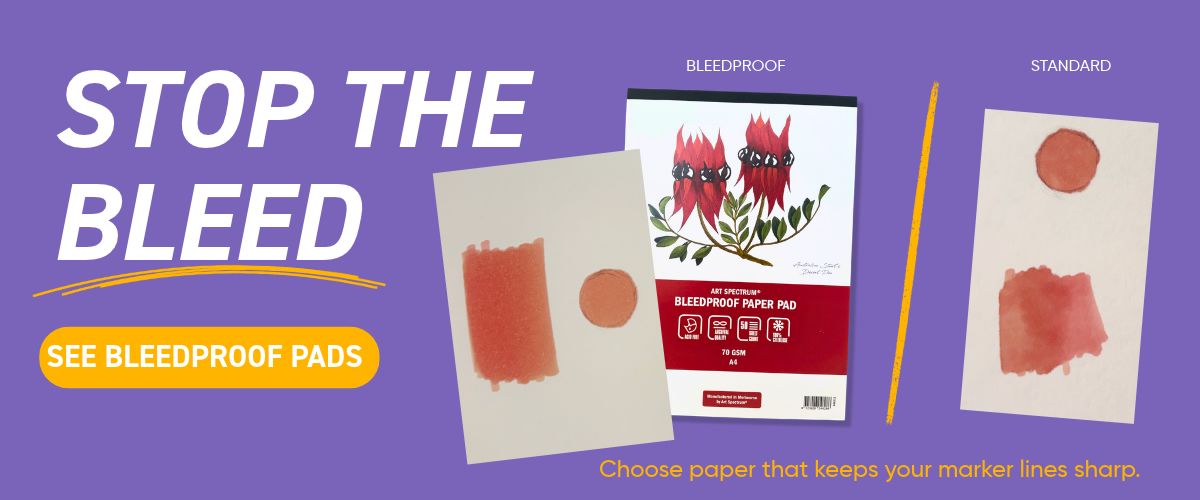
What is the best paper for markers, pens and ink?
| Quick answer For markers, pens and ink, smooth paper is generally your best friend! Bleedproof marker paper helps stop ink feathering or bleeding through, and smooth Bristol is great for crisp illustrations and fineliners. Alcohol markers can soak straight through thin sketch paper, so always keep a spare sheet underneath. |
Ever watched your beautifully neat marker lines spread into fuzzy edges? That's your paper being a little too thirsty!
Think about what happens when you drop water onto a paper towel. It spreads out and gets absorbed almost instantly, right? Alcohol marker ink can behave similarly on absorbent paper, spreading into the fibres rather than staying exactly where you put it.
That's why smooth, coated or dense papers can make such a difference! They help control how ink absorbs, keeping your lines crisp and colours looking bright.
What art supplies work well on these papers?
Alcohol markers: Copic and Ohuhu markers work best on dedicated alcohol marker paper, which helps with smooth blending and reduces feathering. Just remember, even marker paper isn't always completely bleedproof!
Fineliners and ink pens: Sakura Pigma Microns and Uni Pin pens are lovely on smooth Bristol paper for detailed illustrations, lettering and comics.
POSCA paint markers: These work beautifully on smooth, sturdy paper, including Bristol and suitable mixed media pads, for bold colours and clean shapes.
| Tip from the Shed If you're using alcohol markers, pop a spare sheet of paper underneath your artwork, even when using marker paper! Some pads are designed to control how ink spreads rather than completely stop bleed-through, and nobody wants a surprise on the next page. |
| Pick | Good for | Why it works |
|---|---|---|
| Art Spectrum Bleedproof Paper Pad, A4 70gsm, 50 Sheets | Marker practice and drawing | A light pad made to keep marker ink from soaking through. Good for practice. |
| X-Press It Blending Card Pad, A4 250gsm, 20 Sheets (while stocks last) | Blending with markers | A heavy smooth card made for marker blending. |
| Strathmore Wire Bound Bristol Paper Pad, Smooth, 9 x 12 Inch | Fineliners, ink and markers | Dense, smooth Bristol that gives crisp lines. The same pad is in the Bristol section above. |
For pens and fine liners, smooth paper such as Bristol or cartridge works best. Gel pens and fountain pens are happiest on smooth, sized paper that does not soak the ink in.
| Tip from the Shed Before getting stuck in, test your marker on the last page of your pad. Check whether the ink feathers around the edges or bleeds through to the next sheet. If it does, slip a spare sheet underneath to protect the pages below. A little test now can save you a very colourful surprise later! |
A crisp marker line is a small, deeply satisfying thing.
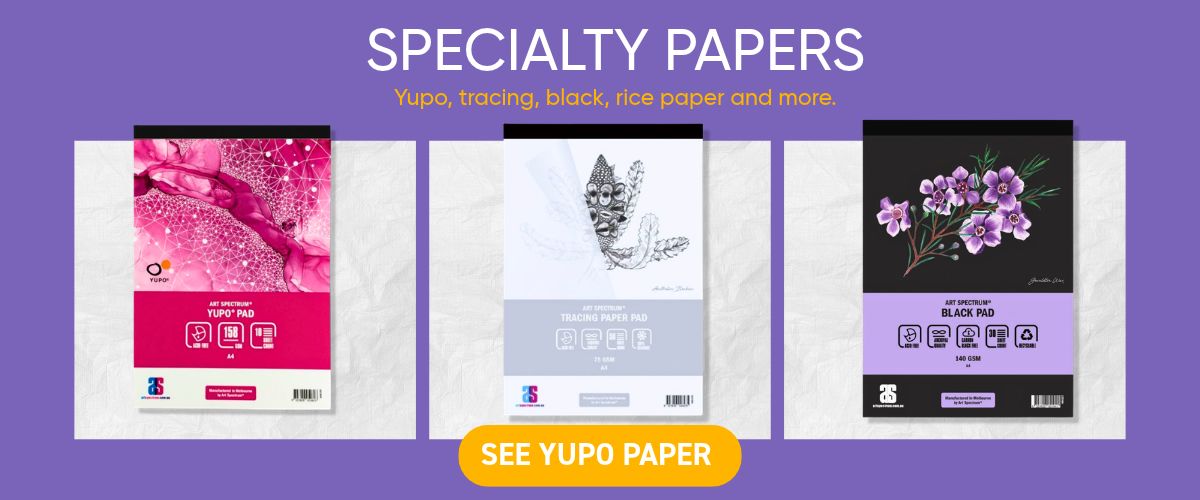
What are specialty art papers?
| Quick answer Specialty papers are designed for particular techniques, and some behave completely differently from ordinary art paper! Yupo is non-absorbent, so watercolour and alcohol ink glide across it. Tracing paper is translucent for transferring designs, black paper makes light and metallic colours pop, and rice paper suits printmaking, ink painting and calligraphy. |
Now for the fun stuff! Specialty papers are where things get a little interesting. Some feel more like plastic than paper, others are almost see-through, and some can completely change how your favourite art supplies behave.
Here's a little look at what makes each one special:
Yupo paper: Imagine painting on a smooth, slightly plasticky surface where the paint doesn't soak in. That's Yupo! This synthetic paper is non-absorbent, so watercolour and alcohol inks can glide, pool and create beautiful flowing effects. It's brilliant for abstract art, alcohol ink experiments and anyone who loves a little unpredictability.
Tracing paper: Remember tracing pictures as a kid? Same idea, just with a lot more creative possibilities! This thin, translucent paper lets you see your original drawing underneath, making it perfect for transferring designs, refining illustrations and planning compositions.
Black paper: Think of a blackboard, but for art supplies! Black paper creates a dramatic background for white gel pens, metallic markers, POSCA paint markers and bright coloured pencils. It's especially lovely for night skies, galaxy drawings and bold lettering.
Rice paper: Often soft, lightweight and beautifully textured, rice paper has a delicate, almost fabric-like feel. Different varieties are used for traditional ink painting, calligraphy and printmaking. Some are surprisingly strong despite how thin they feel!
| Tip from the Shed Feeling adventurous? Pick up a few sheets of specialty paper and try your favourite art supplies on something completely different. You might discover a whole new technique just by changing what's underneath your paint or pencils! |
| Pick | Good for | Why it works |
|---|---|---|
| Art Spectrum Yupo Paper Pad, A4 158gsm, 10 Sheets | Alcohol ink and fluid painting | Synthetic paper that does not absorb, so ink and paint flow and can be lifted. Different from every other paper here, in a good way. |
| Art Spectrum Tracing Paper Pad, A4 75gsm, 50 Sheets | Transferring and planning designs | Translucent sheets for tracing a drawing or planning before the final piece. |
| Art Spectrum Black Paper Pad, A4 140gsm, 30 Sheets | Gel pens, white pencil and paint pens | Black pages make light colours glow. |
| Richeson Rice Paper Pad, 12 x 18 Inch, 50 Sheets (while stocks last) | Calligraphy and printmaking | A thin, delicate paper pad that suits brush work and printmaking. |
| Tip from the Shed Yupo is slippery. Let each layer dry fully before you add more, and expect a very different painting experience from regular paper. |
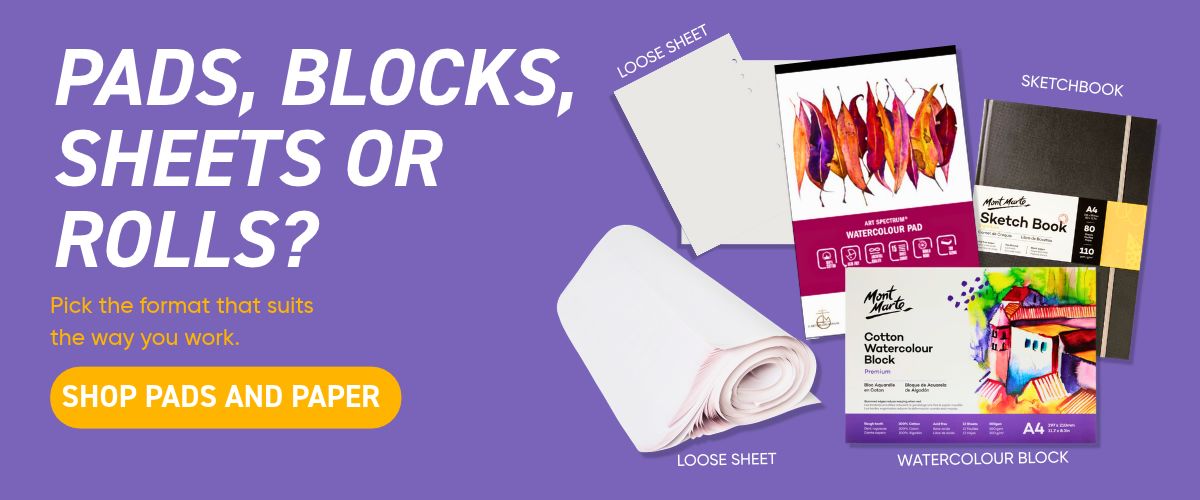
Pads, blocks, loose sheets, rolls and sketchbooks
| Quick answer Art paper comes in all sorts of formats! Pads are glued along one edge so sheets tear off easily. Blocks are glued around the edges to help minimise buckling. Loose sheets suit larger artworks or stretching, rolls give you room for big projects, and sketchbooks keep your creations together in one portable place. |
Here's something you might not realise: two packs of art paper can contain the exact same paper but feel completely different to work with, simply because of how they're packaged!
Think about where and how you like to create. Love taking your pencils to the park or sketching in a café? A bound sketchbook keeps everything together. Prefer painting big, expressive artworks at your desk? Loose sheets or a paper roll might be more your style.
And if you've ever wrestled with a watercolour painting that's determined to curl up at the edges, a watercolour block might become your new favourite! Its glued edges help keep the paper secure as you paint and dry, although very wet washes can still cause some buckling.
There's no secret formula here. The best paper format is simply the one that makes creating easier and more enjoyable for you!
| Format | How it works | Best for | At Art Shed |
|---|---|---|---|
| Pad | Sheets glued along one edge, tear off as needed | Everyday practice and most dry media | Art Spectrum 100% Cotton Watercolour Pad |
| Block | Sheets glued on all four sides. Paint, dry, then slide a knife around to release the top sheet | Wet watercolour without stretching | Fabriano Artistico Enhanced Watercolour Block, 23 x 30cm (while stocks last) |
| Loose sheets | Single sheets, often in a pack | Special pieces and stretching | Mont Marte Premium Cotton Watercolour Paper |
| Roll | Long length you cut to size | Big gestural practice and large studies | Prism Newsprint Roll, 760mm x 10m (while stocks last) |
| Sketchbook | Bound pages, spiral or hardbound | Travel, daily drawing and keeping everything in one place | Mont Marte Signature Sketch Book, Hardbound, A4 |
A block is a lovely thing if you paint with a lot of water. It saves stretching, and the paper stays flat until you remove it. Pads are fine for lighter work or if you do not mind a bit of buckle.
The best format is the one that gets you drawing or painting today.
Common paper problems and how to fix them
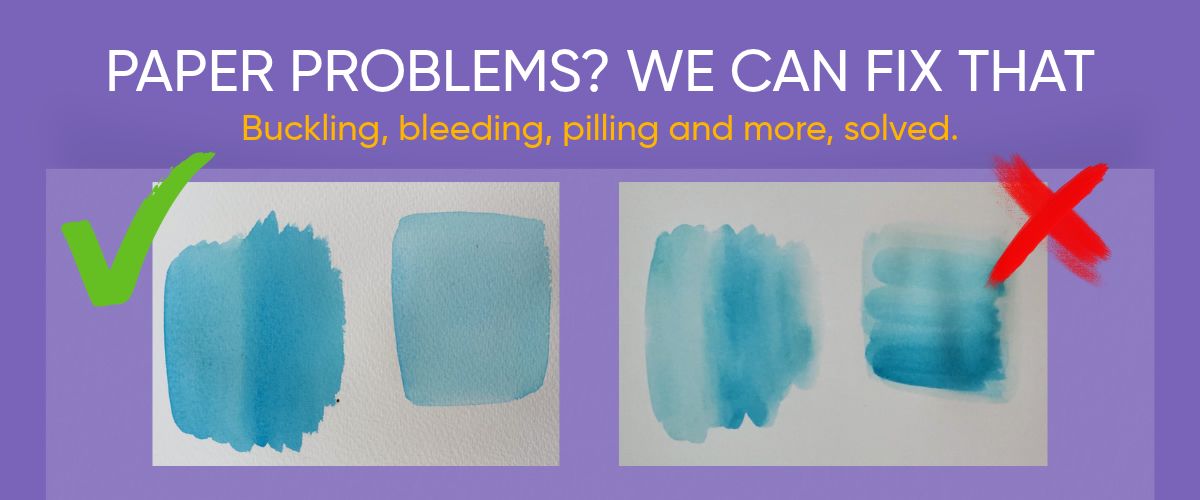
| Quick answer Most paper problems come down to using the wrong paper for your medium, or asking a little too much of the sheet! Buckling means the paper absorbed moisture, so try heavier paper or stretching. Bleeding and feathering mean ink is spreading or soaking through, so look for bleedproof paper or smooth Bristol. Pilling needs a gentler touch and sturdier paper. |
Is your paper curling up like a potato chip? Are your beautifully crisp marker lines turning into fuzzy blobs? Or have you somehow managed to rub a hole right through your watercolour painting?
Before you blame your brushes, paints or artistic abilities, let's have a look at what's happening underneath them!
Different types of art paper have different limits, and sometimes a little change in paper weight, texture or technique is all it takes to get things working beautifully again.
Here are some of the most common paper problems we hear about at Art Shed, why they happen and a few easy tricks to help fix them.
| Problem | Likely cause | Easy fix |
|---|---|---|
| Paper buckles or ripples | Paper is too light for the amount of water | Use 300gsm paper, a block, or stretch the sheet. Our guide to stretching watercolour paper shows how |
| Marker or ink bleeds through | Paper is too thin or absorbent | Switch to bleedproof marker paper or smooth Bristol, and slide a spare sheet underneath |
| Ink or paint feathers at the edges | Paper is not sized enough | Use sized paper, such as watercolour or Bristol |
| Paint beads up and will not spread | A very smooth or coated surface, or oils from fingers | Keep your hands off the working area, or lightly wet the surface first |
| Surface pills or rolls up | Too much scrubbing or erasing | Use a lighter touch, wait for layers to dry, and choose a heavier or cotton paper |
| Paint sinks in and looks dull | Paper is too absorbent | Move to sized watercolour or mixed media paper |
| Pencil will not build up | Surface is too smooth | Try a paper with a little tooth |
| Paper yellows over time | Acidic paper | Use acid-free or cotton paper for work you want to keep |
| Tip from the Shed Keep a scrap of each paper you use and write the medium and result on the back. In a few months you will have your own paper guide. |
A paper problem is usually a paper choice, which is very easy to change.

How to choose art paper: a five-step checklist
| Quick answer Choosing art paper doesn't have to feel like a guessing game! Start with your medium, then consider weight (GSM), surface, fibre (cotton or cellulose), and finally format and size. As a starting point, try 300gsm watercolour paper, bleedproof or smooth Bristol for markers, toothy paper for pastels and heavyweight mixed media paper for experimenting. |
| Step | Ask yourself | Then choose |
|---|---|---|
| 1. Medium | What will I put on this paper? | Use the quick reference table at the top of this guide |
| 2. Weight | Will it get wet? | Light for dry media, 300gsm for watercolour, heavier for thick paint |
| 3. Surface | How much texture do I want? | Smooth for detail, medium for most things, rough for texture |
| 4. Fibre and quality | Am I practising or making something to keep? | Cellulose for practice, cotton and acid-free for keepers |
| 5. Format and size | How do I work and where? | Pad for daily use, block for wet work, sketchbook for travel |
If you are still unsure, ask us. The Art Shed team paints, draws and sketches on this paper every week, and we are always happy to help you find a match.
Five questions, one very happy sheet of paper.
Frequently asked questions
What GSM is best for watercolour paper?
300gsm is the standard for watercolour, because it holds water without buckling too much. Lighter paper, around 190gsm to 200gsm, works for practice, sketching and light washes, but may ripple. If you like a lot of water, choose 300gsm or heavier, or use a watercolour block.
What is the difference between hot pressed and cold pressed paper?
Hot pressed paper is smooth and suits fine detail, ink and smooth washes. Cold pressed paper has a light texture and is the best all-rounder for watercolour. Rough paper has the strongest texture. Cold pressed is sometimes labelled medium or NOT, and is the usual starting point.
Is cotton watercolour paper worth it?
Cotton paper holds more water, dries more slowly and handles layering, lifting and scrubbing better than cellulose paper. It is worth it for finished pieces and techniques that need time. For practice and learning, good cellulose paper is a sensible, affordable choice.
Can I use watercolour paper for drawing?
Yes. Watercolour paper takes pencil, pen and charcoal well, and the texture adds character. Smooth hot pressed paper is best for fine detail. It costs more than drawing paper, so many artists save it for finished pieces and use sketch pads for practice.
What paper do I use for acrylic paint?
Use heavy paper, ideally an acrylic paint pad around 400gsm, or mixed media or watercolour paper at 300gsm. Thin sketch paper will buckle and can absorb the binder from the paint. Acrylic also works on canvas pads and boards if you prefer a firmer surface.
What is the best paper for markers?
Smooth, dense or bleed-resistant paper works best. Bleedproof marker paper or smooth Bristol keeps ink on the surface, so colours stay bright and do not soak through. Alcohol markers bleed on thin sketch paper, so slide a spare sheet underneath whatever you use.
Can I print on art paper?
Yes, in many cases. Check your printer's manual for its maximum paper weight and feed path first, as many home printers only take lighter sheets. Smooth hot pressed paper prints best, while textured paper can give patchy results. Always test on a spare sheet, and avoid laser printers, because the heat can damage some papers.
What is mixed media paper?
Mixed media paper is a heavy, lightly textured paper that handles wet and dry media together, such as watercolour, ink, markers, pencil and collage. It usually starts around 250gsm. It is a good choice for experimenting, though a dedicated watercolour paper is still better for big, wet washes.
Do I need to stretch watercolour paper?
Not always. Paper of 300gsm or heavier buckles less, and blocks stay flat as they dry. Lighter paper benefits from stretching if you use a lot of water. You can also tape the sheet to a board. Stretching is a good technique to know either way.
What is Yupo paper?
Yupo is a synthetic paper that does not absorb liquid. Paint and alcohol ink stay wet on the surface, so you can move, lift and blend them in ways that regular paper does not allow. It is a fun, different painting experience, and it is popular for alcohol ink and fluid art.
What is the difference between a pad and a block?
A pad is glued along one edge, and you tear off sheets as needed. A block is glued on all four sides, so the paper dries flat when you paint wet. You release the top sheet by sliding a knife around the edge. Blocks save you from stretching.
Shop art paper by type
Well, would you look at that! Who knew there was so much to say about a humble sheet of paper? Hopefully, it's earned a little more appreciation in your art supplies collection!
Whether you're after smooth Bristol for detailed illustrations, heavyweight watercolour paper for dreamy washes or a trusty mixed media pad for a bit of everything, there's a paper out there that'll make your favourite supplies shine.
Ready to find your perfect match? Shop art paper by type below, and give your next masterpiece the paper it deserves!
| Paper type | Shop |
|---|---|
| Watercolour paper | Watercolour paper |
| Sketch and drawing pads | Sketchpads |
| Bristol paper | Bristol pads |
| Pastel paper | Pastel papers |
| Mixed media paper | Mixed media pads and paper |
| Yupo paper | Yupo paper |
| Everything else | All art pads and paper |
Whatever you make, we hope this guide helps you pick a sheet that is on your side. Happy painting, drawing and sketching.