


Spray Paint Spotlight: Liquitex vs Montana
Author: The Art Shed Team Date Posted:10 March 2026
Spray paint tends to get a bit of a bad rap thanks to hardware-store cans and questionable alleyway artwork. But in the hands of artists, a good spray can is one of the most versatile tools in the studio. From large murals and street art to canvas pieces, mixed media work and layered textures, aerosol paints let you build colour quickly, create buttery smooth fades and cover surfaces in ways brushes just can’t compete with.
Modern artist spray paints are built specifically for creative work, with high-quality pigments, specialised formulas and controlled pressure systems that make them far more than just paint in a can. And if you’ve ever stood in front of a wall of spray colours wondering which one is actually worth using, you’re definitely not alone.
Two of the most popular spray paint brands artists ask us about at Art Shed are Liquitex Professional Spray Paint and Montana spray paint. Both have developed cult followings among artists, but they are designed with slightly different creative workflows in mind. Liquitex is known for its water-based acrylic formula, fine art pigments and studio-friendly performance, while Montana is famous in the world of graffiti and street art for its durable acrylic-nitro paint systems and reliable coverage. Liquitex spray paint uses highly lightfast pigments in a low-odour water-based formulation that dries to a permanent acrylic film once the water evaporates, making it compatible with traditional acrylic painting techniques.
To see how these two paints compare in real-world use, our team at Art Shed decided to run a simple side-by-side test using Liquitex Professional Spray Paint and Montana Metallic Effect Spray Paint on canvas. We looked at how each paint handled during application, how the colours built up with layering, and what the final finish looked like once dry. If you’ve ever wondered which spray paint might suit your style, workspace or next creative project, this comparison will give you a closer look at how these two artist favourites perform.
Why Artists Use Spray Paint
Spray paint wasn’t originally invented for artists. The first aerosol paint can was developed in the late 1940s by Edward Seymour, who created a pressurised system that allowed paint to be sprayed evenly from a can. It was initially used for industrial and household applications, But artists, being artists, immediately realised this strange new tool had serious creative potential.
By the 1960s and 70s, spray paint had become closely tied to graffiti culture, particularly in cities like New York where artists began using aerosol cans to create large lettering and murals The appeal was pretty obvious. Spray paint is fast, portable and covers large surfaces in seconds. Instead of brush strokes, the paint comes out as a fine mist, which makes it possible to build smooth fades, soft air-brushed colour transitions and huge blocks of colour with very little effort.
Today spray paint is widely used in both street art and fine art studios. The atomised spray creates smooth colour fields, soft gradients and atmospheric layers that are difficult to achieve with traditional brushes. Many artists use spray paint for underpainting on canvas, building colour quickly before adding brushwork with acrylic or mixed media.
Mixed media artists also love spray paint because it works well with stencils, masking techniques, collage and markers. Combined with modern artist-grade pigments, specialised formulas and controlled spray systems, spray paint has evolved into one of the most versatile tools for contemporary creative work.
Montana Spray Paint
If Liquitex feels like the spray paint that grew up in the studio, Montana is the one that grew up on the street. The brand has been closely tied to graffiti and street art culture for decades and is widely considered one of the most recognised spray paint brands in the world.
Montana spray paint was developed specifically for aerosol artists, particularly those working on murals, walls and large-scale outdoor artwork where coverage, reliability and colour choice really matter. Over time it became a go-to brand for graffiti writers, muralists and street artists thanks to its strong colour payoff, consistent spray performance and huge range of colours and finishes.
Most Montana spray paints use an acrylic-nitro combination formula, which is designed to deliver bold colour, quick drying times and a durable finish. Compared to water-based sprays, this formula tends to have slightly stronger fumes, but it also allows the paint to dry quickly and hold up well on a wide variety of surfaces.
One of the reasons artists gravitate toward Montana is the feel of the spray itself. The cans are designed to work with interchangeable caps, which means artists can swap caps to change the spray width and flow. With the right cap you can fill large areas quickly or switch to thin lines and sharper details, making the can feel almost like a drawing tool.
Coverage is another area where Montana shines. The paint lays down smoothly and builds colour quickly, which is especially useful when working on larger surfaces like murals or bold graphic artwork.
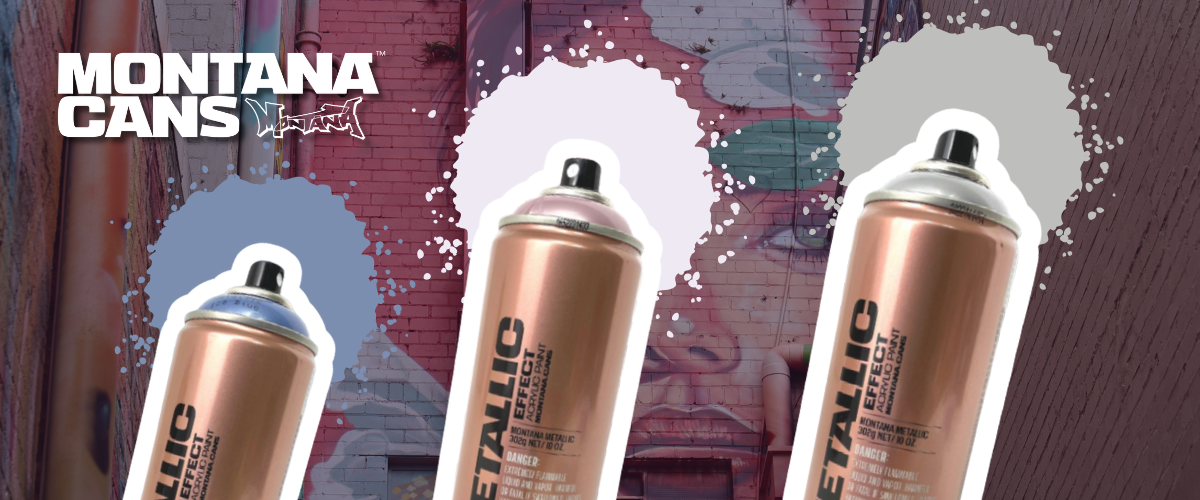
At Art Shed, the Montana range we currently stock is the Montana Metallic Effect Spray Paints. These sprays bring the same reliability and spray control Montana is known for, but with an added metallic finish that catches light and adds a reflective shimmer to artwork.
Metallic sprays can be a really fun way to introduce something different into a piece. They’re often used for highlights, accents, lettering, decorative objects and layered effects where artists want the colour to shift and reflect light across the surface.
Montana Metallic sprays work well on a wide range of surfaces including canvas, wood, metal, glass, ceramics, cardboard and primed panels, making them suitable for both studio projects and decorative artwork.
Because metallic pigments behave a little differently to standard colours, many artists apply them in multiple light layers to build the reflective finish gradually. The end result is a semi-gloss metallic surface that can add a striking visual element to paintings, mixed media work or custom objects.
In short, Montana spray paint is built for artists who enjoy the classic aerosol feel, strong coverage and bold colour application that spray paint is known for. And if you’re looking to add a bit of shine or reflective detail to your work, the Metallic range is a great way to experiment with those effects.
Top Tips for Using Montana Spray Paint
A few small techniques can make a big difference to how your spray paint performs and how the final finish looks.
Start by shaking the can thoroughly for around three minutes before spraying. This helps properly mix the pigment and binder inside the can, which is especially important with metallic paints where heavier reflective pigments can settle over time. It’s also a good idea to give the can another quick shake every now and then while you’re working to keep the colour consistent.
For the smoothest results, hold the can around 15–20cm away from the surface and apply the paint in light, even passes rather than heavy coats. Building colour gradually with multiple thin layers will give you better control and help prevent drips or uneven coverage.
If you want to get the most out of the metallic finish, try priming your surface first, ideally with a similar base colour.
When spraying, slightly vary your direction between passes, moving vertically on one layer and horizontally on the next, which helps create a more even paint distribution across the surface.
Montana sprays perform best when used in moderate temperatures, ideally somewhere around 10–15°C. Drying times can vary depending on temperature and humidity, but as a general guide the paint will usually be dust dry in about 10 minutes, touch dry in around 20 minutes, and fully cured within 24 hours.
Once your artwork has fully cured, you can protect the surface by applying a spray varnish in Gloss, Semi-Gloss or Matte. This helps seal the paint and adds an extra layer of protection.
click here to shop the range
Liquitex Professional Spray Paint
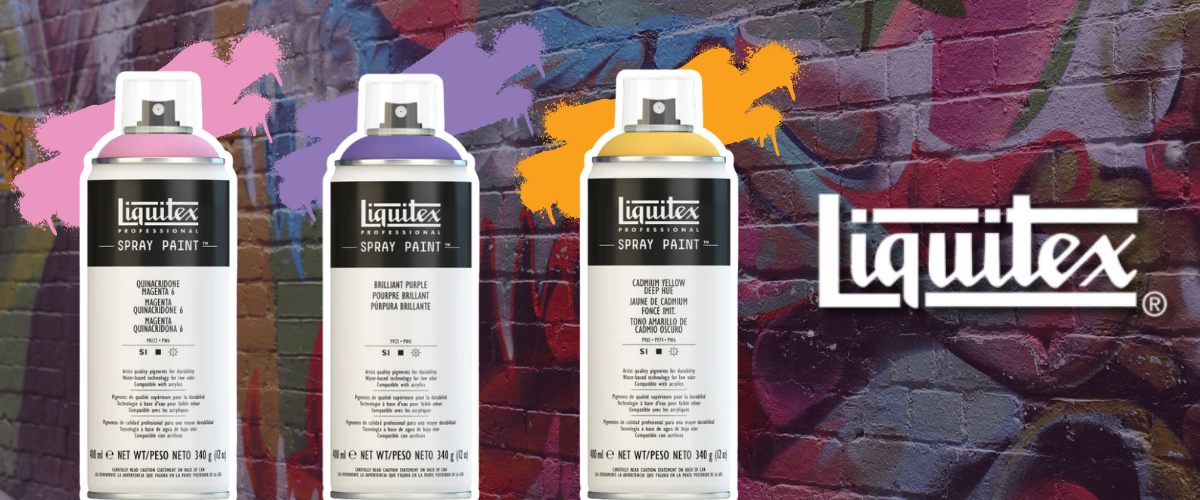
If you’ve spent any time around acrylic paints, chances are you’ve come across the Liquitex name before. The brand has been part of the fine art world for decades and was one of the original pioneers of modern acrylic paint. So when Liquitex released their professional spray paint range, the goal wasn’t to compete with traditional graffiti cans. Instead, they set out to create a spray paint that behaves much more like the acrylic paints artists already use in the studio.
Liquitex Professional Spray Paint is a water-based acrylic spray paint, which already makes it quite different from many traditional aerosol paints that rely on heavier solvent formulas. Because of this, it produces far fewer fumes and is generally more studio-friendly, making it a popular option for artists working indoors or in shared creative spaces.
What really sets Liquitex apart is how easily it fits into a traditional acrylic painting workflow. Once sprayed, the water evaporates and leaves behind a flexible acrylic film of colour. The result is a permanent, water-resistant layer that can be painted over without disturbing the paint underneath. Artists can spray down colour quickly and then move straight into brushwork, acrylic layers or mixed media techniques without worrying about bleeding or lifting previous layers.
Another benefit of the water-based formula is that the paint stays workable slightly longer than many traditional spray paints. This gives artists a little more time to build colour gradually, blend areas or layer soft air-brushed transitions before the paint fully dries.
The colour range is designed with fine artists in mind. Liquitex uses high-quality pigments with strong lightfastness, meaning the colours hold up well over time without fading. Many colours are also available in different opacity levels, including opaque, semi-opaque and transparent pigments. This allows artists to choose whether they want solid coverage or to slowly build colour in translucent layers.
In terms of finish, Liquitex spray paint dries to a matte surface, which many painters prefer because it blends seamlessly with other acrylic paints and mediums. A matte finish also avoids the glare you sometimes get from glossier sprays, making it ideal for both gallery work and photography.
Liquitex sprays can be used on a wide range of surfaces including primed canvas, card, board, wood, masonry, brick, glass, ceramics and even styrofoam, which makes them extremely versatile for studio work, murals and mixed media projects. Because the spray pattern is quite controlled, they’re also popular for techniques like stencilling, soft fades and quick underpainting layers before adding more detailed brushwork.
Many artists describe Liquitex spray paint as feeling more like painting with air than using a traditional spray can. It allows colour to be applied quickly and evenly while still giving artists a lot of control over how the paint builds on the surface.
Top Tips for Using Liquitex Spray Paint
Like most spray paints, a few small habits can make a big difference to how well the paint performs.
Start with a clean nozzle, as paint won’t flow properly through a clogged cap. If the nozzle is dirty, it’s best to swap it for a fresh one before starting. Always shake the can well for around a minute to keep the pigment and binder properly mixed.
When spraying, keep the can upright and apply the paint in short, controlled bursts rather than long continuous sprays. This helps avoid drips and gives you better control over how the colour builds.
After you finish using the can, turn it upside down and spray until only clear propellant comes out. This clears paint from the nozzle and helps prevent blockages next time you use it. Removing the cap and giving it a quick clean with soap and water, or using a dedicated cap cleaner, will also keep everything flowing smoothly.
Finally, pop the cap back on when you’re done. It might seem small, but keeping the nozzle covered helps stop paint drying inside the spray tip and keeps the can ready for the next project.
.png)
Liquitex vs Montana Spray Paint: Key Differences
While both Liquitex and Montana are high-quality spray paints used by artists around the world, they do feel quite different when you start using them. A lot of that comes down to how the paint is formulated and what type of artwork it’s designed for. Some artists prefer the softer, more controlled feel of Liquitex, while others love the bold coverage and classic aerosol punch that Montana delivers. Here are a few of the key differences artists tend to notice.
Spray Pressure
One of the first things you’ll notice when using these paints is the difference in spray pressure. Montana sprays typically have a stronger delivery, which comes from their acrylic-nitro formulation and traditional aerosol design. That stronger spray makes it easier to cover larger surfaces quickly, which is one of the reasons Montana has become so popular for murals, street art and bold graphic work.
Liquitex sprays, on the other hand, tend to feel softer and more controlled. The spray pattern is smoother and easier to manage, which many artists find helpful when working on canvas, mixed media pieces or projects where you want more precision. That controlled feel also makes it easier to build colour gradually and create soft air-brushed fades.
Finish
The finish of the paint is another noticeable difference. Liquitex spray paint dries down to a matte acrylic finish, which integrates beautifully with other acrylic paints and mediums. Because the surface isn’t glossy, it blends nicely with painted layers and avoids the glare you sometimes get from shinier sprays.
Montana Metallic sprays, as the name suggests, produce a semi-gloss metallic finish. The paint contains reflective pigments that catch the light and create a subtle shimmer across the surface. This makes metallic sprays particularly useful for highlights, lettering, decorative elements or adding visual contrast to a piece.
Pigment and Coverage
Both brands use strong, artist-grade pigments, but the way the colour builds can feel slightly different.
Liquitex spray paint lays down smooth, even colour fields that feel quite similar to working with traditional acrylic paint. Because the spray is controlled and the paint stays workable slightly longer, artists often use it for layered effects, underpainting and gradual colour blending.
Montana sprays are designed for fast, confident coverage. The stronger spray output makes it easier to fill larger areas quickly, which is ideal for murals, backgrounds and bold graphic shapes. With metallic colours especially, artists often build the effect using a few light passes to achieve an even reflective finish.
Common Spray Paint Mistakes (And How to Avoid Them)
Spray paint is pretty forgiving, but there are a few common mistakes that can make even great paint behave badly. A couple of small adjustments can make a huge difference to how smooth your results look.
Not shaking the can enough
Spray paint contains pigment, binder and propellant, and these can separate when the can sits for a while. If the paint isn’t mixed properly you can end up with patchy colour or inconsistent spray. Give the can a solid shake for at least a minute or two before you start, and a quick reshake every now and then while you’re working.
Spraying too heavily
One of the quickest ways to ruin a spray paint finish is laying down too much paint at once. Heavy coats can cause drips, uneven texture and longer drying times. Instead, build colour using multiple light passes, gradually layering the paint until you reach the coverage you want.
Holding the can too close
Distance matters more than most people realise. If the can is too close, the paint can pool and drip. Too far away and the colour can look dusty or uneven. A good working distance for most sprays is around 15–20cm from the surface.
Skipping surface preparation
Spray paint behaves best on a properly prepared surface. Using a primed surface helps paint adhere evenly and often makes colours appear stronger and more vibrant. This is especially helpful with metallic sprays, where the base colour can influence the final finish
.png)
Liquitex vs Montana Spray Paint: Test Results
Spray Control
One of the most noticeable differences came down to spray control.
Montana’s nozzle felt slightly stiffer, which actually worked in its favour. The resistance in the cap made it easier to control smaller bursts of paint, allowing for more precise application and tighter spray movements. The spray pattern also felt slimmer and more focused, which made it easier to control details and build colour exactly where it was needed.
Liquitex, on the other hand, dispersed paint over a wider spray area. This can be great when you want to quickly cover a broader space or create softer fades, but it does make it slightly harder to control very small details.
Coverage and Opacity
Coverage was another area where the paints behaved differently.
Montana applied a thicker first layer, which meant the paint reached strong opacity much more quickly. Even the first pass produced solid coverage, making it ideal when you want bold colour or when you’re filling larger areas.
Liquitex sprayed a lighter initial layer, which meant the first pass appeared more translucent. Rather than fully covering the surface straight away, the paint builds gradually with additional passes. This thinner application can actually be useful depending on the effect you’re after. Because it allows more of the underlying surface to show through, it can create softer transitions and allow textures like canvas weave to remain visible.
In short, if you're looking for immediate colour coverage, Montana tends to get there faster. If you want more gradual colour building, Liquitex can give you that flexibility.
Drying Time
Drying time also showed some differences between the two paints.
Liquitex applies a thinner layer of paint, which means each pass tends to dry fairly quickly. This can be helpful when you want to build colour gradually or move through layers without waiting too long between sprays.
Montana Metallic also dries quickly, but because it lays down a slightly heavier layer of paint, it can take a little longer to fully set on the surface.
Metallic Finish
Since the Montana option we stock is the Metallic Effect range, the finish behaves a little differently compared to Liquitex.
When first applied, Montana Metallic can appear slightly darker or more muted. As the paint dries, the metallic pigments begin to reflect light more strongly, revealing the signature metallic shimmer that the range is known for. The finish becomes noticeably brighter and more reflective as it cures.
Liquitex spray paint, by comparison, dries to a matte acrylic finish. This non-reflective surface integrates easily with traditional acrylic paints and mediums, which is why many artists like using it as part of a painting workflow.
Which Spray Paint Performs Better?
Rather than one being universally better, the results really come down to the type of effect you're aiming for.
If you're looking for strong coverage, precise control and a reflective metallic finish, Montana Metallic performed very well in our test. The focused spray pattern and thicker coverage make it useful when building bold layers or adding eye-catching highlights.
Liquitex, on the other hand, works nicely when you want lighter paint layers, softer colour transitions, or when you want the surface texture to remain visible through the paint. Because it dries matte and integrates easily with acrylic paints, many artists use it as part of a mixed media or painting process.
.png)
Frequently Asked Questions About Spray Paint
What Surfaces Can You Spray Paint?
Spray paint is surprisingly versatile and can be used on a wide range of surfaces as long as they’re properly prepared. Artists commonly spray paint on canvas, wood, cardboard, primed panels, brick, masonry, glass, ceramics and metal. Priming the surface first usually gives the best results, as it helps the paint adhere evenly and improves colour vibrancy.
Tips for Better Spray Paint Results
A few simple habits can dramatically improve your spray paint results. Always shake the can thoroughly before spraying, apply paint in multiple light layers instead of one heavy coat, and keep the can around 15–20cm away from the surface for the most even coverage. Preparing the surface with primer and working in a well-ventilated area will also help the paint perform at its best.
Which Spray Paint Is Better for Street Art?
For street art, murals and larger surfaces, many artists prefer spray paints with strong coverage and precise control, which is where brands like Montana are popular. The tighter spray pattern and thicker coverage make it easier to build bold shapes, lettering and colour fields on walls.
That said, plenty of artists also use spray paints like Liquitex when they want softer colour fades or to combine spray work with acrylic painting techniques.
Which Spray Paint Is Better for Fine Art?
Fine artists often look for spray paints that integrate well with traditional painting materials. Water-based acrylic sprays like Liquitex are commonly used for canvas work, mixed media and layered painting techniques, since they behave similarly to acrylic paint once dry.
Because they produce a matte finish and allow gradual colour building, they fit naturally into many studio painting workflows.
Can You Spray Paint Canvas?
Yes, spray paint works very well on canvas, especially when the surface has been properly primed with gesso. Primed canvas helps the paint adhere evenly and prevents the colour from soaking too deeply into the fabric.
Some artists even prefer spray paint for underpainting because it allows them to quickly build colour before adding brushwork.
Is Spray Paint Permanent?
Most artist-grade spray paints become permanent once fully dry. As the solvents or water evaporate, the paint forms a solid film that bonds to the surface.
For artwork that needs extra protection, many artists finish their work with a spray varnish, which helps protect the paint from scratches, UV exposure and environmental damage.
How Long Does Spray Paint Take to Dry?
Drying time can vary depending on the paint type, temperature and humidity. In general, spray paint will be dust dry within around 10 minutes and touch dry in about 20 minutes, although full curing can take up to 24 hours.
Applying multiple light layers instead of one heavy coat usually helps paint dry faster and more evenly.
Why Does Spray Paint Look Darker When First Applied?
Some spray paints, especially metallic finishes, can appear darker when first applied. As the paint dries and the pigments settle, the colour often becomes lighter and the reflective qualities become more visible.
This is particularly noticeable with metallic paints where the shimmer becomes stronger as the surface cures.
Do You Need Primer Before Spray Painting?
While spray paint can sometimes be applied directly to surfaces, using a primer or base coat usually produces better results. Primer helps paint adhere more evenly and often improves colour brightness and coverage.
This is especially helpful when painting porous surfaces like wood or canvas.
How Do You Prevent Spray Paint Drips?
The best way to prevent drips is to apply multiple thin layers instead of one heavy coat. Keep the can moving while spraying and maintain a consistent distance from the surface.
Starting and stopping your spray just off the edge of the artwork can also help prevent paint buildup.
Can You Mix Spray Paint With Acrylic Paint?
Yes. Many artists combine spray paint with traditional acrylic paints, especially when working on canvas or mixed media pieces.
Spray paint can be used to quickly build colour or backgrounds, while acrylic paint can then be applied with brushes for detail work and layering.
What Is the Difference Between Water-Based and Solvent Spray Paint?
Water-based spray paints typically produce lower fumes and integrate well with acrylic painting, which makes them popular for studio work. Solvent-based sprays often provide stronger coverage and faster drying, which is why they’re commonly used for murals and outdoor artwork.
Both types have their place depending on the project and working environment.
Is Spray Paint Good for Beginners?
Spray paint can actually be very beginner-friendly once you learn a few basic techniques. Starting with light layers, proper spray distance and well-prepared surfaces makes a big difference.
Many artists enjoy spray paint because it allows them to build colour quickly and experiment with textures and fades that are difficult to achieve with brushes.
Final Verdict
Both Liquitex and Montana bring something different to the table, and neither one is objectively “better” across every situation. It really comes down to how you like to work and what kind of result you’re aiming for.
Liquitex spray paint fits naturally into a traditional acrylic workflow. The thinner layers, matte finish and gradual build-up of colour make it a great choice if you’re working on canvas, experimenting with mixed media or combining spray with brushwork and acrylic painting.
Montana Metallic, on the other hand, delivers stronger coverage from the start along with that distinctive metallic shimmer. The tighter spray control and thicker application make it well suited for bold colour, defined shapes and reflective accents that stand out on the surface.
In reality, many artists end up using both. Liquitex can handle softer layers and painterly effects, while Montana Metallic adds those striking highlights and reflective finishes that instantly catch the eye.
Like most tools in art, the “best” option isn’t about the brand on the can, it’s about the effect you’re trying to create.