




Street Art & Graffiti Guide + Best Supplies
Author: The Art Shed Team Date Posted:1 March 2026
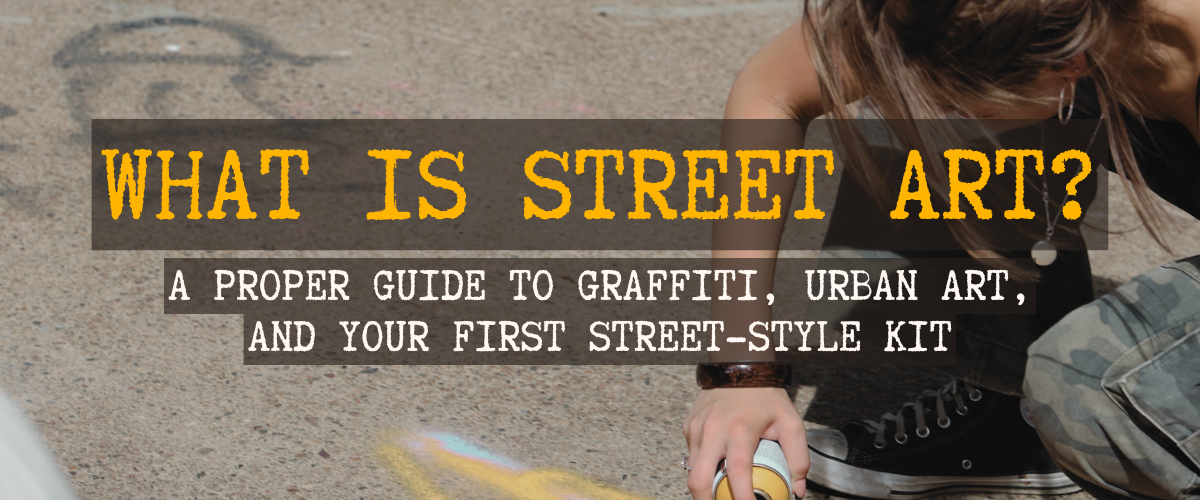
Street art is what happens when a city stops being background noise and becomes the canvas.
It’s the stencil half-peeled off a brick wall that you keep thinking about all day. The dripping letters on a roller door that feel louder than any billboard. The giant mural that turns a boring street into a moment, making you pause your busy life for just a second to stare. The sticker slapped on a signpost that makes you laugh, think, or feel something before you even realise why.
Street art is visual culture born from public spaces, shaped by graffiti, urban art, mixed media, and raw creative energy. It blends bold lettering, layered textures, graphic imagery, and street-style techniques into work that feels alive, rebellious, and like a comment on the human experience.
But it often gets lumped in with graffiti, murals, tagging, and anything that looks a little grungy or underground. So what is street art exactly, and how is it different from graffiti and urban art?
In this guide, we break it all down. You’ll explore the real meaning of street art, the roots of modern graffiti culture, how urban art evolved into today’s layered mixed media styles, and the techniques artists use now. Then we’ll get into the fun part: building your own street-style art starter kit using products from the Urban Sale, plus a few next-level upgrades to help you create work that feels bold, expressive, and unmistakably urban.
What is street art, exactly?
Street art is visual art inspired by public spaces and urban culture. It draws influence from city life, community stories, graffiti lettering, mixed media techniques, and large-scale murals, transforming everyday environments into places of creativity and connection.
Rather than living behind gallery walls, street art is designed to be experienced in real life. It appears in laneways, on building facades, around skateparks, in community spaces, and on surfaces that already carry the texture and history of a city. The goal isn’t just decoration. It’s communication. Street art tells stories, reflects local identity, celebrates creativity, and often brings colour and energy into spaces people pass through every day.
At its core, street art is about accessibility. Anyone can encounter it, connect with it, and feel something from it. That’s why so many artists are drawn to urban art styles. It creates a shared cultural experience, turning ordinary streets into open-air galleries and building a sense of community through art.
Today, street art exists across many spaces. You’ll see it in public murals, community art projects, legal walls, festivals, studios, sketchbooks, canvases, and mixed media artworks inspired by the street aesthetic. Whether it’s painted on a massive wall or created in a visual art diary at home, the spirit remains the same: bold expression rooted in urban culture.
Where modern graffiti and street art began
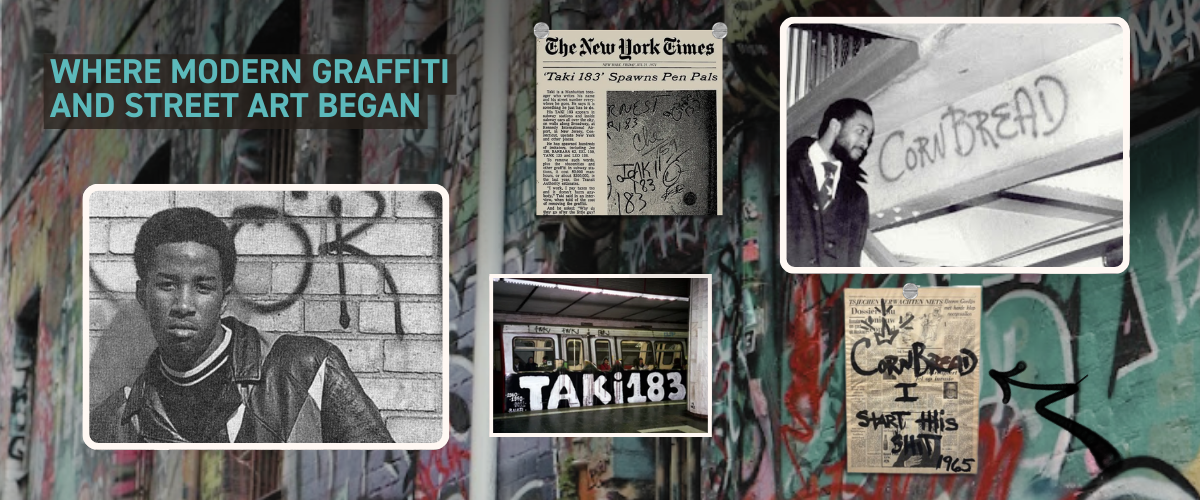
Modern graffiti culture, and the foundations of today’s street art, emerged in the late 1960s and early 1970s, when young writers began tagging public spaces to make their names known across their cities. One of the earliest and most cited pioneers was a Philadelphia teenager known as Cornbread, who started writing his nickname across the city in 1967, helping spark what would become a global movement.
Not long after, New York City became the epicentre of modern graffiti culture. Writers like TAKI 183, a messenger who tagged throughout NYC, inspired a wave of “getting up”, the practice of putting your name everywhere until it became impossible to ignore. By the early 1970s, simple tags evolved into larger letterforms, bold colours, outlines, arrows, and the early foundations of full graffiti pieces.
When trains changed everything
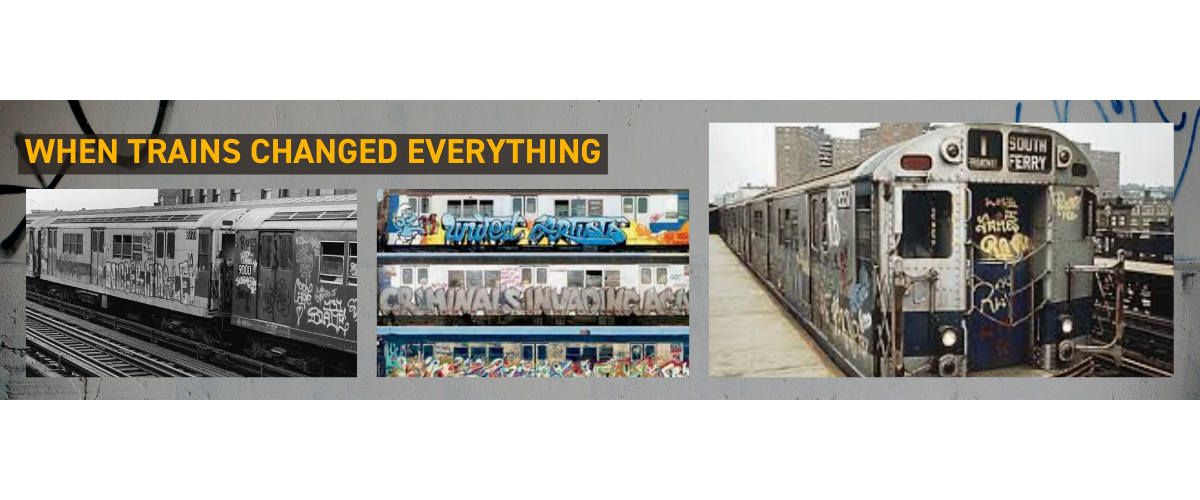
Graffiti truly exploded when it moved onto subway cars. Trains became rolling galleries, carrying artwork across boroughs and exposing styles to entire cities. This demand for visibility pushed rapid innovation. Writers developed bigger compositions, stronger colour control, and increasingly complex lettering styles, eventually giving rise to wildstyle, the interlocking, high-skill graffiti lettering still celebrated today.
By the late 1970s, full-car murals were common, crews had formed, and graffiti had evolved into a recognised visual language. While controversial, it was no longer dismissed as random markings. It was culture, skill, and identity on a massive scale.
The 1980s: graffiti spreads worldwide
The 1980s marked a turning point as graffiti became deeply connected with hip-hop culture, alongside DJing, MCing, breakdancing, and street fashion. Films, photography books, and media coverage carried graffiti culture across the globe, inspiring artists in London, Paris, Amsterdam, Berlin, Melbourne, Brisbane, and beyond. Leading to things like the graffiti of the berlin wall where remnants of the wall became open canvases for artists from around the world, or Works like the Pam the Bird tag, a recurring cartoon bird motif that has appeared across many Melbourne surfaces
As the movement spread, each city developed its own urban art styles, blending local culture with graffiti techniques. Around the same time, graffiti began entering galleries and studios, blurring the line between underground street culture and the traditional art world. Street aesthetics started influencing album covers, fashion, graphic design, and visual culture more broadly.
.png)
Punk, skate, and pop art: why street art looks the way it does
Street art didn’t develop in isolation. It grew through remixing, borrowing, and evolving alongside other creative movements.
Punk culture brought a DIY attitude and bold, fast messaging. Stencils became a powerful tool because they were quick, graphic, and easy to repeat, This approach helped shape the work of artists like Banksy, whose stencil pieces brought global attention to street art as a powerful form of public expression. By combining simple visuals with sharp messaging.
Skate culture treated the city as a creative playground rather than just a space to pass through. This overlap introduced sticker art, bold illustration styles, deck graphics, scuffed textures, and rebellious humour that still define urban aesthetics today.
Pop art introduced the influence of mass media, advertising, and iconic imagery into street art culture. Artists like Andy Warhol blurred the line between commercial visuals and fine art, proving that everyday symbols could become powerful cultural statements. Street artists adopted that same remix mentality, transforming familiar imagery into bold public art long before social media turned everything into a feed.
The 1990s: grunge textures, collage, and mixed media street art
The 1990s pushed urban art into a more layered, textured, and experimental direction. The grunge aesthetic introduced ripped posters, distressed typography, heavy collage, dripping paint, and intentionally rough finishes that made street art feel raw and alive.
Artists began working with a wider range of materials and surfaces, including wheatpaste, stickers, paint markers, acrylic inks, and mixed media techniques. Characters and visual storytelling became just as important as lettering, expanding what street art could look like.
2000s to today: street art becomes global culture
From the early 2000s onward, street art visibility exploded. Social media turned walls into shareable galleries, while festivals, legal mural programs, and community projects brought urban art into public spaces worldwide.
Street art styles spread into interior design, branding, fashion, and studio practice, while underground scenes continued pushing new techniques and visual experimentation.
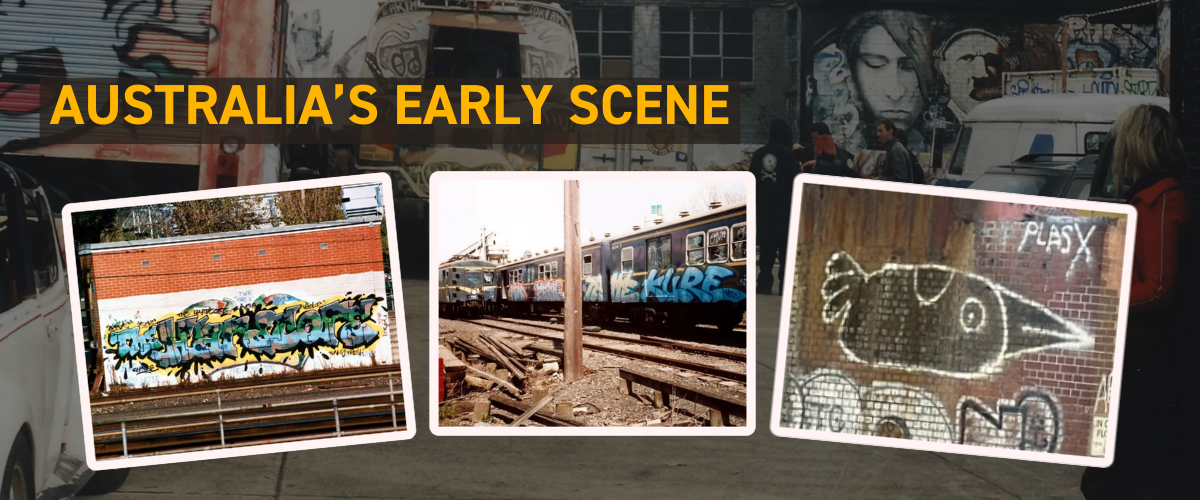
Street art today: culture, community, and everyday connection
In modern cities, street art has become part of everyday life. In places like Brisbane City and West End, and throughout Melbourne’s laneways and city streets, murals, paste-ups, and layered walls have transformed urban infrastructure into accessible public galleries. What were once blank concrete surfaces now tell stories, spark conversations, and bring colour into spaces built around the nine-to-five routine.
Street art is one of the most accessible forms of art in the world. You don’t need a ticket, a gallery invite, or art knowledge to experience it. You simply walk past it on your way to work, school, the gym, or a café. It belongs to everyone. That accessibility is a huge part of why urban art culture has grown so deeply into local communities.
For many artists, street art has become a voice. It reflects world events, celebrates local identity, honours cultural history, and responds to what’s happening right now. Walls often act like visual newspapers, documenting moments in time through imagery, colour, and message.
In Australia especially, street art is now a protected and celebrated part of city life. Councils support legal walls, community mural programs, and festivals that invite artists of all backgrounds to contribute. Young creatives use street art as a way to express themselves, connect with others, and keep creative culture alive in a fast-moving world.
So ingrained is street art in modern urban culture that many people can’t remember a time without it. It’s no longer just decoration, rebellion, or trend. It’s a living, evolving form of public expression that connects people to their cities, to each other, and to creativity itself.
.png)
Street art styles you’ll actually see
Street art isn’t one single look. It’s a mix of styles shaped by graffiti culture, mixed media techniques, and large-scale public murals. These are the main street art styles you’ll recognise fast.
Tagging and handstyles
Stylised signatures that form the foundation of graffiti culture, built on flow, repetition, and personal style.
Throw-ups
Bold bubble-letter forms designed to be quick, readable, and high-impact.
Pieces and wildstyle
Fully developed graffiti artworks with layered colour, outlines, and complex lettering. Wildstyle is the intricate, interlocking version that takes serious skill.
Stencils
Crisp, repeatable imagery used to spread graphic visuals quickly across cities.
Paste-ups and stickers
Printed artwork and sticker slaps layered onto walls for collage-style texture and strong messaging.
Murals
Large-scale public artworks that transform buildings into storytelling surfaces.
Mixed media street-style art
Urban-inspired work on canvas or boards using paint, ink, markers, collage, and texture.
The Urban Kits: Pick Your Weapon
You don’t need a warehouse wall or a hidden laneway to start making street-style work. You just need the right tools and a bit of nerve.
Below are three focused kits built from the Urban range, designed around how you actually want to create.
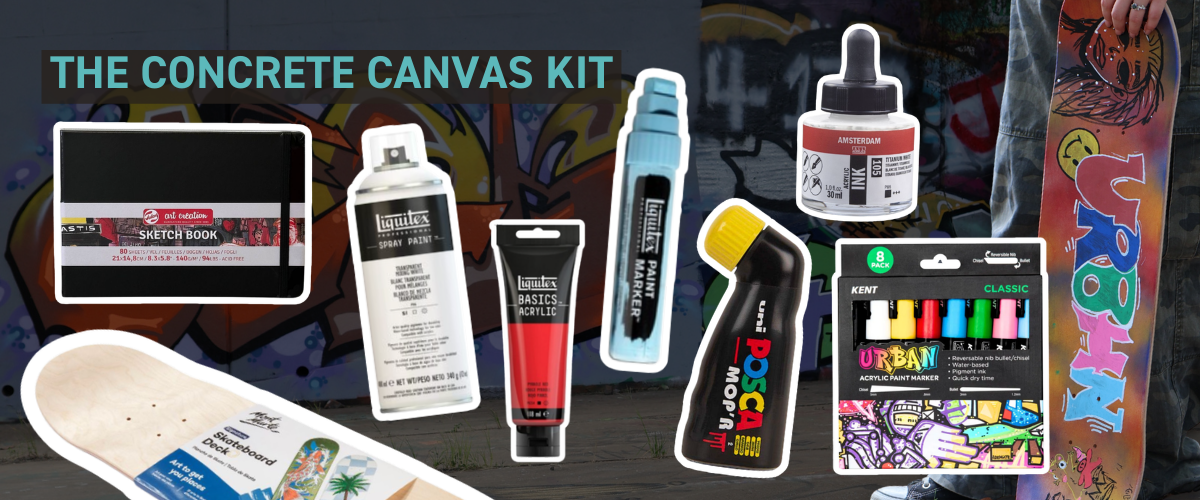
The Concrete Canvas Kit
For bold surfaces and real urban energy.
Start with a Mont Marte Wooden Skateboard Deck, a surface that instantly feels street. Sketch and plan in a Talens Art Creation Sketchbook before committing to the final piece.
Build atmosphere using Liquitex Professional Spray Paint for fades and coverage, then reinforce your colour blocks with Liquitex Basics Acrylic. Lock in outlines and graphic edges using Kent Urban Markers and Liquitex Professional Paint Markers, and add movement with a Posca Mop’r for thick, expressive drips. Finish with Amsterdam Acrylic Ink to bring depth and contrast into the layers.
This kit gives you gradients, fills, outlines and texture in one cohesive setup. It’s bold, layered and unapologetically urban.
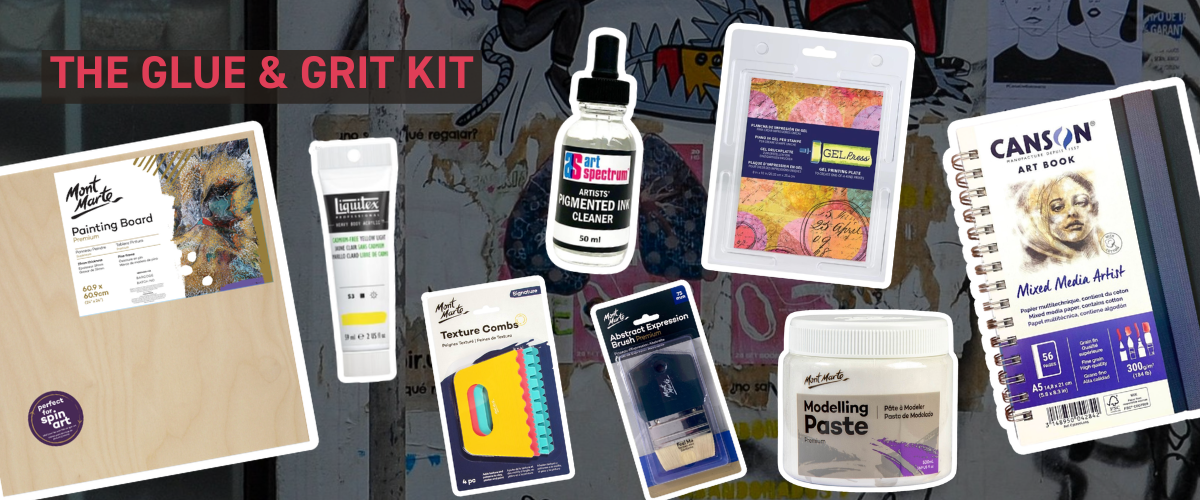
The Glue & Grit Kit
For layered walls, ripped posters, and controlled chaos.
Start in a Canson Mixed Media Artist Book to test composition and layering before committing to something larger. When you’re ready to build depth, move onto a Mont Marte Wooden Panel for a surface that behaves more like a real wall.
Prime with Mont Marte Gesso, then build physical texture using Modelling Paste and drag through Texture Combs to create raw, distressed effects. Lay down your base with Liquitex heavy body Acrylic using Mont Marte Expression Brushes for confident, gestural strokes and strong colour blocking.
From there, bring in the layered energy. Use a Gel Press Plate to print backgrounds and patterns, then introduce Art Spectrum Inks for staining, drips and contrast.
This kit is about depth. Paint. Texture. Layer. Let it dry. Paint over it again. It’s urban art in slow motion.
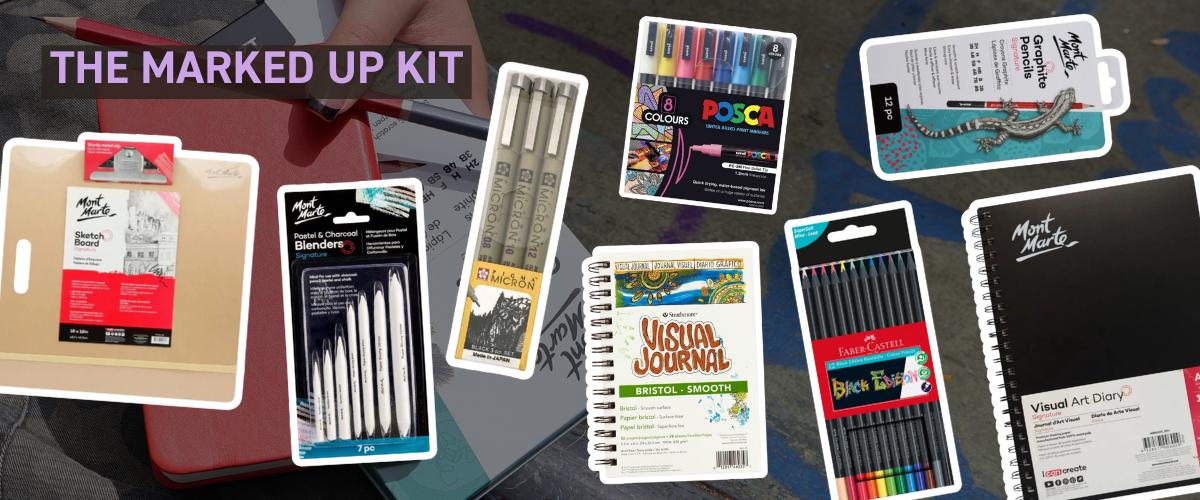
The Marked Up Kit
For handstyles, characters and building real skill.
This is where style gets earned.
Work daily in a Mont Marte Sketchbook or on a Mont Marte Sketch Board, then move to a Strathmore Bristol Smooth Pad when you want ultra-clean marker performance. Structure your designs with Mont Marte Graphic Pencils, blend with Mont Marte Blenders, and introduce grit using Nitram Charcoal for tonal depth.
Sharpen everything up with Sakura Micron Fineliners for crisp linework, then bring in colour using Posca Paint Pens or Faber-Castell Black Edition Pencils for bold graphic contrast.
This kit is perfect for refining graffiti lettering, building characters and developing pieces before scaling them up into paint or spray.
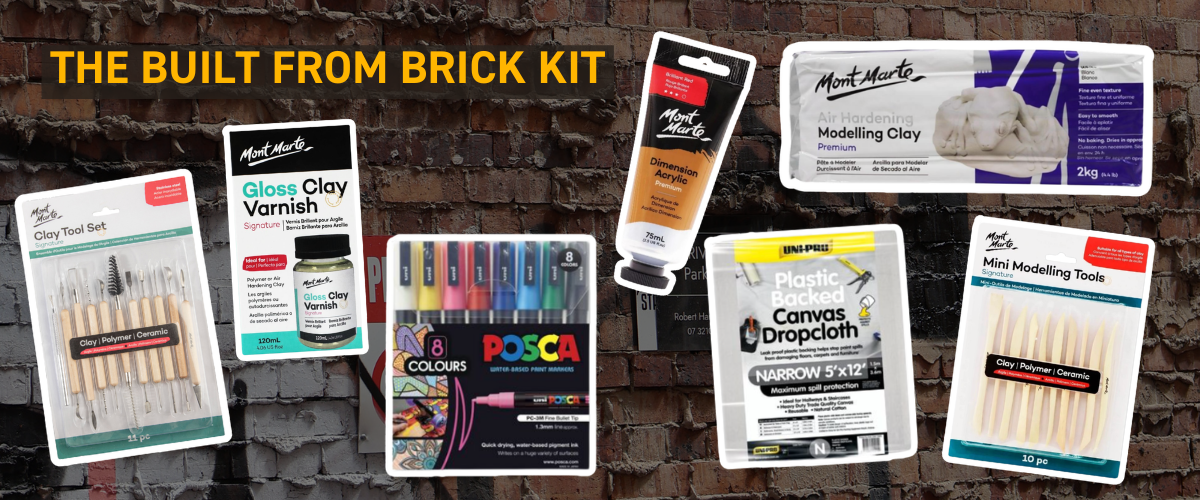
The Built From Brick Kit
For raised lettering, sculptural textures and experimental surfaces.
Street art doesn’t have to stay flat.
Start with Mont Marte Air Hardening Clay to build raised graffiti lettering, abstract textures or sculptural characters directly onto boards or panels. Shape and refine with Mont Marte Sculpting Tools, then seal and protect your finished work using Mont Marte Clay Varnish.
Once dry, bring it to life with Mont Marte Dimension Acrylic Paint for thick, tactile colour and bold surface presence. Add sharp graphic details using Posca Bullet Point Paint Pens for controlled outlines and contrast.
Lay everything down on a drop cloth and let it get messy.
This kit turns street-style art into something you can physically feel. It’s layered, raised and unapologetically different.
.png)
FAQs: Street Art, Graffiti & Urban Art Supplies
Is street art the same as graffiti?
Not exactly. Graffiti traditionally focuses on lettering, handstyles and name-based work. Street art is broader and includes murals, stencils, paste-ups, mixed media and graphic imagery. They overlap often, and many street artists begin in graffiti culture before expanding their style.
How do beginners start street art?
Start in a sketchbook. Build confidence with graphite, fineliners and paint pens before moving into acrylic paint or spray. Once you understand layering and composition, experiment on canvas pads, wooden panels or other surfaces.
What supplies do I need for street art?
At minimum: a sketchbook or smooth pad, fineliners or paint markers, and acrylic paint or spray paint. From there, you can add acrylic ink for drips, texture mediums for layering, or clay for dimensional work.
What’s the best paint for street art style?
Acrylic paint is the most versatile for studio-based street art. Medium-body paints are great for colour blocking and layering, while spray paint delivers smooth fades and bold coverage. Paint markers and inks help refine outlines and add detail.
Can you create street art on canvas?
Yes. Many artists use canvas, boards and mixed media pads to practise urban art techniques indoors. Layering, drips, stencils and bold lettering all translate well to studio surfaces.
Is street art legal in Australia?
It depends on location. Many councils support legal walls, mural programs and community projects, especially in cities like Melbourne and Brisbane. Art Shed does not encourage illegal graffiti or vandalism. Always check local guidelines before creating in public spaces.
How do you make street art look layered and textured?
Build from the background forward. Start with base colour, add texture using modelling paste or gel prints, then layer paint, ink drips and bold outlines. Let layers dry between applications to create depth rather than mud.
What paper works best for graffiti-style markers?
Smooth, heavyweight paper like Bristol is ideal for crisp marker lines and clean colour fills. Sketchbooks work well for practice, but smoother pads help markers perform at their best.
Final Thoughts
Street art has always been about more than surface. It’s culture, identity and shared space. It brightens cities built around routine and gives everyday people a way to express something real.
From Melbourne’s layered laneways to Brisbane’s bold murals, street art is now woven into urban life. It’s protected, celebrated and constantly evolving.
You don’t need a wall to be part of it. Just a surface and the right tools.
Explore The Urban Edit, choose your kit and start building something layered, loud and completely your own.
.png)
Art Shed does not condone illegal graffiti or unlawful street art activity. All campaign content and promotional materials encourage legal creative expression and use of approved surfaces such as sketchbooks, canvas, boards, and other appropriate art materials. Customers are encouraged to follow local laws and regulations when creating public artwork and to refer to their local government authorities for approved street art locations and guidelines.
Comments (1)
So cool!
By: Iggy on 1 March 2026Street art is such a huge part of the arts and it’s so cool to see an art store cover it like this! I never knew some of the history behind it so it was awesome to learn so much more about such a prominent category of art and also about how to get into the world of street art and graffiti as a beginner. Super useful :)
Art Shed Online Response
We agree! Our team will be so thrilled to hear your feedback, and we are so pleased you are enjoying our blog! Have fun!