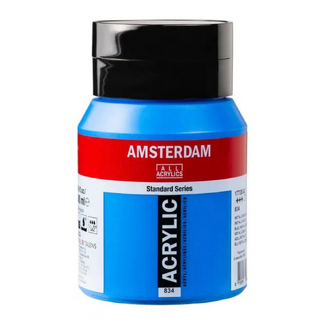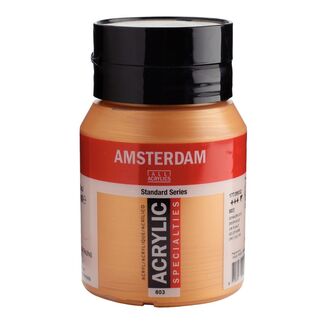


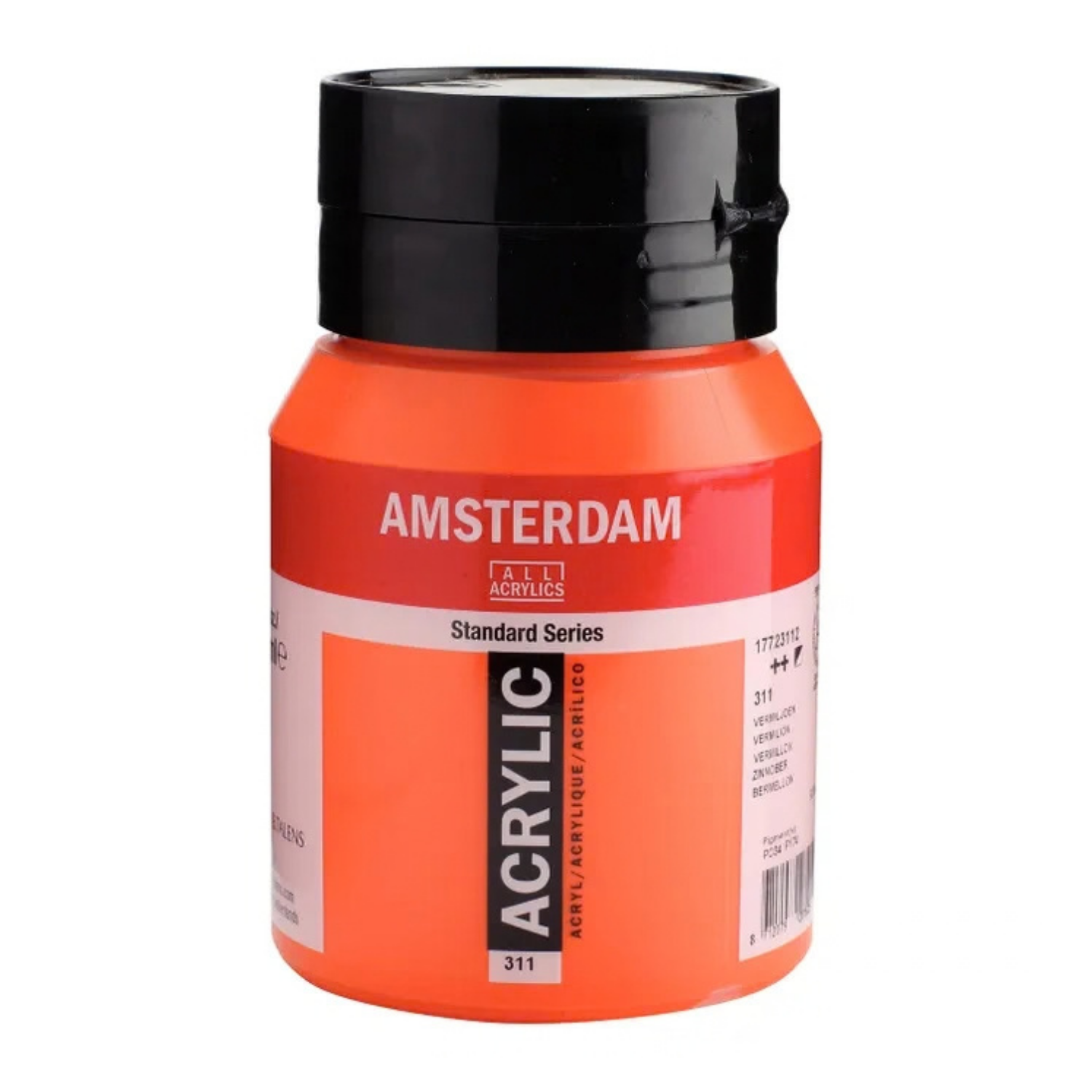
Amsterdam Acrylic Paint 500ml Bottle - Vermilion
Our everyday low price
or 4 interest-free installments of $11.74 with

Own it now, pay later

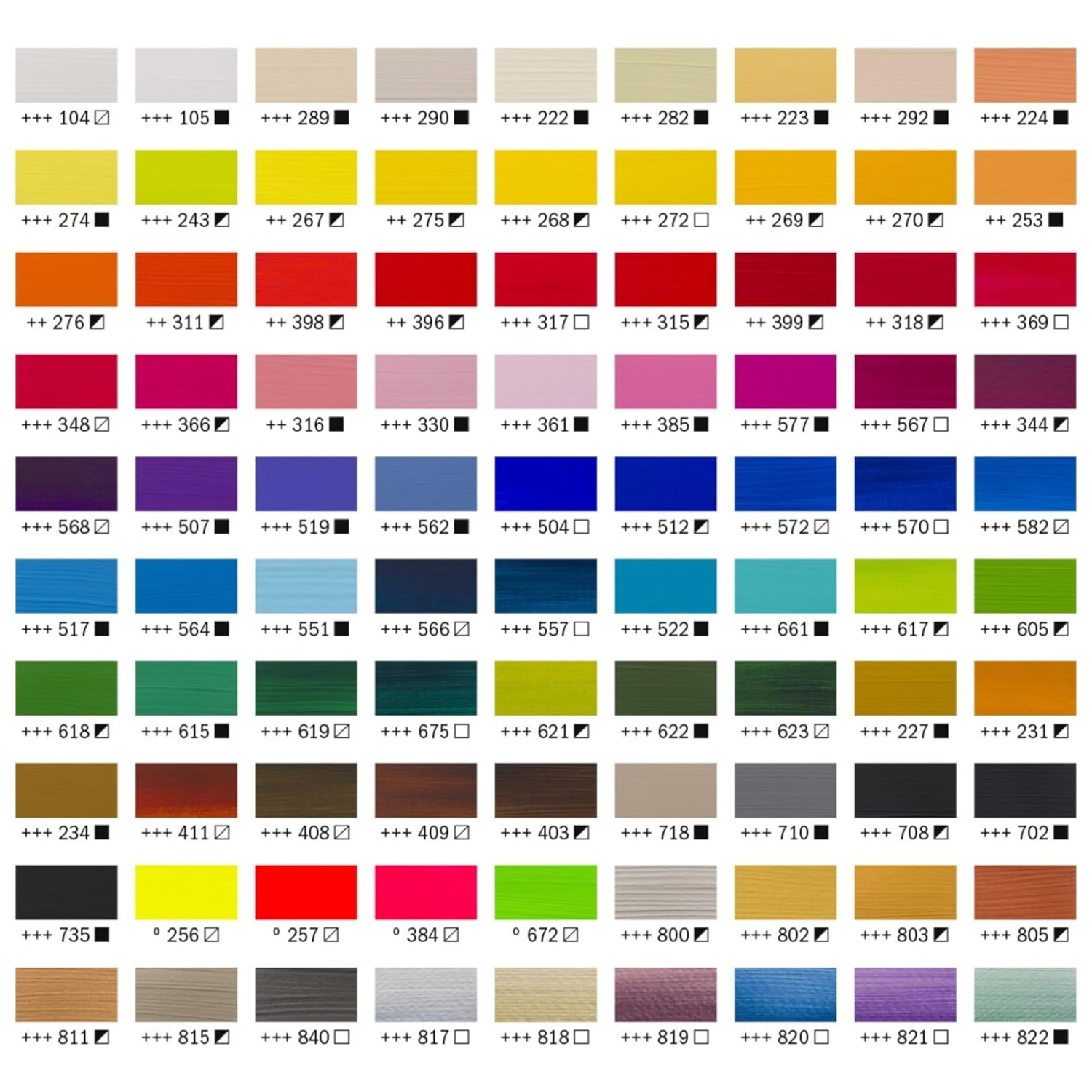
Amsterdam Standard Series Acrylic Paint 500ml Vermilion (311) is a semi-opaque red acrylic in a 500ml jar, made by Royal Talens in the Netherlands. It is made from diarylide orange and arylide yellow. Lightfastness is ++, rated to last at least 25 years under museum conditions. Art Shed ships it Australia wide, with same day dispatch before 11am AEST on business days.
The short answer: The jar is the right call when you empty tubes fast: large canvases, classes, murals, pouring. It holds about 4.2 times a 120ml tube. For occasional accent work, buy the tube.
Specifications at a glance
How Vermilion behaves
The pigment mix tells you how it will behave:
- PO34, diarylide orange: a warm orange that pushes a yellow or red towards the fire end
- PY74, arylide yellow: a clean mid yellow that mixes bright greens and oranges without muddying
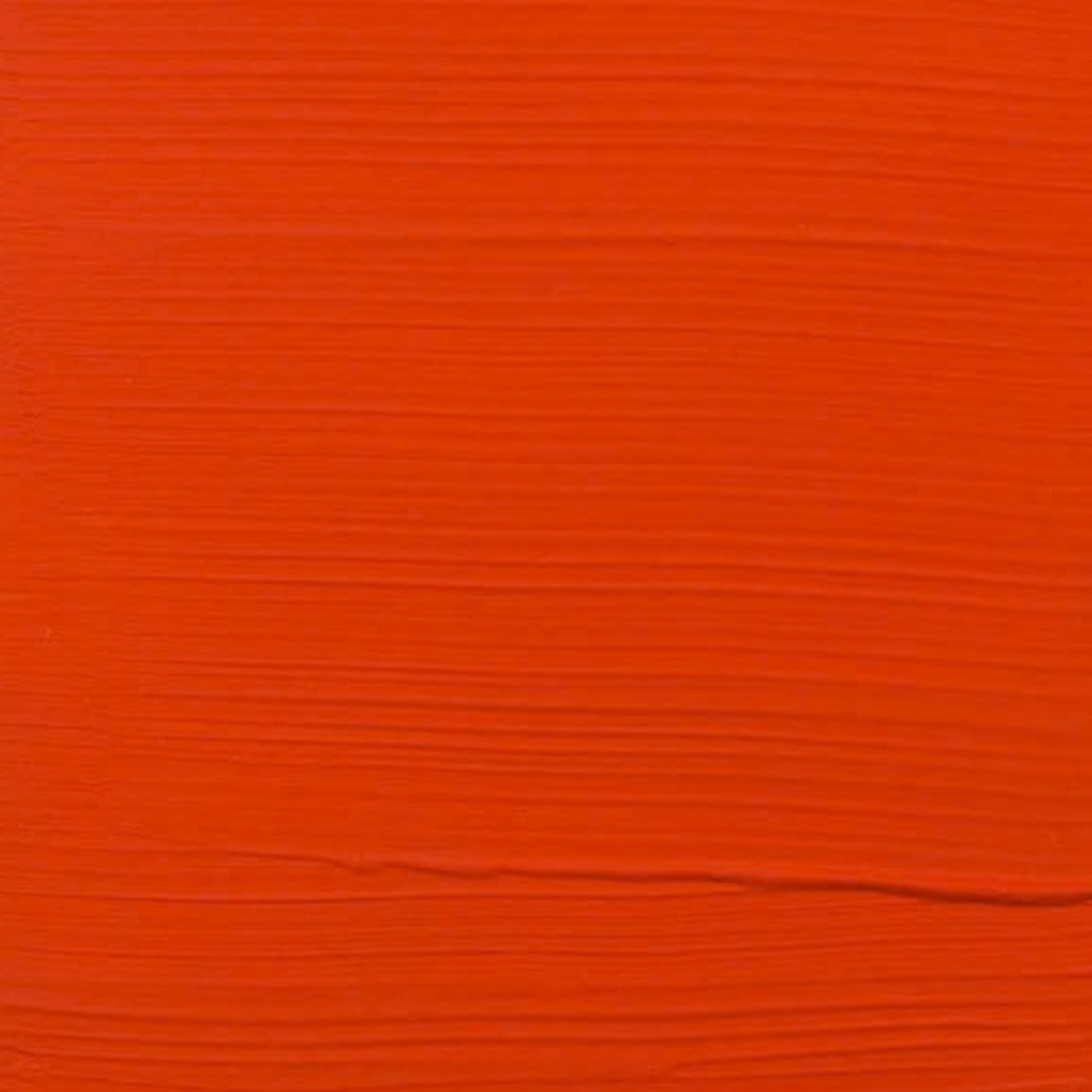
It is rated semi-opaque. It covers well but not completely. Two coats gives solid colour, one coat gives a veil that lets the ground show through.
Where Vermilion earns its place
A red earns its keep through mixing rather than through the passages where you actually see it as red.
- Still life and drapery, where red does the dramatic work
- Mixing browns and earths with a green or a yellow, rather than buying them
- Underpainting a landscape, which makes the greens over it sing
- Murals and props, where you need the same red across several sessions
Why the 500ml jar
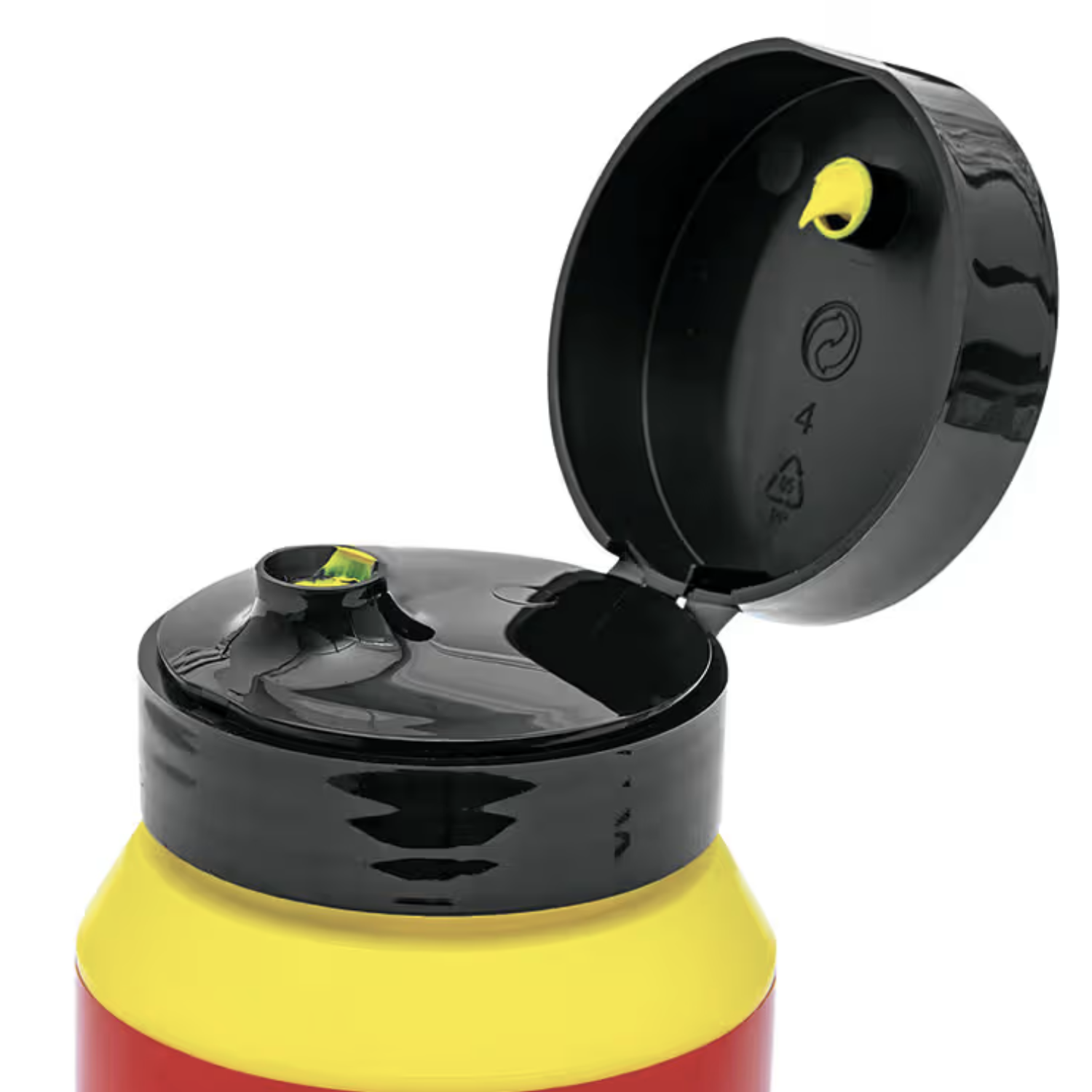
The honest test is how fast you empty a tube. A 500ml jar holds about 4.2 times the paint of a 120ml tube, so it is the size for colours you genuinely empty rather than dip into. The wide mouth matters too: it takes a palette knife or a large brush straight in, which a tube nozzle will not, and it reseals properly between sessions. If Vermilion is an accent colour for you, buy the tube instead and see the full Amsterdam range for sizes.
Surfaces and drying
This will go straight onto almost any slightly porous surface: canvas, canvas board, acrylic and watercolour paper, cardboard, MDF, plywood, raw and primed timber, stone, terracotta, plaster, concrete and render. It is alkali resistant, which is why it holds on masonry where many acrylics fail. Bare metal, glass and glossy plastic need a primer first. Expect thin layers to be dry within half an hour. Heavy application takes considerably longer, and full cure takes days. Clean brushes with soap and water before it sets.
Buying online in Australia
We are an Australian owned art store, with our Melbourne shop in Moorabbin, a Brisbane shop in West End, and warehouses that ship Australia wide. Same day dispatch on orders before 11am AEST on business days, outside sale periods. Express Post is about 1 to 2 business days to metro VIC, NSW, QLD, SA, ACT and TAS, and 2 to 3 days to WA, the NT and remote areas. Standard Post is about 2 to 5 business days to those metro areas and 6 to 8 days to WA, the NT and remote. Every order is tracked. Click and Collect from Moorabbin is ready in 1 to 3 business days, and we ship to New Zealand.
Frequently asked questions
Is Vermilion opaque or transparent?
Vermilion is semi-opaque. That determines how you should use it. An opaque colour covers what is beneath it in one or two coats and is what you want for blocking in and correcting. A semi-transparent or transparent colour lets the layer underneath influence the result, which makes it ideal for glazing and shadow work but frustrating if you are trying to cover something. Check the swatch on the jar against a black bar to see it for yourself.
What colours mix well with Vermilion?
All Amsterdam acrylics are intermixable, and Vermilion behaves predictably in mixes given it is semi-opaque. Start by mixing it with titanium white for tints and with a small amount of its complementary colour to knock back the intensity rather than reaching for black, which tends to deaden a mix. Keep a swatch card of your mixes with the ratios written on it, because you will want to repeat one later.
How lightfast is Amsterdam Vermilion?
Vermilion is rated ++ on Royal Talens' scale. Three pluses means the colour is rated to last at least 100 years under museum conditions, two pluses at least 25 years. Museum conditions means indoors and out of direct sunlight. That rating is why work painted in Amsterdam Standard Series is safe to sell, provided the buyer is not hanging it in a north-facing window.
Who makes Amsterdam acrylic paint?
Royal Talens, based in Apeldoorn in the Netherlands. The company was founded in 1899 and also makes Rembrandt oils and pastels, Van Gogh oils and watercolours, Cobra water-mixable oils, Ecoline liquid watercolour and Bruynzeel pencils. Amsterdam acrylics are manufactured in the Netherlands, not contract-made offshore, which is part of why batch-to-batch consistency is reliable when you are mixing a colour you need to match again later.
Can I click and collect from your Melbourne store?
Yes, Click and Collect is available from our Moorabbin store, for Melbourne metro customers. Order online and the Click and Collect option appears as a delivery method once you enter your address. Allow 1 to 3 business days for your order to be picked and packed, and we will email you when it is ready. Orders need to be collected within 4 business days of that notification. Someone else can collect on your behalf if they have the order number.
Can I paint acrylic over oil paint, or oil over acrylic?
Oil over acrylic is fine, and is a standard technique. Acrylic gesso and acrylic underpainting make a perfectly good ground for oils. Acrylic over oil is not fine. Acrylic is a water-based film and will not bond to an oily surface, so it will sit on top and eventually peel. The rule painters use is fat over lean: acrylic first, oil on top, never the other way around.
What surfaces can I use Amsterdam acrylic on?
Virtually any slightly porous surface: stretched canvas, canvas board, acrylic and watercolour paper, cardboard, MDF, plywood, raw and primed timber, stone, terracotta, plaster, concrete and rendered walls. It is alkali resistant, which is why it holds on masonry and render where many acrylics fail. Non-porous surfaces such as bare metal, glass and glossy plastic need an appropriate primer or adhesion promoter first, or the paint will lift.
Can acrylic paint go off or go mouldy?
It can, though it takes mistreatment. Signs are a sour smell, visible mould on the surface, lumps that will not redisperse, or paint that has separated with a watery layer on top that will not stir back in. Contamination from dirty brushes and palette scrapings is the usual cause, along with a lid that never sealed properly. A skin on the surface is normal, just lift it off rather than stirring it in.
Can I use acrylic paint on a wall in my house?
Yes, for feature walls, murals and children's rooms. Artist acrylic is far more pigmented than house paint, so it covers in fewer coats and goes further per litre than you would expect, which is why people usually use it for the artwork itself and standard wall paint for the surrounding field. Make sure the wall is clean and free of grease, and keep in mind that artist acrylic in a satin finish will not scrub like a washable interior paint unless you seal it.
Related
- The full Amsterdam acrylics range, every colour and size we stock
- A guide to Amsterdam acrylic paints, Standard versus Expert explained
- All acrylic paints at Art Shed, every brand compared
(NU17723112)
| SKU | NU17723112 |
| Barcode # | 8712079281625 |
| Brand | Royal Talens |
| Shipping Weight | 0.6050kg |
| Shipping Width | 0.050m |
| Shipping Height | 0.050m |
| Shipping Length | 0.050m |
More From This Category