

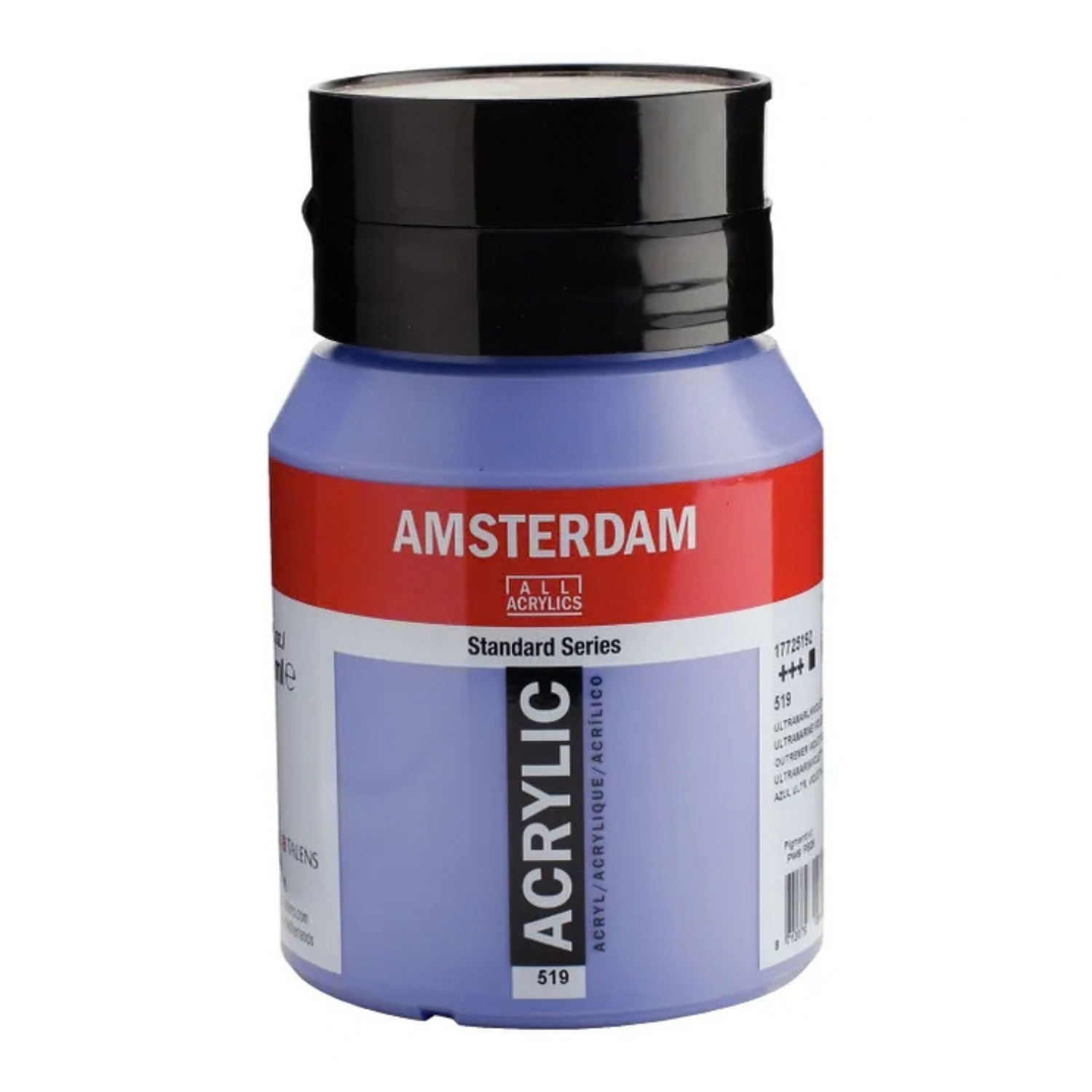
Amsterdam Acrylic Paint 500ml Bottle - Ultramarine Violet Light
Our everyday low price
or 4 interest-free installments of $11.74 with

Own it now, pay later

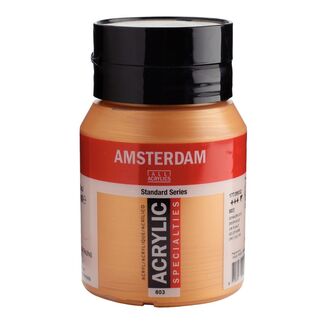
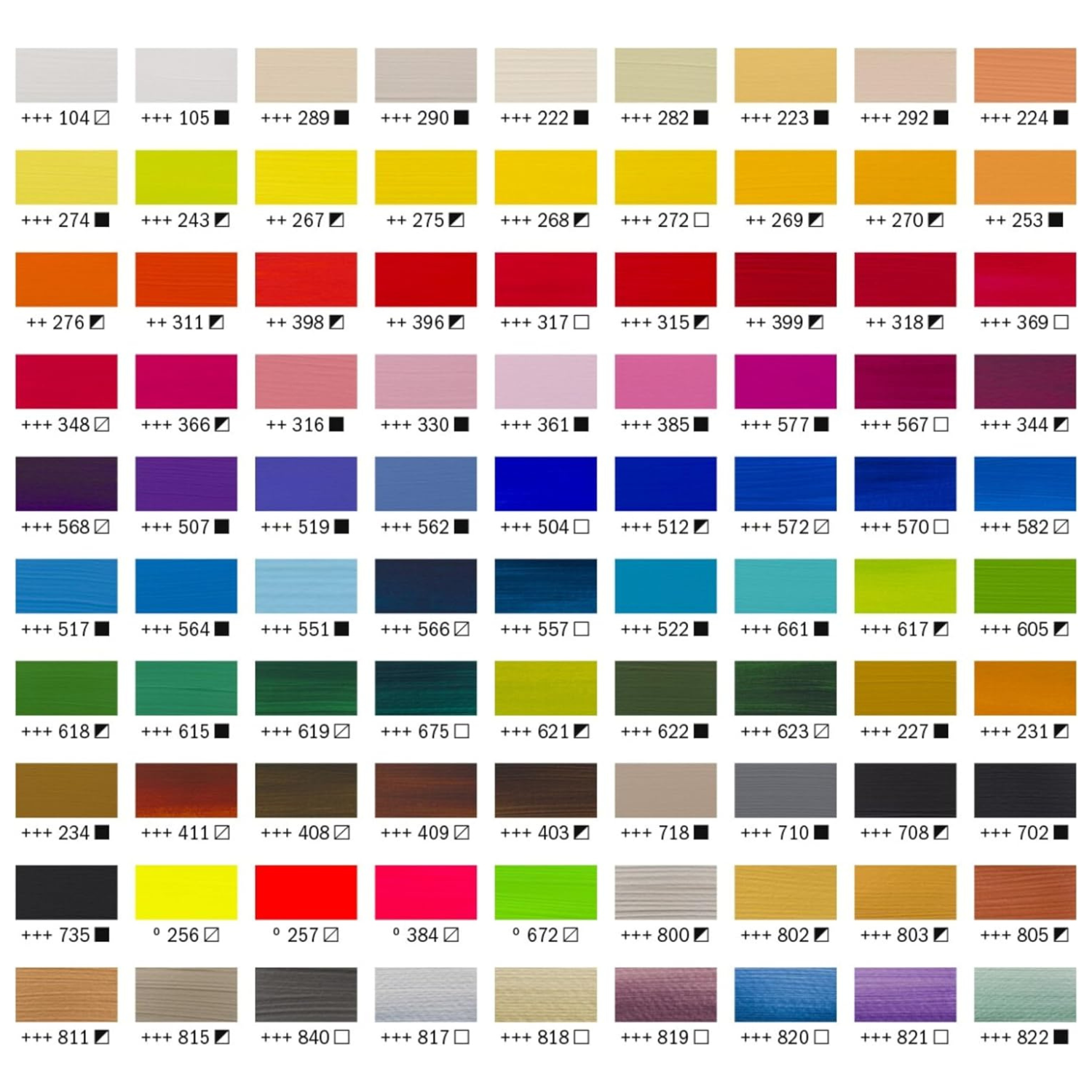
Amsterdam Standard Series Acrylic Paint 500ml Ultramarine Violet Light (519) is an opaque violet acrylic in a 500ml jar, made by Royal Talens in the Netherlands. It is made from ultramarine blue, dioxazine violet, quinacridone violet and titanium white. Lightfastness is +++, rated to last at least 100 years under museum conditions. Art Shed ships it Australia wide, with same day dispatch before 11am AEST on business days.
The short answer: Go big on the colours you actually empty. A 500ml jar holds about 4.2 times a 120ml tube. Go small on the ones you dot in, or it will skin over before you finish it.
Specifications at a glance
How Ultramarine Violet Light behaves
The pigment mix tells you how it will behave:
- PB29, ultramarine blue: a warm, slightly granular blue that leans violet and behaves gently in mixes
- PV23, dioxazine violet: an extremely strong violet, so a very small amount shifts a whole mix
- PV19, quinacridone violet: a transparent rose to violet that glazes beautifully and tints with real clarity
- PW6, titanium white: a dense, highly opaque white that lifts a colour towards a tint and kills transparency
It is rated opaque. It covers what is underneath in one or two coats, so it is a colour you block in with, correct with, and build on.
Because titanium white is already in the mix, this sits in the tint range rather than at full chroma. More white will lighten it but will not make it cleaner. For a more saturated version, tint the pure pigment colour yourself instead.
Where Ultramarine Violet Light earns its place
Violet is the colour people mix badly and then buy premixed, because red and blue rarely give you the violet you pictured.
- Portrait shadow, where violet keeps the skin alive in a way grey cannot
- Storm skies and weather
- Jacaranda, lavender and anything that defeats a mixed violet
- Underpainting, where a violet ground warms everything over it
Mixing with it
Dioxazine violet is one of the strongest pigments made. Treat it the way you would treat a staining ink: a touch shifts a mix, a squeeze ruins it.
Ultramarine is a gentle, forgiving blue in mixes and leans slightly violet, which is why it makes softer greens than a phthalo blue and far better violets.
Quinacridone stays clean as you tint it, so this colour will not go chalky when you add white the way an opaque red would.
With three or more pigments already in the jar, this colour is doing some mixing for you. That makes it convenient and consistent, but it means mixes made from it go neutral faster than mixes made from single-pigment colours.
Why the 500ml jar
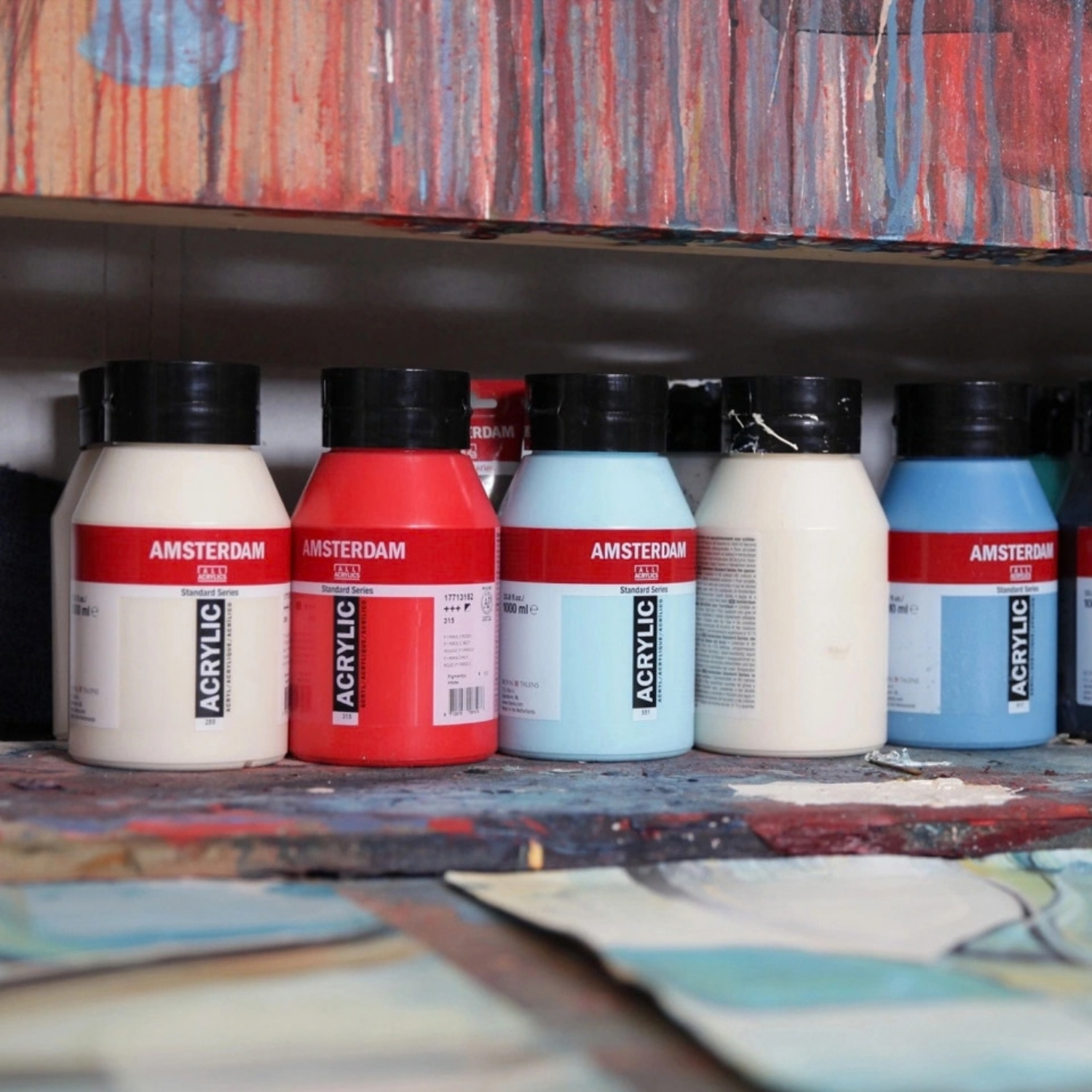
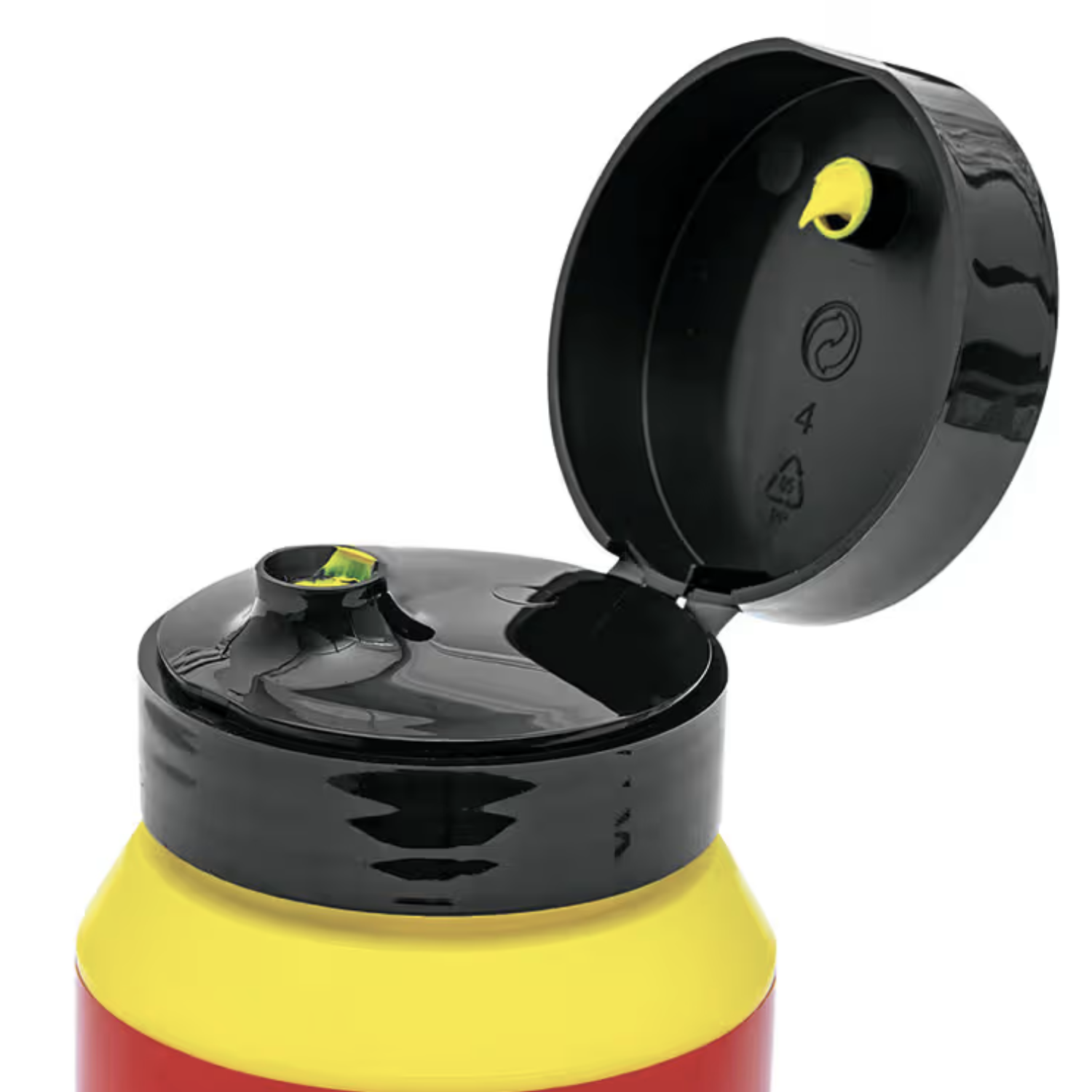
Ask yourself how often you have run out mid-session. A 500ml jar holds about 4.2 times the paint of a 120ml tube, so it is the size for colours you genuinely empty rather than dip into. The wide mouth matters too: it takes a palette knife or a large brush straight in, which a tube nozzle will not, and it reseals properly between sessions. If Ultramarine Violet Light is an accent colour for you, buy the tube instead and see the full Amsterdam range for sizes.
Surfaces and drying
Surfaces are rarely the problem with this range. Anything slightly porous works: canvas, canvas board, acrylic and watercolour paper, cardboard, MDF, plywood, raw and primed timber, stone, terracotta, plaster, concrete and render. It is alkali resistant, which is why it holds on masonry where many acrylics fail. Bare metal, glass and glossy plastic need a primer first. A thin layer can be dry inside half an hour. Thick passages take much longer, and touch dry is not the same as cured. Clean brushes with soap and water before it sets.
Buying online in Australia
Orders ship Australia wide from our own warehouses. You can also buy this over the counter at our Moorabbin store in Melbourne or our West End store in Brisbane. Same day dispatch on orders before 11am AEST on business days, outside sale periods. Express Post is about 1 to 2 business days to metro VIC, NSW, QLD, SA, ACT and TAS, and 2 to 3 days to WA, the NT and remote areas. Standard Post is about 2 to 5 business days to those metro areas and 6 to 8 days to WA, the NT and remote. Every order is tracked. Click and Collect from Moorabbin is ready in 1 to 3 business days, and we ship to New Zealand.
Frequently asked questions
Do you stock Ultramarine Violet Light in other sizes?
The Amsterdam Standard Series runs in 20ml, 120ml, 250ml, 500ml and 1 litre, though not every colour is made in every size. We carry the sizes that move, and the 500ml jar is the one to choose when you are painting large, teaching, mixing in volume or working on murals and props. If you want a size you cannot see on the site, ask us and we will check what Royal Talens produces in that colour.
What pigments are in Amsterdam Ultramarine Violet Light?
Ultramarine Violet Light (colour number 519) uses PB29/PV23/PV19/PW6. It is rated opaque with a lightfastness of +++. Knowing the pigment code matters more than the colour name, because names vary between brands while pigment index codes do not. If you are matching a colour across brands or checking permanence, the code is the thing to compare.
Is Ultramarine Violet Light opaque or transparent?
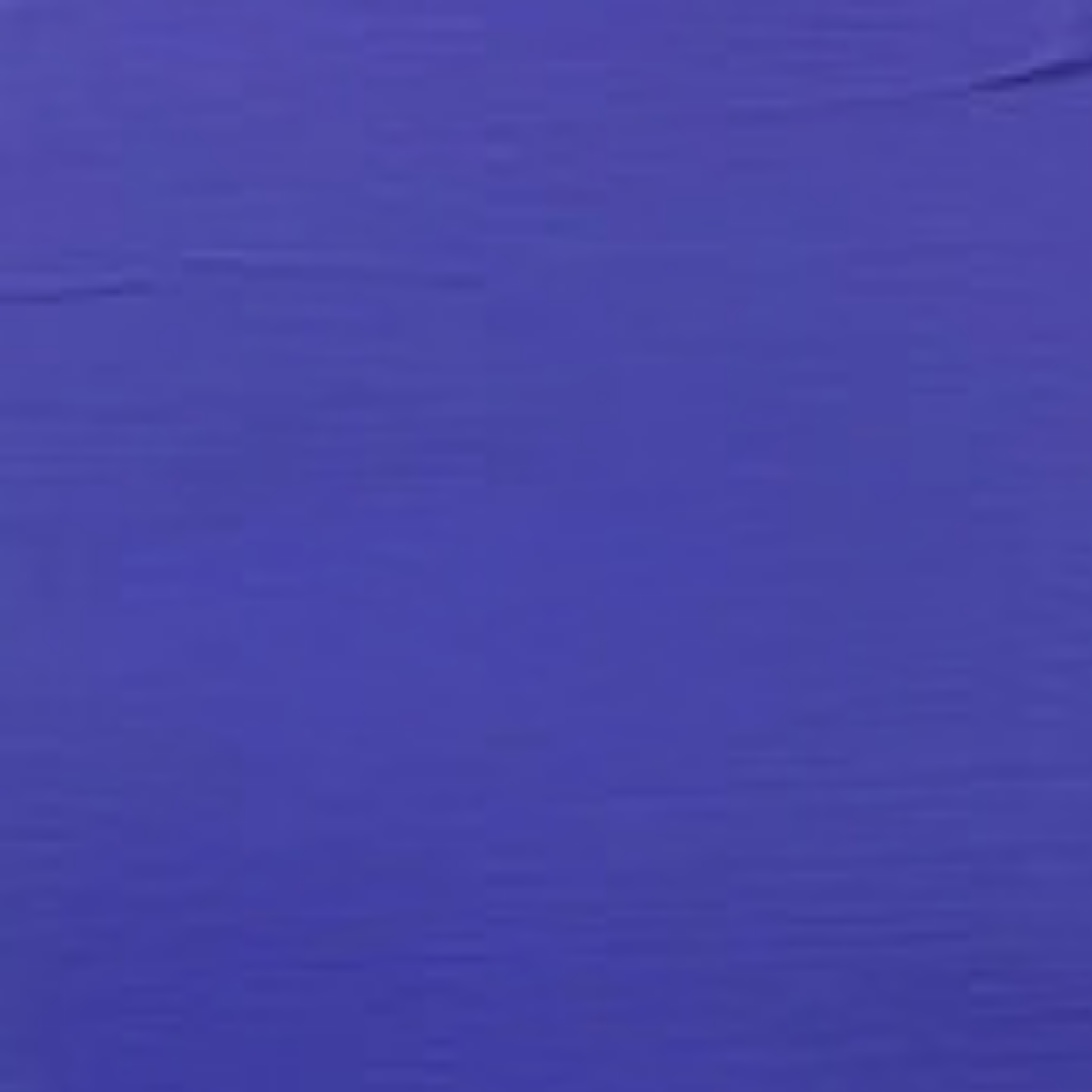
Ultramarine Violet Light is opaque. That determines how you should use it. An opaque colour covers what is beneath it in one or two coats and is what you want for blocking in and correcting. A semi-transparent or transparent colour lets the layer underneath influence the result, which makes it ideal for glazing and shadow work but frustrating if you are trying to cover something. Check the swatch on the jar against a black bar to see it for yourself.
Who makes Amsterdam acrylic paint?
Royal Talens, based in Apeldoorn in the Netherlands. The company was founded in 1899 and also makes Rembrandt oils and pastels, Van Gogh oils and watercolours, Cobra water-mixable oils, Ecoline liquid watercolour and Bruynzeel pencils. Amsterdam acrylics are manufactured in the Netherlands, not contract-made offshore, which is part of why batch-to-batch consistency is reliable when you are mixing a colour you need to match again later.
Can I click and collect from your Melbourne store?
Yes, Click and Collect is available from our Moorabbin store, for Melbourne metro customers. Order online and the Click and Collect option appears as a delivery method once you enter your address. Allow 1 to 3 business days for your order to be picked and packed, and we will email you when it is ready. Orders need to be collected within 4 business days of that notification. Someone else can collect on your behalf if they have the order number.
How long does Amsterdam acrylic take to dry?
Thin layers can dry within half an hour. Thick, impasto applications take considerably longer, sometimes overnight, and a heavy texture can stay soft underneath for days even when the surface feels dry. Heat and airflow speed it up, humidity slows it down, which matters in a Brisbane summer. Touch dry is not cured. Allow a good few days before varnishing, and longer over heavy texture.
What paper works best with acrylic paint?
Acrylic paper or a heavyweight watercolour paper, 300gsm or above. Acrylic is a heavy, wet medium and lighter paper will cockle and eventually break down. Watercolour paper works well and gives you texture to play with, and stretching or taping it down first prevents buckling. Cartridge paper under about 200gsm is fine for quick studies but not for anything you intend to keep or frame.
How should I store acrylic paint?
Upright, lid on tight, at stable room temperature, out of direct sunlight. Heat and freezing are the two things that ruin acrylic, so a hot car, a tin shed in summer or an unheated garage in a cold winter are all bad storage. Wipe the rim before you close the lid or dried paint will stop it sealing. Never tip used paint from the palette back into the jar, because you are introducing contamination and half-cured lumps.
Can I use acrylic paint on fabric or clothing?
Yes, with a fabric medium mixed in. Straight acrylic on fabric dries into a stiff plastic patch that cracks when the cloth flexes. A textile or fabric medium keeps the binder flexible so the paint moves with the weave. Prewash the fabric to remove sizing, paint with a board inside so it does not bleed through, let it cure fully, then heat set with an iron on the reverse per the medium's instructions.
Related
- The full Amsterdam acrylics range, every colour and size we stock
- A guide to Amsterdam acrylic paints, Standard versus Expert explained
- All acrylic paints at Art Shed, every brand compared
(NU17725192)
| SKU | NU17725192 |
| Barcode # | 8712079281687 |
| Brand | Royal Talens |
| Shipping Weight | 0.6050kg |
| Shipping Width | 0.050m |
| Shipping Height | 0.050m |
| Shipping Length | 0.050m |
More From This Category