

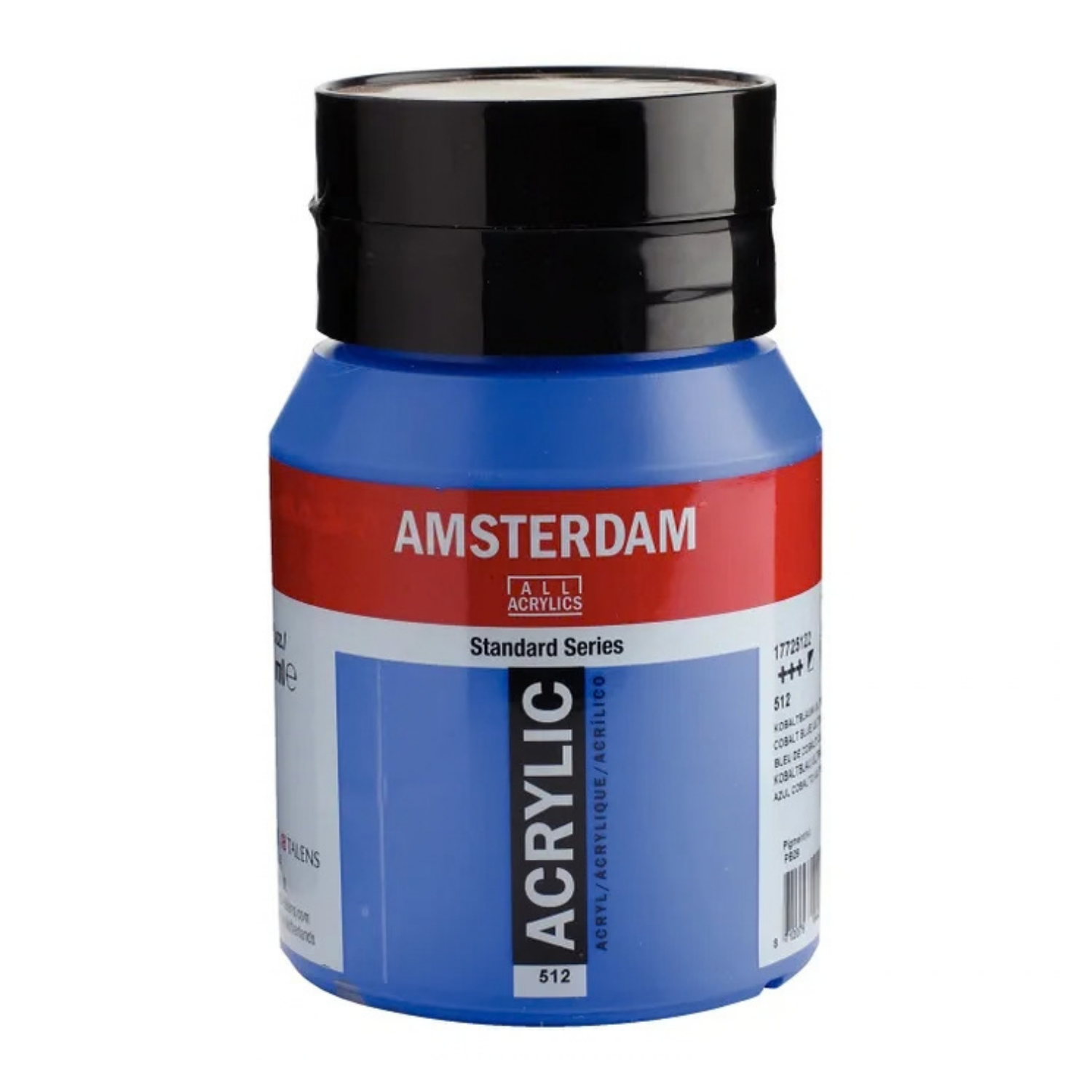
Amsterdam Acrylic Paint 500ml Bottle - Cobalt Blue (Ultramarine)
Our everyday low price
or 4 interest-free installments of $11.74 with

Own it now, pay later

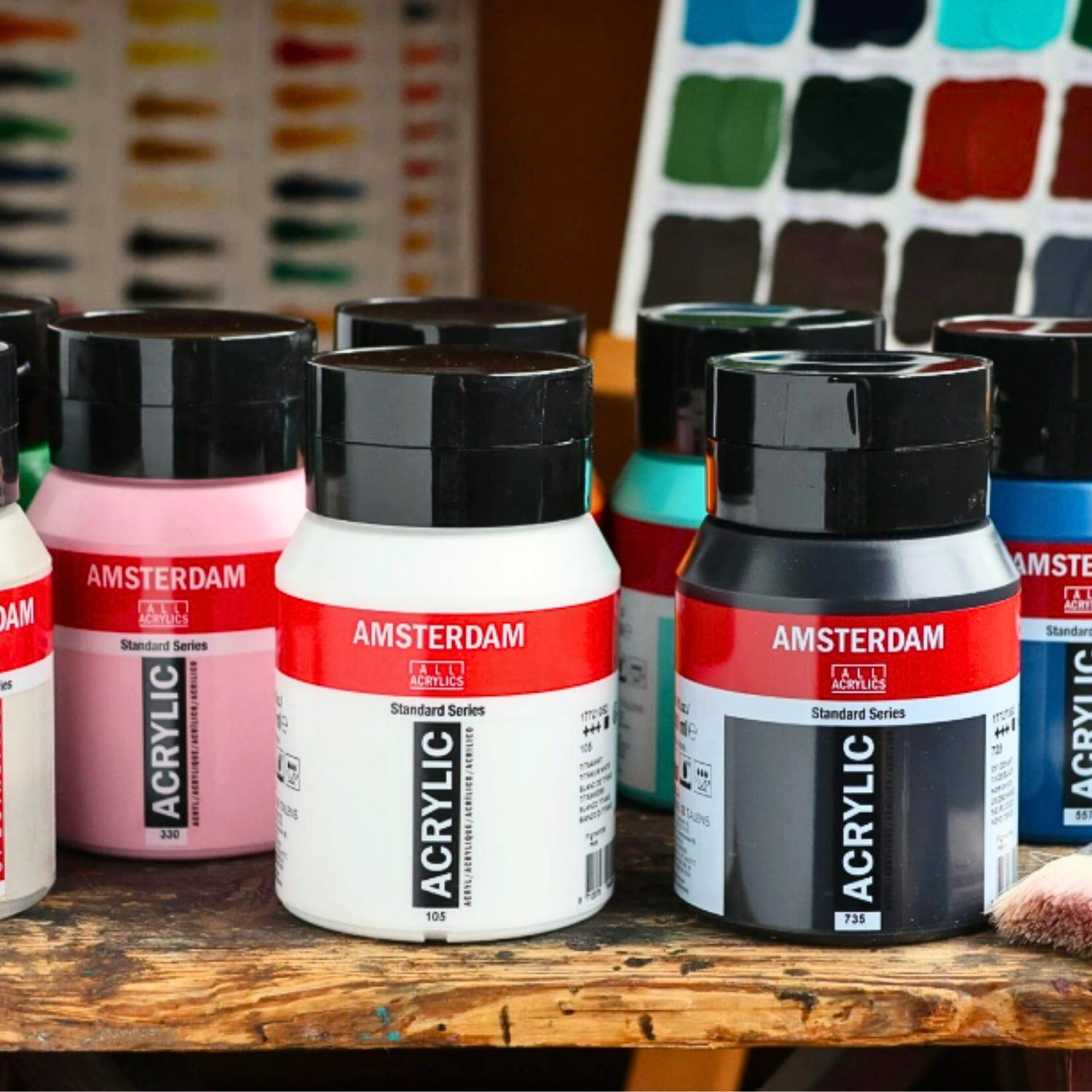
Amsterdam Standard Series Acrylic Paint 500ml Cobalt Blue (Ultramarine) (512) is a semi-opaque blue acrylic in a 500ml jar, made by Royal Talens in the Netherlands. It is made from ultramarine blue. Lightfastness is +++, rated to last at least 100 years under museum conditions. Art Shed ships it Australia wide, with same day dispatch before 11am AEST on business days.
The short answer: The jar is the right call when you empty tubes fast: large canvases, classes, murals, pouring. It holds about 4.2 times a 120ml tube. For occasional accent work, buy the tube.
Specifications at a glance
How Cobalt Blue (Ultramarine) behaves
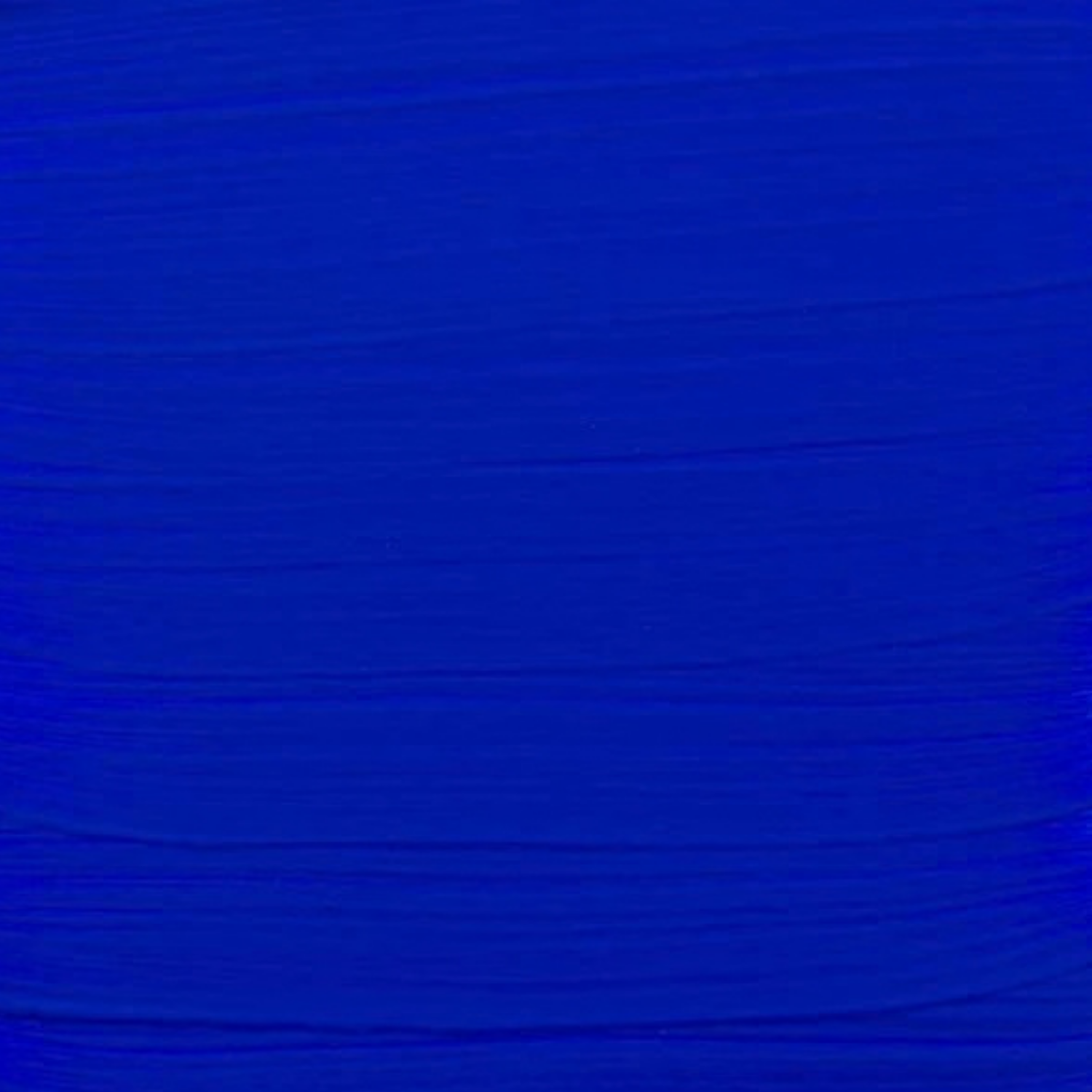
This is a single-pigment colour: ultramarine blue (PB29), a warm, slightly granular blue that leans violet and behaves gently in mixes.
It is rated semi-opaque. It covers well but not completely. Two coats gives solid colour, one coat gives a veil that lets the ground show through.
Where Cobalt Blue (Ultramarine) earns its place
Blue is the colour most often mixed into something else rather than used straight, which is why a large jar makes sense.
- Atmospheric recession, where everything distant moves towards blue
- Neutralising an orange, since blue is its complement
- Large flat fields of colour in contemporary and graphic work
- Underpainting, where a blue ground cools everything over it
Mixing with it
Ultramarine is a gentle, forgiving blue in mixes and leans slightly violet, which is why it makes softer greens than a phthalo blue and far better violets.
Being a single-pigment colour, it stays clear in mixes. Three-pigment colours are already a compromise before you add anything, which is why they go muddy faster.
Why the 500ml jar
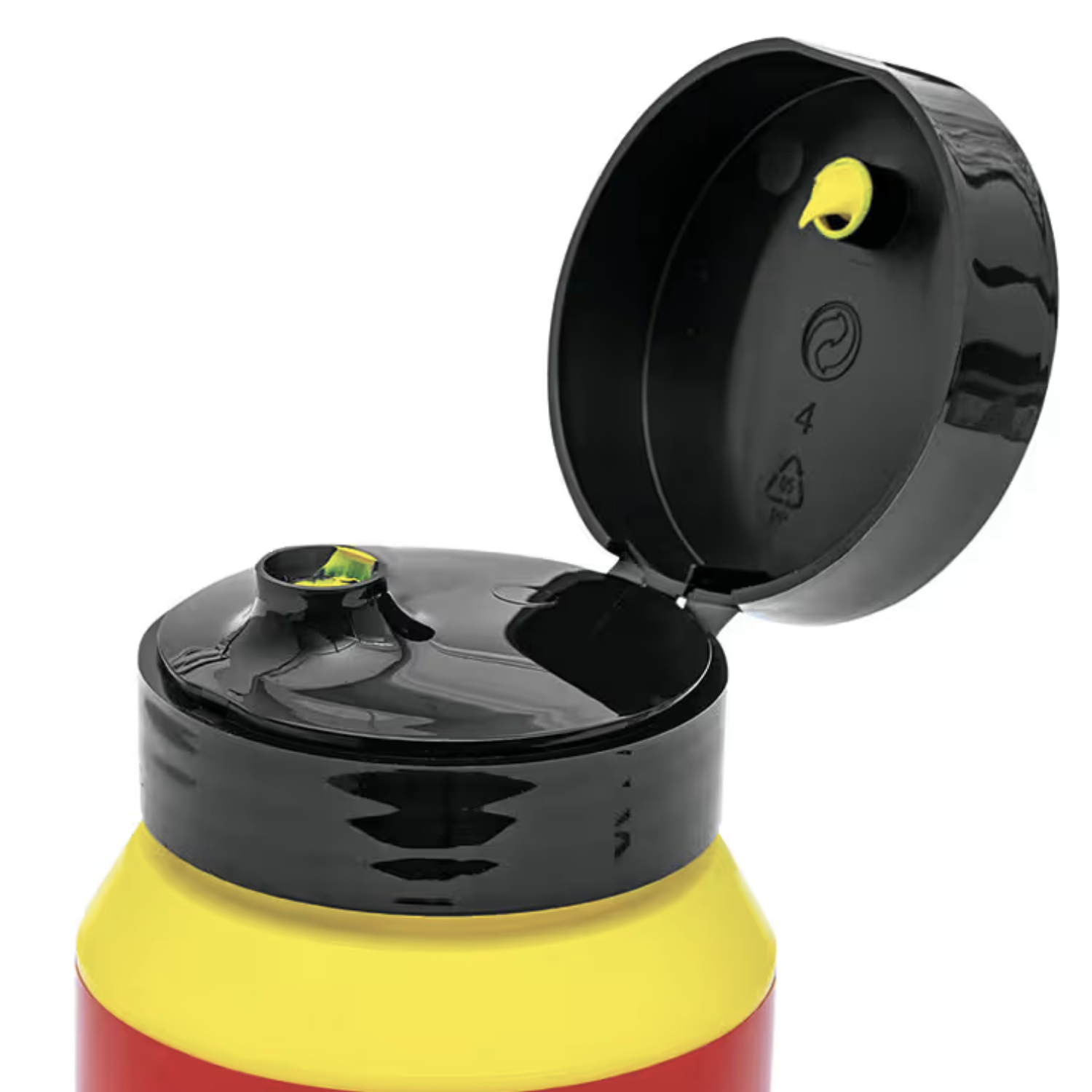
The honest test is how fast you empty a tube. A 500ml jar holds about 4.2 times the paint of a 120ml tube, so it is the size for colours you genuinely empty rather than dip into. The wide mouth matters too: it takes a palette knife or a large brush straight in, which a tube nozzle will not, and it reseals properly between sessions. If Cobalt Blue (Ultramarine) is an accent colour for you, buy the tube instead and see the full Amsterdam range for sizes.
Surfaces and drying
This will go straight onto almost any slightly porous surface: canvas, canvas board, acrylic and watercolour paper, cardboard, MDF, plywood, raw and primed timber, stone, terracotta, plaster, concrete and render. It is alkali resistant, which is why it holds on masonry where many acrylics fail. Bare metal, glass and glossy plastic need a primer first. Expect thin layers to be dry within half an hour. Heavy application takes considerably longer, and full cure takes days. Clean brushes with soap and water before it sets.
Buying online in Australia
We are an Australian owned art store, with our Melbourne shop in Moorabbin, a Brisbane shop in West End, and warehouses that ship Australia wide. Same day dispatch on orders before 11am AEST on business days, outside sale periods. Express Post is about 1 to 2 business days to metro VIC, NSW, QLD, SA, ACT and TAS, and 2 to 3 days to WA, the NT and remote areas. Standard Post is about 2 to 5 business days to those metro areas and 6 to 8 days to WA, the NT and remote. Every order is tracked. Click and Collect from Moorabbin is ready in 1 to 3 business days, and we ship to New Zealand.
Frequently asked questions
What colours mix well with Cobalt Blue (Ultramarine)?
All Amsterdam acrylics are intermixable, and Cobalt Blue (Ultramarine) behaves predictably in mixes given it is semi-opaque. Start by mixing it with titanium white for tints and with a small amount of its complementary colour to knock back the intensity rather than reaching for black, which tends to deaden a mix. Keep a swatch card of your mixes with the ratios written on it, because you will want to repeat one later.
How lightfast is Amsterdam Cobalt Blue (Ultramarine)?
Cobalt Blue (Ultramarine) is rated +++ on Royal Talens' scale. Three pluses means the colour is rated to last at least 100 years under museum conditions, two pluses at least 25 years. Museum conditions means indoors and out of direct sunlight. That rating is why work painted in Amsterdam Standard Series is safe to sell, provided the buyer is not hanging it in a north-facing window.
Do you stock Cobalt Blue (Ultramarine) in other sizes?
The Amsterdam Standard Series runs in 20ml, 120ml, 250ml, 500ml and 1 litre, though not every colour is made in every size. We carry the sizes that move, and the 500ml jar is the one to choose when you are painting large, teaching, mixing in volume or working on murals and props. If you want a size you cannot see on the site, ask us and we will check what Royal Talens produces in that colour.
How does Amsterdam compare to other student acrylics?
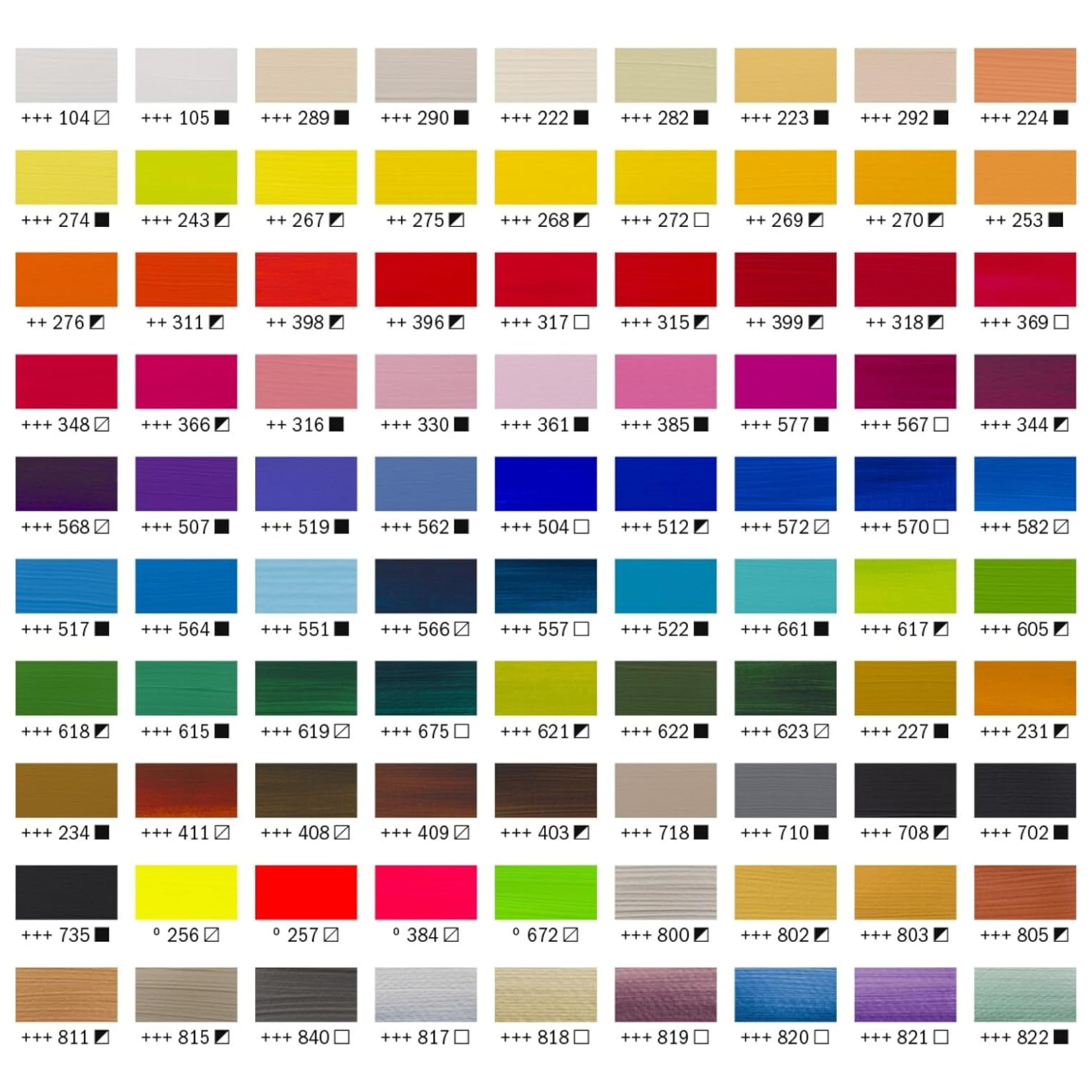
The honest comparison is on three things: permanence, consistency and range. Amsterdam Standard Series carries ++ or +++ lightfastness across the line, has a medium buttery viscosity that holds a brush mark without being stiff, and runs to around 90 colours including metallics, reflex fluorescents and specialty finishes. Some competing student ranges are thinner, some are stiffer, and several carry fewer colours or do not publish lightfastness at all. If a range will not tell you its lightfastness, that is the thing to notice.
Do you ship art supplies to New Zealand?
Yes, we ship to New Zealand. Orders are charged in Australian dollars, and import duties, taxes and levies charged by New Zealand are not included in the order total or the postage and are the recipient's responsibility, so check locally before you order. We are not currently shipping to countries other than Australia and New Zealand.
Can I blend acrylics like oils?
Not as freely, because acrylic sets fast, but you can get close with the right approach. Work wet into wet quickly and in small areas, keep a mister handy, and use an acrylic retarder or an open medium to extend the working time. The alternative approach, which often looks better, is to build the blend in thin glazes once each layer is dry, letting the transitions happen optically rather than physically.
What surfaces can I use Amsterdam acrylic on?
Virtually any slightly porous surface: stretched canvas, canvas board, acrylic and watercolour paper, cardboard, MDF, plywood, raw and primed timber, stone, terracotta, plaster, concrete and rendered walls. It is alkali resistant, which is why it holds on masonry and render where many acrylics fail. Non-porous surfaces such as bare metal, glass and glossy plastic need an appropriate primer or adhesion promoter first, or the paint will lift.
Can acrylic paint go off or go mouldy?
It can, though it takes mistreatment. Signs are a sour smell, visible mould on the surface, lumps that will not redisperse, or paint that has separated with a watery layer on top that will not stir back in. Contamination from dirty brushes and palette scrapings is the usual cause, along with a lid that never sealed properly. A skin on the surface is normal, just lift it off rather than stirring it in.
Do you supply schools, studios and bulk orders?
Yes. Schools, universities, community art programmes and studios are a large part of what we do, and the 500ml and 1 litre sizes exist for exactly this reason. If you need quantities across multiple colours, or a quote on school letterhead, contact us rather than working through the cart and we will put it together properly, including availability and lead time on anything we would need to bring in.
Related
- The full Amsterdam acrylics range, every colour and size we stock
- A guide to Amsterdam acrylic paints, Standard versus Expert explained
- All acrylic paints at Art Shed, every brand compared
(NU17725122)
| SKU | NU17725122 |
| Barcode # | 8712079044268 |
| Brand | Royal Talens |
| Shipping Weight | 0.6050kg |
| Shipping Width | 0.050m |
| Shipping Height | 0.050m |
| Shipping Length | 0.050m |
More From This Category
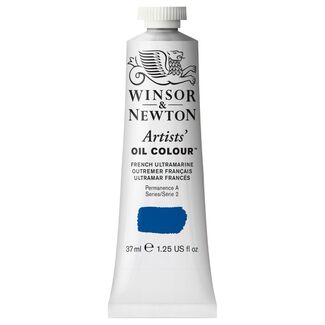
Winsor & Newton Artists' Oil Colour 37ml S2 - French Ultramarine Blue
Was $41.95
Now
$33.56