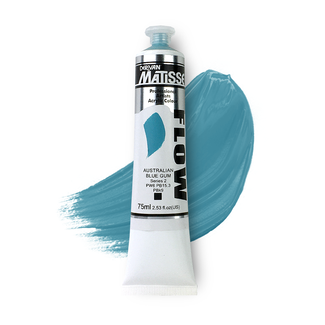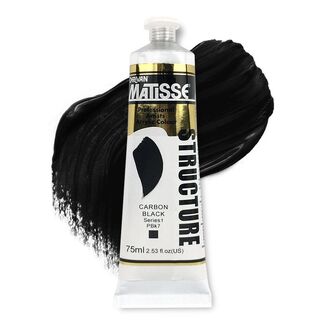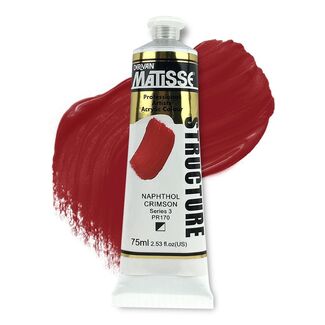


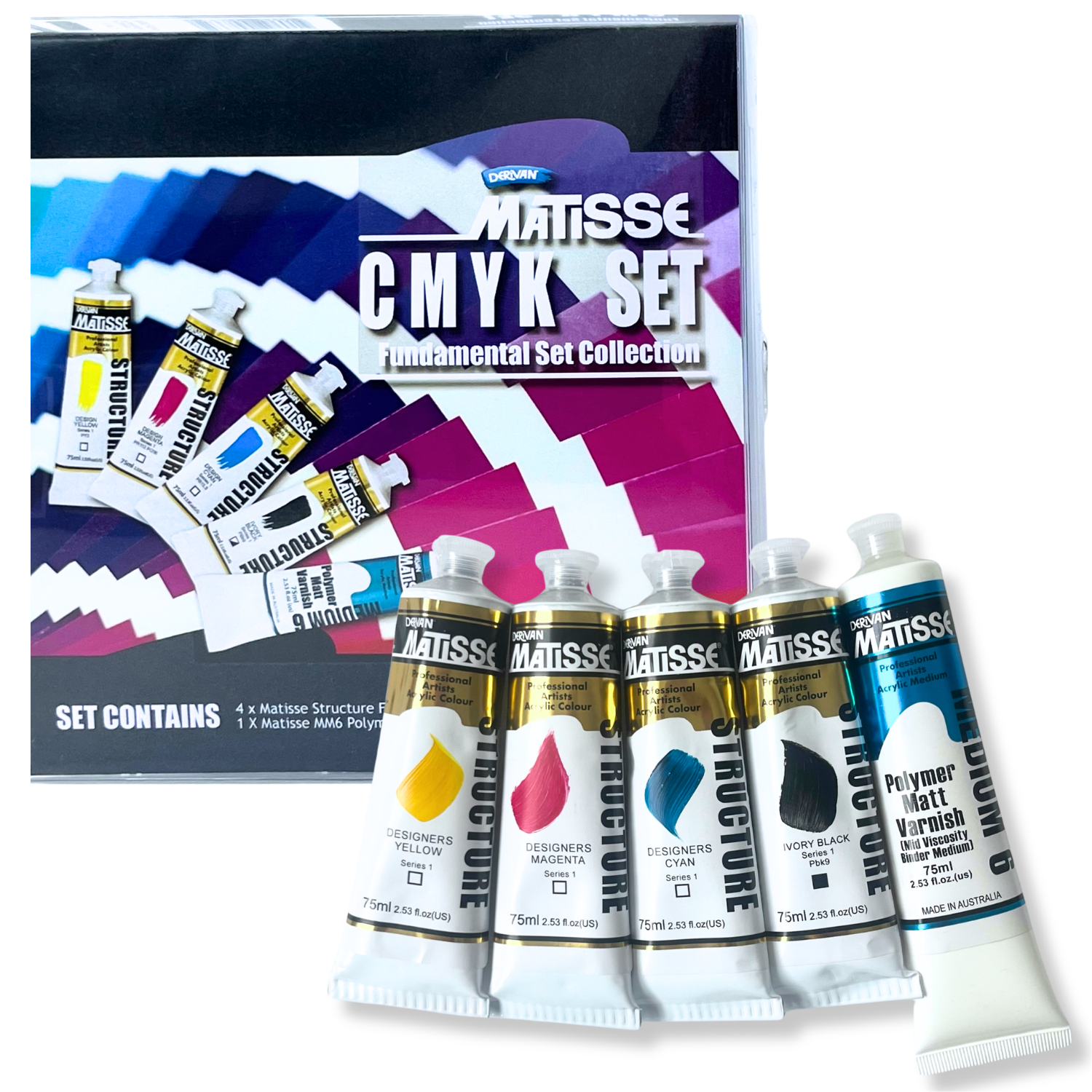
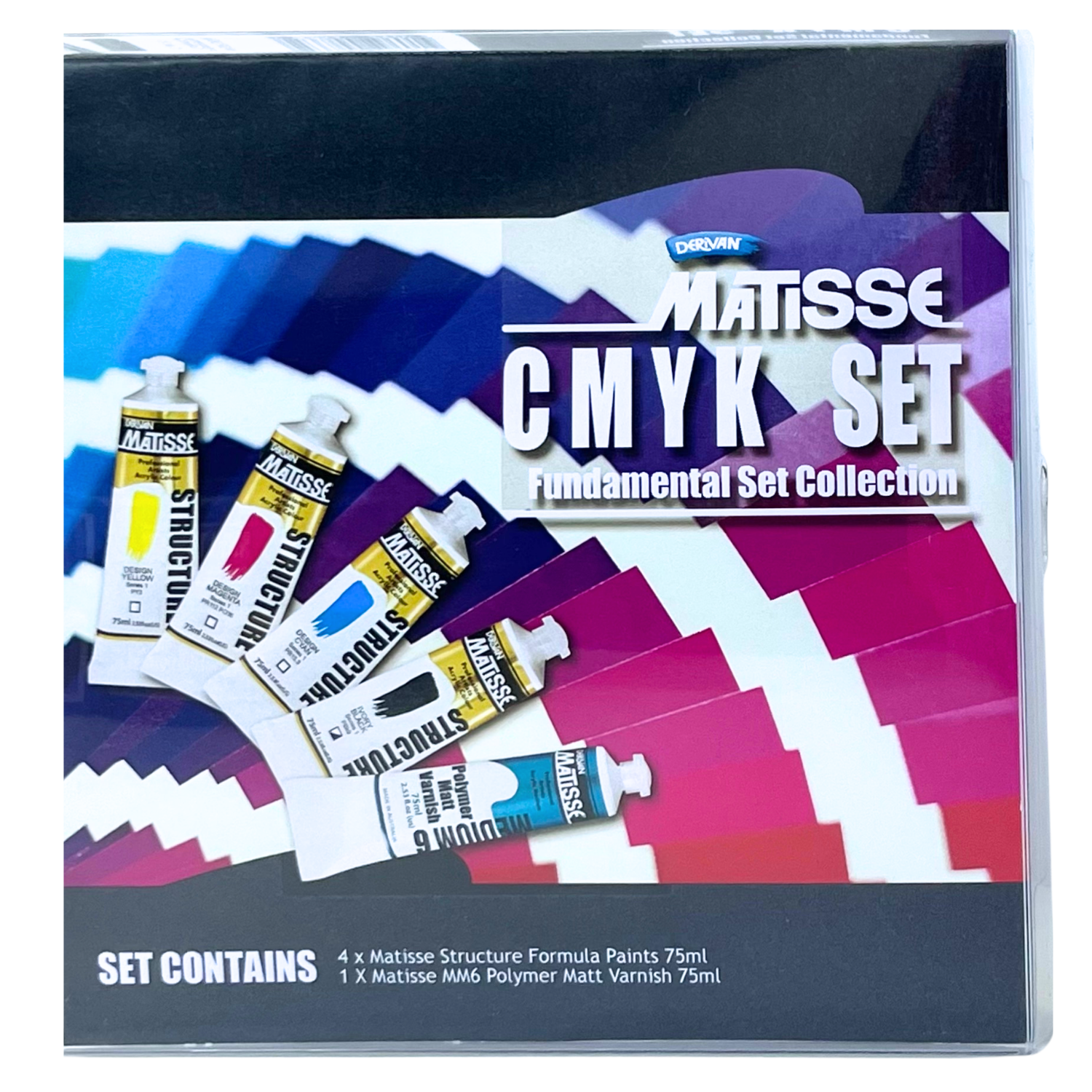
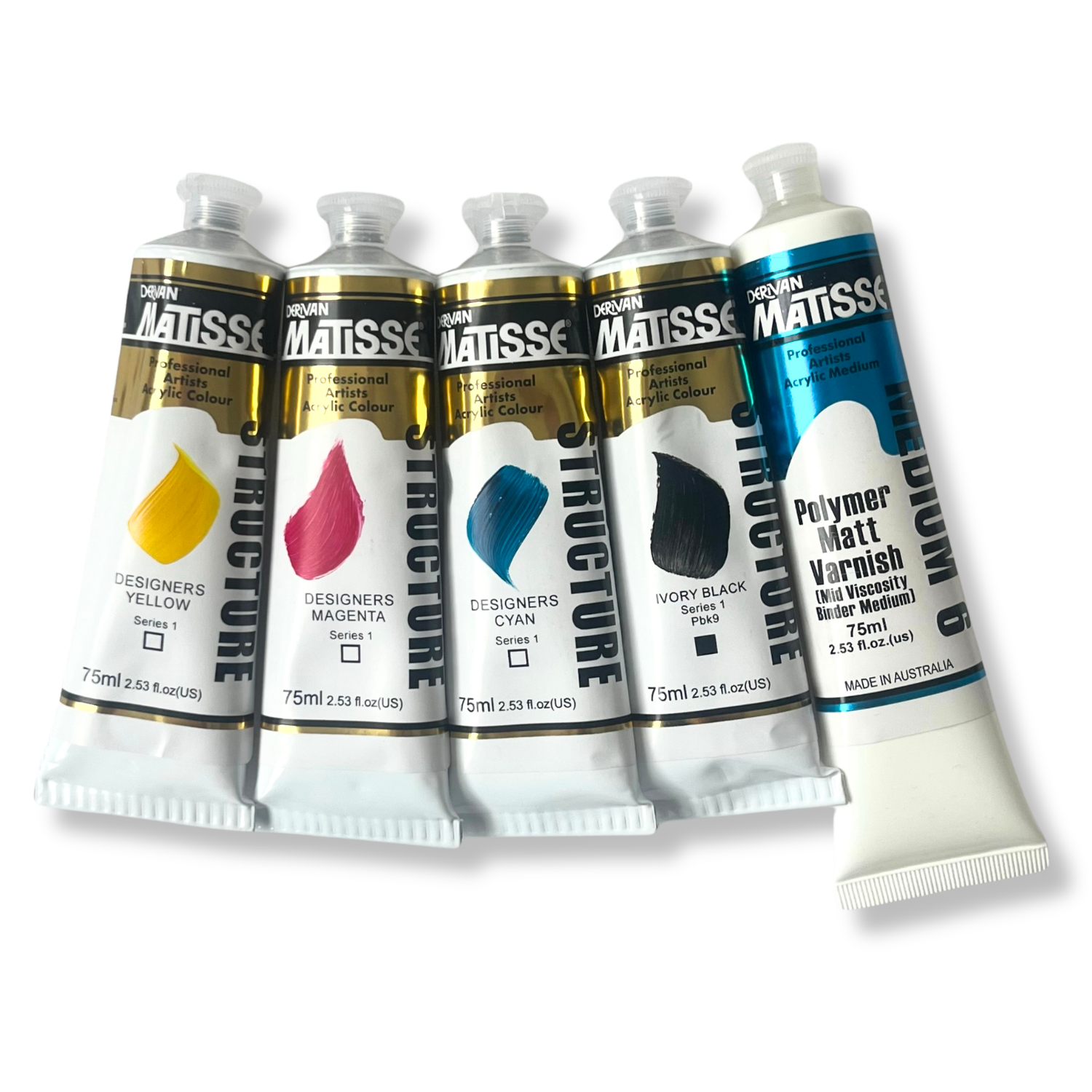
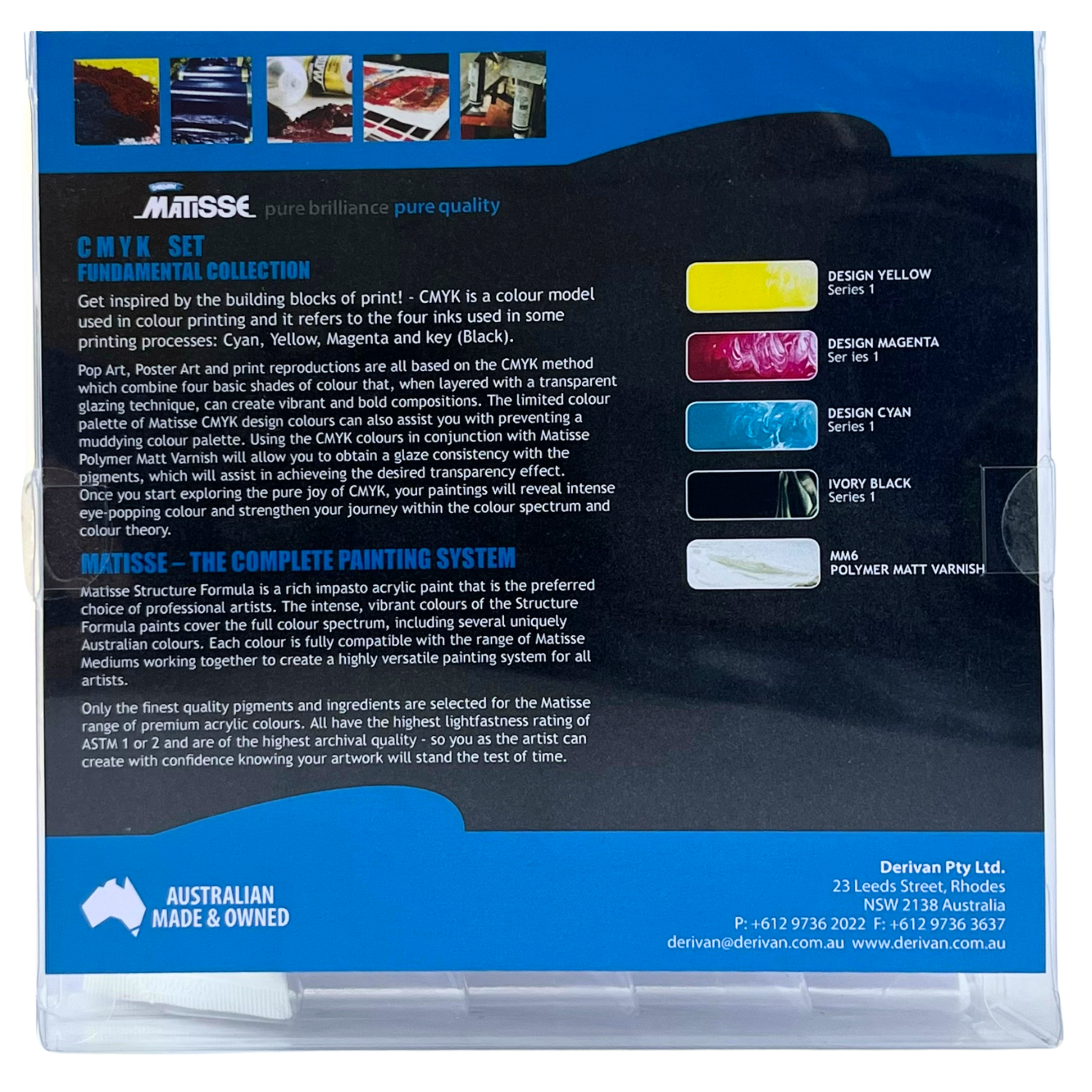
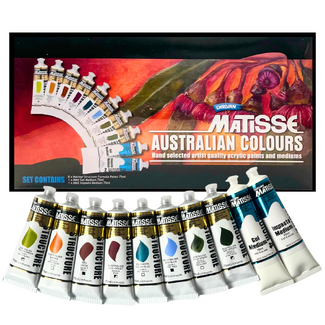
Matisse Structure CMYK Fundamental Set 5x75ml
Our everyday low price
or 4 interest-free installments of $15.49 with

Own it now, pay later

Matisse Structure CMYK Fundamental Set 5x75ml
Every printed image you have ever seen, from the magazine on your coffee table to the label on a paint tube, was produced using four inks: Cyan, Magenta, Yellow, and Black. Together they can reproduce any colour the eye can see. This is not a coincidence. It is the fundamental mathematics of subtractive colour mixing, the same principle that governs how paint pigments work on a white surface. The Matisse Structure CMYK Fundamental Set puts the four process colours into your hands as heavy-body acrylic paint, with a bottle of MM6 Polymer Matt Varnish included to finish your work with the same flat, print-accurate surface that modern design demands.
Design Cyan, Design Magenta, and Design Yellow are Matisse's process-accurate versions of the three primary subtractive colours. They are formulated to behave as pure colour mixing anchors: high saturation, clean hue, and maximum mixing range. Ivory Black completes the CMYK model, providing the depth and neutral darkening that the three chromatic primaries cannot reach on their own. Together these four colours mix to produce the full spectrum: blue from Cyan and Magenta, green from Cyan and Yellow, red and orange from Magenta and Yellow, and a range of neutral greys and browns from all three. This set is both a practical colour theory tool and a genuinely usable studio palette for bold, graphic, high-chroma painting.
| Colour / Item | Series | Role in the Set |
|---|---|---|
| Design Cyan | S1 | Process cyan primary; mixes to blue with Magenta, to green with Yellow |
| Design Magenta | S1 | Process magenta primary; mixes to red/orange with Yellow, to purple with Cyan |
| Design Yellow | S1 | Process yellow primary; mixes to orange with Magenta, to green with Cyan |
| Ivory Black | S1 | The K in CMYK; neutral darkening, deep shadows, and rich mixed neutrals |
| MM6 Polymer Matt Varnish | Medium | Clear finishing varnish; protects the surface and delivers a flat, non-reflective finish |
CMYK is the colour model used in offset lithographic printing and most commercial colour reproduction. The acronym stands for Cyan, Magenta, Yellow, and Key (Black). In subtractive colour mixing, each pigment absorbs certain wavelengths of light and reflects others. Cyan absorbs red and reflects blue and green. Magenta absorbs green and reflects blue and red. Yellow absorbs blue and reflects red and green. Overlapping these three in varying proportions produces the secondary colours and a vast range of mixed hues. Black is added because the overlap of all three primary pigments rarely produces a true, deep black in practice. It also allows much more efficient use of pigments by replacing neutral mixed colours with a single ink. The Matisse Design colours are formulated specifically to the CMYK model, making them the ideal choice for painters who want to understand how colour mixing works from the ground up.
Equal parts produces a vibrant blue-violet. Add more Cyan to push toward blue; add more Magenta to push toward purple. This is the cleanest blue mix possible from a subtractive primary palette.
Equal parts makes a vivid scarlet-red. Shift toward Yellow for orange; shift toward Magenta for a cooler, more intense red. The cleanest warm red you can achieve from a palette without a red primary.
Equal parts makes a vivid mid-green. Add more Yellow for lime and yellow-green; add more Cyan for teal and blue-green. A full range of greens is available from this single mix.
Mixing Cyan, Magenta, and Yellow together in roughly equal parts produces warm brown-greys. Add Ivory Black to deepen any mix quickly, or to replace the neutral grey that would otherwise require all three primaries in high quantity.
Adding a small amount of Ivory Black to any of the three primaries deepens and darkens it without muddying the hue. Use sparingly as the K in your mix; a little goes a long way in Matisse Structure's high-pigment formula.
- High pigment concentration means the Design colours are at maximum chroma and mix cleanly without dulling
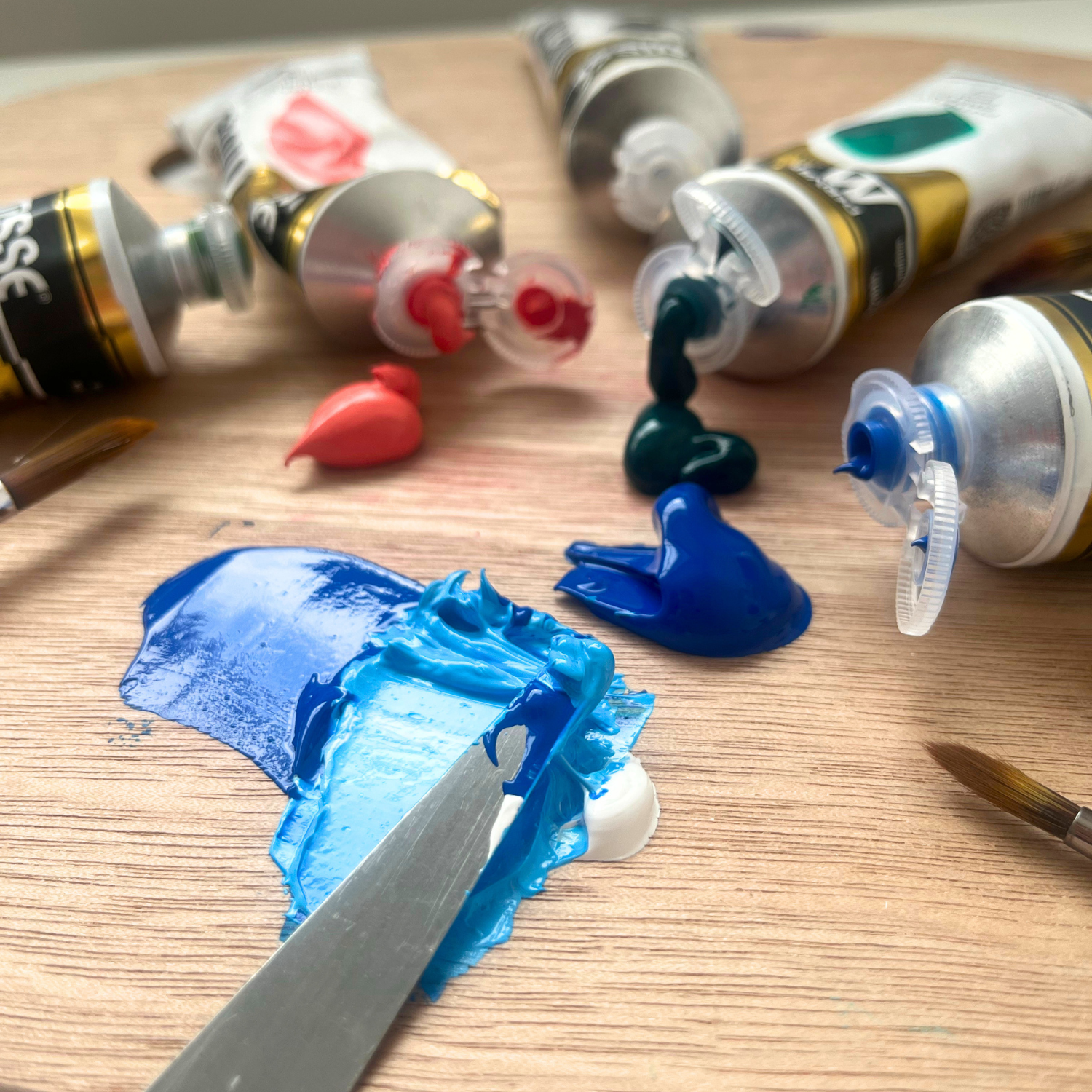
- Heavy body impasto consistency holds texture when applied with a brush or palette knife for graphic, high-impact results
- Excellent lightfastness on all four paints in this set
- Series 1 pricing on all four colours, making this the most affordable entry point into the Matisse Structure range
- MM6 Polymer Matt Varnish included provides a durable, water-resistant, flat finish that is fully compatible with all Matisse Structure paint colours
- Made in Australia by Derivan, Chipping Norton NSW, since the 1960s
Matisse Structure Formula is Australia's definitive heavy-body acrylic paint, produced by Derivan at their Sydney facility in Chipping Norton. Derivan has been manufacturing professional artist colours in Australia since the 1960s, making them the country's longest-running domestic art paint producer. The Structure Formula range spans over 100 colours, including the Design Series of process-accurate primaries developed for colour theory work, graphic painting, and mixed-media applications. Matisse Structure is favoured by Australian artists and educators for its high pigment density, reliable batch consistency, and broad compatibility with mediums and varnishes.
What is CMYK and why does it matter for painters?
CMYK stands for Cyan, Magenta, Yellow, and Key (Black). It is the subtractive colour model used in commercial colour printing, where inks are applied to white paper in overlapping layers to produce any colour in the visible spectrum. Unlike the additive RGB model used by screens (which adds light), CMYK works by subtracting light: each pigment absorbs certain wavelengths and reflects others, and overlapping pigments progressively subtract more light until black is approached. For painters, understanding CMYK is important because it is the foundation of subtractive colour theory, the same principle that governs all pigment-based colour mixing. Working with process-accurate Cyan, Magenta, and Yellow teaches the painter how colour mixing really works from first principles, without the shortcuts that come from starting with a red, blue, and yellow palette that are already biased toward certain mixes.
What are the Matisse Design Series colours and how do they differ from standard colours?
The Matisse Design Series colours, including Design Cyan, Design Magenta, and Design Yellow, are formulated to match the process primaries used in commercial printing. This makes them more extreme in their colour positioning than typical artist colours: Design Cyan is a pure, unmixed blue-green with no bias toward warm or cool; Design Magenta is a true red-purple with no orange or blue bias; Design Yellow is a clean, pure yellow positioned at the maximum chroma point for its hue. In contrast, standard artist colours such as Ultramarine Blue or Cadmium Red are biased toward warm or cool ends of their hue and are deliberately positioned for specific mixing relationships in traditional colour mixing. The Design colours are ideal for anyone learning subtractive primary mixing from first principles, for graphic and illustrative painting, and for any work where maximum chromatic intensity is the priority.
Can I mix any colour from Cyan, Magenta, Yellow, and Black?
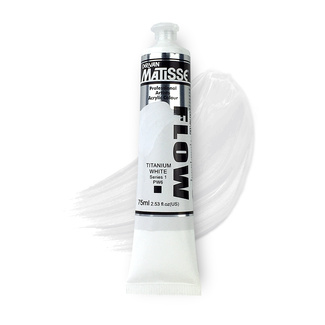
In theory, yes. In practice, there are two limitations. First, paint pigments are not perfect absorbers: even the purest Cyan, Magenta, and Yellow still reflect small amounts of other wavelengths, which means mixed secondaries are not as vivid as pure primaries. This is why commercial printing uses pre-mixed spot colours for particularly vivid results. Second, without white, you cannot lighten colours in a subtractive palette: mixing with more yellow lightens yellow mixes, but to achieve a pale pink or a sky blue, you need a white (which is not included in this set). Many painters use this CMYK set alongside Titanium White, which is available separately at Art Shed Online. With white added, the CMYK palette becomes capable of reproducing the full tonal range as well as the full colour wheel. Without white, the set still mixes every hue but is limited to the darker half of the tonal range.
What is MM6 Polymer Matt Varnish and how do I use it?
MM6 Polymer Matt Varnish is a clear, water-based finishing varnish for acrylic paintings. Applied over a fully dry painting, it provides a durable, water-resistant protective layer with a flat, non-reflective matte surface. This is the appropriate finish for graphic, design-oriented, and illustrative work where gloss would distract from the image. To use, ensure your painting is completely dry (allow at least 24 hours after your final layer of Matisse Structure). Apply MM6 with a soft, wide brush in a single direction, working quickly to avoid brushing over setting varnish. Allow to dry for 30 to 60 minutes before a second coat if desired. MM6 is water-soluble before it dries but becomes water-resistant once cured. It is fully compatible with all Matisse Structure Formula paint colours.
Is the CMYK set suitable for beginners or is it for advanced painters?
The CMYK set is especially well-suited to beginners who want to understand colour mixing from first principles, and to experienced painters who want to explore graphic or design-influenced styles. The four-colour model is simpler than a full artist palette: because each colour has a clear, defined role as a primary, mixing decisions are more systematic. Beginners who start with CMYK often develop stronger colour intuition than those who start with a large palette of pre-mixed colours, because they must think through every mix rather than reaching for a ready-made approximation. For experienced painters, the Design colours offer a maximum-chroma tool for pop art, street art, illustration, and any work that calls for the kind of vivid, saturated colour that landscape and traditional studio palettes do not include. The set works at any skill level and for any painting style that values pure, bold colour.
(1PMSFU05CMY)
| SKU | 1PMSFU05CMY |
| Barcode # | 9310097008652 |
| Brand | Matisse |
| Shipping Weight | 0.6550kg |
| Shipping Width | 0.190m |
| Shipping Height | 0.040m |
| Shipping Length | 0.200m |
| Shipping Cubic | 0.001520000m3 |
Others Also Bought
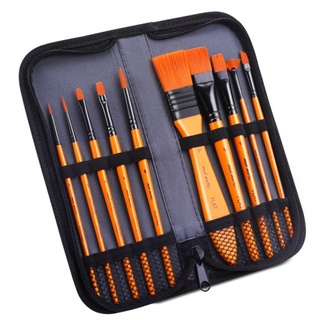
Mont Marte Signature Paint Brush Set - Acrylic Taklon Bristle In Wallet 11pc
Was $17.95
Now
$12.57
More From This Category